
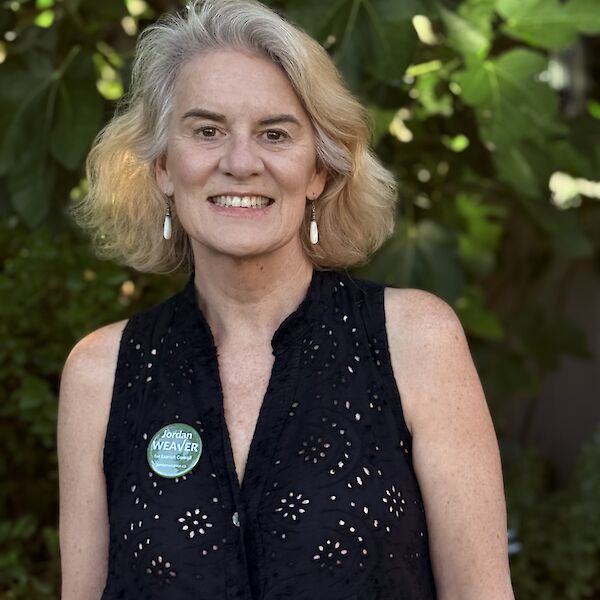
Jordan Weaver
About
Policy commitments
We all want healthy, affordable, and comfortable homes. These policies will help to lower energy bills, cut pollution, and improve indoor air quality.
Our community is already experiencing the harmful impacts of climate change caused by fossil fuel pollution, and taxpayers are on the hook to upgrade and repair critical infrastructure.
The air we breathe, the water we drink, and the food we eat all rely on healthy ecosystems. Nature can also help protect our community from extreme weather by controlling floods, protecting shorelines, and cooling neighbourhoods. Access to nature improves the health and well-being of residents, and supports biodiversity.
We envision vibrant, walkable communities that protect nature and improve food security.
Connecting neighbourhoods through public transit and active transportation networks will cut pollution, improve public health, and make our communities more affordable (and fun!).
Climate change, increasing populations, and overconsumption threaten our water security. Healthy watersheds and forests are critical to support clean drinking water, stormwater management, climate resilience, and biodiversity for future generations.
Zero waste policies reduce pollution, keep waste out of landfills, build resilient local economies, and safeguard public health by shifting society away from a disposable culture toward a sustainable circular economy.
Climate action
In our household, we have invested in 12 kilowatts of solar panels, a 10-kilowatt battery storage system and a heat pump. We also subscribe to a 100% renewable natural gas program. These choices reflect our commitment to reducing our reliance on fossil fuels and taking responsibility for the energy we use.
We own a fully electric vehicle and recently acquired a hybrid vehicle from my husband’s late father. Our experience with these technologies has made the opportunities and practical considerations of changing how we power our homes and travel part of everyday life.
I also recognize that households have very different circumstances. Many residents rent their homes, face financial pressures or cannot readily replace a vehicle or heating system. Leadership means sharing what is possible while respecting those realities. Climate action needs to be accessible, affordable and relevant to people’s lives.
For me, contributing to climate action means connecting personal responsibility with a commitment to serving the wider community. The choices we have made at home inform the approach I would bring to council: listening carefully, considering evidence, understanding costs and supporting practical measures that help residents participate.
I want Saanich to be a community where protecting our climate is something we work on together, with encouragement, thoughtful planning and opportunities for everyone to contribute in meaningful ways.
Questions for Saanich
1. Listen to ideas brought to council by residents, community organizations, businesses and staff.
2. Work with provincial and federal governments to secure infrastructure funding for climate adaptation.
3. Collaborate with neighbouring municipalities and regional partners to advance transportation initiatives that improve travel choices and reduce emissions.
4. Support ongoing public education about opportunities to reduce emissions, emphasizing practical benefits and ways everyone can participate.
I would also like to clarify my neutral responses elsewhere in this questionnaire. These reflect the need to assess specific proposals before committing to them. Responsible decisions require evidence, consultation and clarity about costs, jurisdiction and implementation.
For heat pumps, air filtration, battery storage and energy retrofits, I would seek provincial, federal and BC Hydro support. Municipalities should avoid assuming financial commitments without considering existing programs, funding partnerships and impacts on property taxpayers.
A right-to-cool bylaw warrants regional coordination, including with the CRD, and legal advice about responsibilities and liability. Infrastructure upgrades and construction-waste bylaws likewise require assessment of needs, effectiveness, feasibility and costs.
I support reducing reliance on fossil fuels; endorsing a particular treaty requires assessing what that commitment entails. Proposals involving AI data centres need consideration of location, electricity and water demands, environmental effects and potential benefits before supporting a blanket moratorium.
Neutral means I am reserving judgment on the proposed mechanism while remaining committed to climate and environmental progress. I would consider these questions openly and work with others towards informed, practical decisions.
That responsibility is central to why I am running. Voting for tomorrow means considering the lasting consequences of today’s choices.
I would work within applicable provincial and federal legislation, consider relevant guidance and focus on where municipal decisions can make a meaningful difference.
Where decisions affect emissions or our ability to adapt to climate change, I would ask council to consider those implications alongside affordability, infrastructure needs, public safety and other community priorities. The depth of that assessment should reflect the scale and relevance of the climate implications. This means examining evidence, comparing practical options and considering costs and benefits over time.
Progress also requires collaboration. No councillor can achieve lasting change alone. I would work to build trust, find common ground and bring fellow elected representatives and residents into developing solutions.
Applying a climate lens means making informed decisions with a clear understanding of their consequences. Sometimes that will reveal opportunities to meet several priorities together; sometimes it will require difficult choices. My responsibility would be to explain those choices honestly and support decisions that serve both today’s residents and future generations.
Too often, the climate conversation has relied on fear, negativity and a sense of impending catastrophe. We need to be honest about the challenges, but messages that leave people anxious or overwhelmed can also leave them feeling powerless. Leadership means showing people what they can do and why their contribution matters.
Climate change challenges us to think creatively about how we build our homes, move around our region, use energy and protect our neighbourhoods. Addressing it creates opportunities to improve everyday life: more comfortable homes, lower energy bills, better transportation choices and communities better prepared for heat, drought and heavy rainfall.
As a councillor, I would help make those opportunities tangible. I would support practical initiatives, encourage local innovation and bring residents, businesses, community organizations and neighbouring municipalities into the conversation. People should have a meaningful role in shaping solutions, with clear information about their benefits, costs and tradeoffs.
My approach would recognize that people have different resources and circumstances. Giving residents agency means ensuring there are realistic ways to participate, whether through household choices, community projects or decisions we make together through local government.
We all contribute to the challenge, and we can all contribute to the solutions. That is an empowering message. I want to inspire participation by showing how climate action can build a healthier, more affordable and resilient Saanich that we help create together.
Vote4Tomorrow is an independent voter guide to evaluate where local candidates stand on climate and environmental policies that will affect our future.