
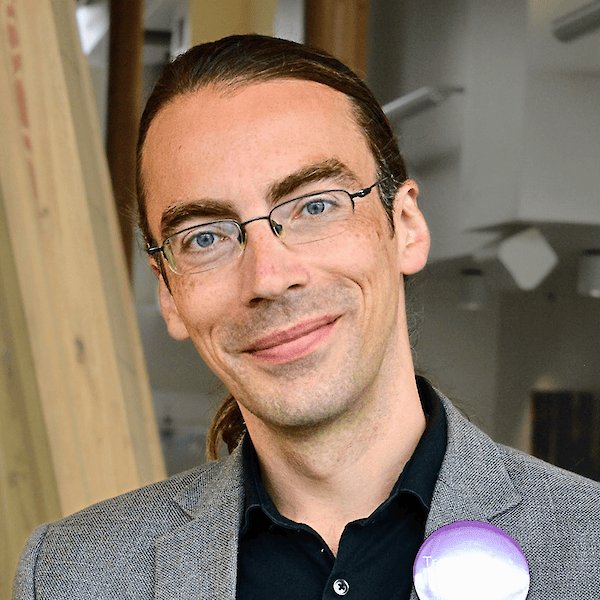
Trevor McAleese
About
Policy commitments
We all want healthy, affordable, and comfortable homes. These policies will help to lower energy bills, cut pollution, and improve indoor air quality.
Our community is already experiencing the harmful impacts of climate change caused by fossil fuel pollution, and taxpayers are on the hook to upgrade and repair critical infrastructure.
The air we breathe, the water we drink, and the food we eat all rely on healthy ecosystems. Nature can also help protect our community from extreme weather by controlling floods, protecting shorelines, and cooling neighbourhoods. Access to nature improves the health and well-being of residents, and supports biodiversity.
We envision vibrant, walkable communities that protect nature and improve food security.
Connecting neighbourhoods through public transit and active transportation networks will cut pollution, improve public health, and make our communities more affordable (and fun!).
Climate change, increasing populations, and overconsumption threaten our water security. Healthy watersheds and forests are critical to support clean drinking water, stormwater management, climate resilience, and biodiversity for future generations.
Zero waste policies reduce pollution, keep waste out of landfills, build resilient local economies, and safeguard public health by shifting society away from a disposable culture toward a sustainable circular economy.
Climate action
At every opportunity, I take part in volunteer clean-up efforts around Kelowna. I’ve joined on with neighbourhood associations and community advocates to remove trailer-fulls of litter and dumped garbage on streets all throughout the city, as well as helping to haul out enormous amounts of broken camping gear and assorted waste from abandoned encampments along major waterways like Mill Creek. There are few community efforts more starkly visible in their before-and-after as picking up trash, and doing so at scale.
I am a dedicated backyard composter, and a stubbornly committed public transit user who has never owned a car (I am a safe driver, though!). I eat a plant-based diet, prioritize local & BC-grown food, purchase secondhand clothing over brand new, and choose the Ebus over airlines for long-distance travel whenever possible. I do my best not to doom anything to the landfill that still has usable life in it.
Questions for Kelowna
Ensuring that retrofits and appliance swaps can be completed on older homes affordably is where public funding may prove vital, and a program of subsidies or rebates offered to homeowners could turn what is a prohibitively expensive non-starter into a feasible investment in the future of one's home.
High-albedo roofs, vegetated roofs, and photovoltaic roofs are all roofing options I would love to see greater adoption of in homes and commercial buildings. Reflecting and/or making productive use of sunlight that would otherwise only be contributing to raising the building's temperature is, quite simply, smart.
Expanding urban tree canopy, especially with shade trees that are able to offer shade on buildings throughout the day, can have a great effect on maintaining comfortable indoor temperatures.
Kelowna's ongoing NeighbourWoods program is an initiative I am fully behind, but we could and should be doing more to ensure that tree canopy growth is enjoyed more equitably across all neighbourhoods. There are areas of the city that are severely lacking in shade provided by urban tree canopy, and I would prefer that NeighbourWoods or any urban tree planting program better addresses these inequities The city can offer pick-up locations that are more accessible by residents in target neighbourhoods, offer pricing that considers postal code to incentivize sales in certain city areas, etc.
Watering is a legitimate issue affecting survival rate of newly-planted street trees throughout Kelowna. At present, the city employs a single watering truck to service street trees, and this presents a serious logistical challenge considering the number of young trees planted and the elevated watering needs until established. What we see a lot of are young trees left to die due to lack of watering. I would fully support prioritizing the procurement of an additional watering truck.
A resident-led street tree stewardship program that gives neighbourhood ownership of watering responsibility may have value. Show appreciation through signage/utility bill offsets.
Ensuring that frequency along major routes remains high in early mornings and into evenings, and weekend service more closely resembles weekday service, will establish Kelowna Regional Transit as a service that more residents can rely upon to get where they need to be at their own schedule.
Lobbying of the federal government to obtaining greater permanent stronger cost-sharing commitments via the Canada Public Transit Fund would, if successful, provide the stability of funding needed to maintain an improved base level of public transit service.
Kelowna's Active Transport Corridors are practically at a point where enough in the way of a continuous network of protected bike lanes are in place along major routes to allow cyclists to safely commute between centres more efficiently than by any other mode of transport (short of electric bikes/scooters). Prioritizing protected bike lane construction moving outward from the ATCs ought to be a priority, as we want to drive usage of the ATCs.
Pedestrian overpasses reduce friction along major thoroughfares, especially when they are able to replace pedestrian-controlled crosswalks. Pedestrian overpasses can be pursued to a more budget-friendly and utilitarian tune than the elaborate Bertram example, which would encourage walking and reduce idling at stops.
I was extremely disappointed with Council's decision last year to reject the RDCO's proposal around organic waste curbside collection The plan had flaws in its logistics, but as a starting point to build off of it was absolutely a step in the right direction to modernizing our treatment of organic waste. By my read it was responsibly costed out, and Kelowna's no vote tanked the economic viability of the program for our neighbouring communities in the regional district, in effect holding us all back from ensuring organic waste is properly broken down and not sent to the landfill to produce methane. Diverting organic waste would extend the usable life of the Glenmore landfill by years, more than balancing out any reduced municpal revenue from Glengro production and resale of harvested RNG.
The ongoing pilot by the City of Nelson to provide residences with FoodCyclers remains promising, and I would move for city staff to determine if a comparable pilot were economically feasible for the City of Kelowna to pursue for Kelowna residents who would otherwise be left out of curbside collection.
I am a major proponent of proper treatment of organic household waste, and I would be a loud voice advocating for the RDCO to return a revised proposal for curbside organic waste collection to council.
Reduced traffic volumes and noticeably less garbage ending up in the black bin are the two clearest measures of progress we could hope for with these two actions.
Compiled & presented by
Vote4Tomorrow is an independent voter guide to evaluate where local candidates stand on climate and environmental policies that will affect our future.