
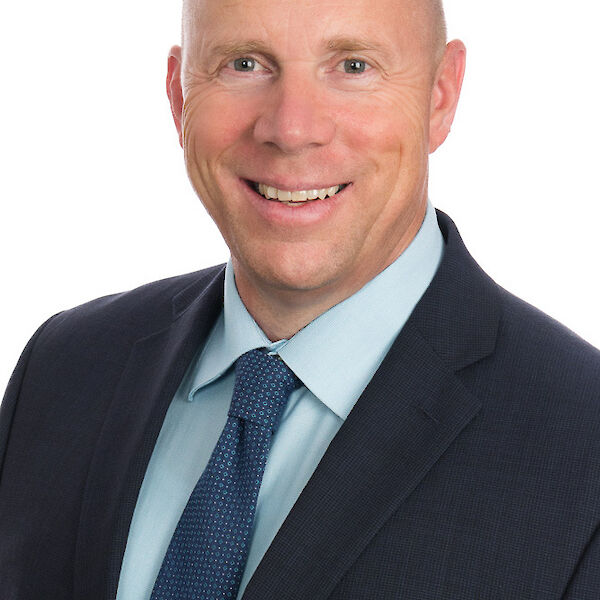
Ron Cannan
About
Policy commitments
We all want healthy, affordable, and comfortable homes. These policies will help to lower energy bills, cut pollution, and improve indoor air quality.
Our community is already experiencing the harmful impacts of climate change caused by fossil fuel pollution, and taxpayers are on the hook to upgrade and repair critical infrastructure.
The air we breathe, the water we drink, and the food we eat all rely on healthy ecosystems. Nature can also help protect our community from extreme weather by controlling floods, protecting shorelines, and cooling neighbourhoods. Access to nature improves the health and well-being of residents, and supports biodiversity.
We envision vibrant, walkable communities that protect nature and improve food security.
Connecting neighbourhoods through public transit and active transportation networks will cut pollution, improve public health, and make our communities more affordable (and fun!).
Climate change, increasing populations, and overconsumption threaten our water security. Healthy watersheds and forests are critical to support clean drinking water, stormwater management, climate resilience, and biodiversity for future generations.
Zero waste policies reduce pollution, keep waste out of landfills, build resilient local economies, and safeguard public health by shifting society away from a disposable culture toward a sustainable circular economy.
Climate action
During this term, Council endorsed the Climate Resilient Kelowna Strategy, focused on reducing greenhouse gas emissions and preparing for wildfires, drought, extreme heat and flooding. I have supported wildfire prevention and FireSmart initiatives, active transportation, transit, our urban tree canopy and energy-efficient infrastructure.
I support building a new transit garage so we can expand transit service and improve frequency and reliability, providing residents with a practical alternative to driving.
As a Board Director with the Okanagan Basin Water Board, I understand the importance of responsible water management, particularly as our region faces increasing pressures from drought, growth and agriculture.
I am also a strong supporter of local agriculture and food security. Protecting ALR land, ensuring reliable agricultural water, and encouraging innovative and regenerative farming practices can strengthen soil health, improve water retention and make our local food system more resilient.
I also believe in leading by example. I reduced my personal carbon footprint by moving closer to City Hall, allowing me to walk and ride my bicycle as much as possible rather than relying on a vehicle.
Going forward, I will continue advocating for wildfire prevention, expanded FireSmart programs, responsible water management, sustainable transportation and resilient local agriculture.
Climate action should be practical, measurable and affordable while protecting our environment and quality of life for future generations
Questions for Kelowna
I have met with the owners of Wilden Development, who want to move further and faster in improving building efficiency and resilience to extreme heat. Kelowna’s Climate Resilient Kelowna Strategy already identifies accelerating the Energy Step Code and/or Zero Carbon Step Code as a critical action.
I would work collaboratively with builders, developers, trades, energy professionals and residents to establish a clear implementation path, identify barriers and ensure industry has sufficient time to prepare for higher requirements.
Building efficiency is also about affordability, comfort and resilience. Well-designed buildings can use less energy, cost less to operate and remain more comfortable during extreme temperatures. I support better insulation and building envelopes, high-efficiency heating and cooling, heat pumps, passive cooling, exterior shading, cool roofs and energy-efficient windows.
With Kelowna’s increasingly hot summers, we should design buildings and neighbourhoods with heat resilience in mind by protecting and expanding our tree canopy, incorporating shade and encouraging landscaping appropriate for our dry Okanagan climate.
I would also pursue partnerships and incentives from senior governments and utilities to help homeowners and businesses retrofit existing buildings.
Our goal should be straightforward: more efficient, resilient buildings that are affordable to operate, while ensuring new requirements do not unnecessarily increase housing costs or create barriers to building the homes Kelowna needs.
Mature trees are especially valuable because they provide benefits that newly planted trees can take decades to achieve. I would support stronger consideration of significant mature trees during development, including incentives and reasonable design flexibility that allow trees to be retained wherever practical.
At the same time, Kelowna is a growing city in a semi-arid environment, so our approach must recognize housing needs, water conservation and wildfire risk. We need the right tree in the right place—prioritizing drought-tolerant, climate-resilient and FireSmart species and ensuring trees have adequate soil and space to reach maturity.
On public land, I would prioritize additional shade trees along sidewalks, active transportation routes, parks, playgrounds, transit stops and other areas where people are particularly exposed to summer heat.
On private property, I support continuing and expanding programs such as NeighbourWoods that make appropriate trees more affordable for residents, as well as working with developers to retain mature trees and increase canopy in new projects.
Finally, we should measure our progress against Kelowna’s established canopy targets. Trees are long-term infrastructure, and thoughtful investment today will make Kelowna cooler, healthier and more resilient for generations.
For transit, I would work with BC Transit to improve frequency, reliability and connections between neighbourhoods, employment areas, UBCO (especially Bus#84), Okanagan College and other key destinations.
I would also advocate for a practical solution to the need for a new transit operations and maintenance garage\. Rather than putting the full upfront cost on Kelowna taxpayers, I would ask the City to finance the facility and negotiate an agreement with the Province where the Province makes the monthly payments required to service that borrowing. If the Province requires and benefits from the infrastructure needed to deliver expanded transit service, I believe the cost should not fall disproportionately on Kelowna property taxpayers.
Cycling is personal for my wife and me. We are both avid cyclists, and we have both been hit by cars. We understand firsthand why safe, connected cycling routes are so important\.
I support cost-effective cycling infrastructure that connects the routes people actually use. Projects like Abbott Street and the Rail Trail show that we can improve safety and connectivity while being responsible with taxpayers’ dollars.
We also need to make Kelowna a more universally accessible community, ensuring sidewalks, crossings, transit and public spaces work for seniors and people of all abilities.
My goal is simple: better transportation choices, safer streets, greater accessibility and responsible use of taxpayer dollars.
Food waste makes up a significant portion of household garbage. Diverting it can extend the life of our landfill, reduce emissions and turn waste into a useful resource. I would ask the City and RDCO to revisit food-waste collection early in the next term, address previous concerns around cost and multifamily housing, determine the infrastructure required, and pursue provincial and federal funding to help make it affordable.
I also believe we need greater accountability for recycling. Residents take the time to sort their recycling with the expectation that it will actually be recycled. We should require transparent reporting on where our recyclable materials go, what percentage is actually recycled, what is rejected or disposed of, and why.
Recycle BC currently reports that most materials it manages are recycled and that the vast majority of plastics sent for recycling remain in B.C. I want us to continue verifying those outcomes rather than simply assuming that putting something in a recycling bin means the job is done.
Whether it is composting or recycling, we should measure success by what is actually diverted from the landfill and reused—not simply by what we collect at the curb.
Food waste makes up a significant portion of household garbage. Diverting it can extend the life of our landfill, reduce emissions and turn waste into a useful resource. I would ask the City and RDCO to revisit food-waste collection early in the next term, address previous concerns around cost and multifamily housing, determine the infrastructure required, and pursue provincial and federal funding to help make it affordable.
I also believe we need greater accountability for recycling. Residents take the time to sort their recycling with the expectation that it will actually be recycled. We should require transparent reporting on where our recyclable materials go, what percentage is actually recycled, what is rejected or disposed of, and why.
Recycle BC currently reports that most materials it manages are recycled and that the vast majority of plastics sent for recycling remain in B.C. I want us to continue verifying those outcomes rather than simply assuming that putting something in a recycling bin means the job is done.
Whether it is composting or recycling, we should measure success by what is actually diverted from the landfill and reused—not simply by what we collect at the curb.
Campaign contributions
Public records from Elections BC — 39 contributions totalling $29,650.00.
2022 GENERAL LOCAL ELECTIONS
39 contributions · $29,650.00
| Contributor | Date | Amount | Office | Jurisdiction |
|---|---|---|---|---|
| ANTHONY BEYROUTI | Sep 30, 2022 | $1,250.00 | COUNCILLOR | KELOWNA |
| RUSSELL BRACKEN | Sep 20, 2022 | $100.00 | COUNCILLOR | KELOWNA |
| MYLES BRUCKAL | Aug 24, 2022 | $500.00 | COUNCILLOR | KELOWNA |
| LONNIE BURMA | Sep 17, 2022 | $250.00 | COUNCILLOR | KELOWNA |
| BALDEEP DHINDSA | Oct 3, 2022 | $1,250.00 | COUNCILLOR | KELOWNA |
| ROBERT DONICK | Oct 12, 2022 | $250.00 | COUNCILLOR | KELOWNA |
| JENNIFER ELIZABEH | Aug 31, 2022 | $100.00 | COUNCILLOR | KELOWNA |
| JORAWAR GOSAL | Oct 3, 2022 | $1,250.00 | COUNCILLOR | KELOWNA |
| MANDEEP GOSAL | Oct 3, 2022 | $1,250.00 | COUNCILLOR | KELOWNA |
| SURINDERPAL GOSAL | Oct 3, 2022 | $1,250.00 | COUNCILLOR | KELOWNA |
| SARBOT HAYER | Sep 10, 2022 | $1,000.00 | COUNCILLOR | KELOWNA |
| MURAT KAYNAK | Sep 4, 2022 | $500.00 | COUNCILLOR | KELOWNA |
| JAS KHUNKHUN | Sep 4, 2022 | $100.00 | COUNCILLOR | KELOWNA |
| TONY KHUNKHUN | Sep 4, 2022 | $100.00 | COUNCILLOR | KELOWNA |
| PARMINDER KINDHRA | Aug 24, 2022 | $1,250.00 | COUNCILLOR | KELOWNA |
| SHEETU KINDHRA | Sep 14, 2022 | $1,250.00 | COUNCILLOR | KELOWNA |
| ASTRID KLEINFELDER | Sep 16, 2022 | $100.00 | COUNCILLOR | KELOWNA |
| CHAMAN LAL | Oct 3, 2022 | $1,250.00 | COUNCILLOR | KELOWNA |
| BRIAN LOVIG | Oct 9, 2022 | $1,250.00 | COUNCILLOR | KELOWNA |
| JASON MARTIN | Oct 5, 2022 | $250.00 | COUNCILLOR | KELOWNA |
| CARLEE MATVIESHEN | Sep 19, 2022 | $1,250.00 | COUNCILLOR | KELOWNA |
| MICHAEL MATVIESHEN | Sep 10, 2022 | $1,250.00 | COUNCILLOR | KELOWNA |
| SHARI MATVIESHEN | Aug 26, 2022 | $1,250.00 | COUNCILLOR | KELOWNA |
| SHENAYA MATVIESHEN | Sep 4, 2022 | $1,250.00 | COUNCILLOR | KELOWNA |
| DANIEL MATVIESHEN | Sep 12, 2022 | $1,200.00 | COUNCILLOR | KELOWNA |
| COLIN METCALFE | Sep 2, 2022 | $500.00 | COUNCILLOR | KELOWNA |
| MICHAEL NEIL | Oct 3, 2022 | $1,000.00 | COUNCILLOR | KELOWNA |
| GURDIP SINGH NIJJAR | Oct 15, 2022 | $600.00 | COUNCILLOR | KELOWNA |
| PARMEET OPPAL | Oct 3, 2022 | $1,250.00 | COUNCILLOR | KELOWNA |
| GURSHARAN PUREWALL | Oct 3, 2022 | $1,250.00 | COUNCILLOR | KELOWNA |
| ALEXANDER REZANSOFF | Oct 5, 2022 | $300.00 | COUNCILLOR | KELOWNA |
| ED SANDERS | Sep 1, 2022 | $500.00 | COUNCILLOR | KELOWNA |
| HARPREET SANDHU | Sep 30, 2022 | $1,250.00 | COUNCILLOR | KELOWNA |
| HENRY SAWATZKY | Sep 3, 2022 | $500.00 | COUNCILLOR | KELOWNA |
| MOSTAFA SHORANICK | Oct 3, 2022 | $500.00 | COUNCILLOR | KELOWNA |
| IAN SISETT | Sep 15, 2022 | $200.00 | COUNCILLOR | KELOWNA |
| NOLAN SISETT | Sep 15, 2022 | $100.00 | COUNCILLOR | KELOWNA |
| JURGEN WEYAND | Sep 1, 2022 | $500.00 | COUNCILLOR | KELOWNA |
| JURGEN WEYAND | Sep 20, 2022 | $500.00 | COUNCILLOR | KELOWNA |
Compiled & presented by

Vote4Tomorrow is an independent voter guide to evaluate where local candidates stand on climate and environmental policies that will affect our future.