
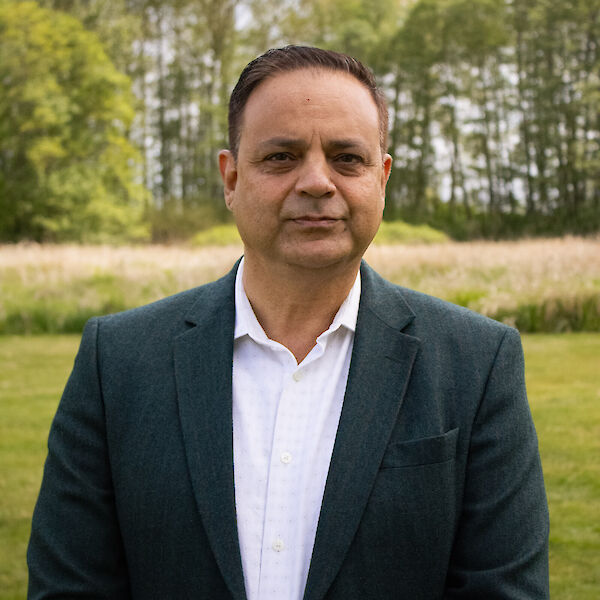
Pawan Joshi
About
Policy commitments
We all want healthy, affordable, and comfortable homes. These policies will help to lower energy bills, cut pollution, and improve indoor air quality.
Our community is already experiencing the harmful impacts of climate change caused by fossil fuel pollution, and taxpayers are on the hook to upgrade and repair critical infrastructure.
The air we breathe, the water we drink, and the food we eat all rely on healthy ecosystems. Nature can also help protect our community from extreme weather by controlling floods, protecting shorelines, and cooling neighbourhoods. Access to nature improves the health and well-being of residents, and supports biodiversity.
We envision vibrant, walkable communities that protect nature and improve food security.
Connecting neighbourhoods through public transit and active transportation networks will cut pollution, improve public health, and make our communities more affordable (and fun!).
Climate change, increasing populations, and overconsumption threaten our water security. Healthy watersheds and forests are critical to support clean drinking water, stormwater management, climate resilience, and biodiversity for future generations.
Zero waste policies reduce pollution, keep waste out of landfills, build resilient local economies, and safeguard public health by shifting society away from a disposable culture toward a sustainable circular economy.
Climate action
Earlier in my career, I worked as an advocate for farmworkers, focusing on access to justice, workplace conditions and health and safety. I participated in a Farmworkers’ Rights Forum with the Labour Environmental Alliance Society and West Coast Environmental Law. This work included a survey of farmworkers and a review of pesticides used in the Fraser Valley, helping bring attention to pesticide exposure, worker health and the relationship between agricultural practices, people and the environment.
I also served as a Tribunal Member with the BC Farm Industry Review Board. My work involved complex matters affecting agriculture, farming practices, environmental interests and regulated industries. This experience reinforced for me the importance of evidence-based decision-making and balancing agricultural, environmental, economic and community interests.
At the community level, I have been involved in sports and youth organizations and have consistently supported protecting Delta’s parks, green spaces and agricultural land. I believe preserving these assets is essential to Delta’s environmental and community well-being.
Climate action also requires practical local decisions. I support better public transit and active transportation, resilient municipal infrastructure, responsible land-use planning, and protecting farmland and natural areas.
If elected, I will bring my experience in advocacy, governance and community service to practical, responsible climate action at the municipal level.
Questions for Delta
already experiencing the effects of shifting weather patterns and coastal pressures. As
a port city, we rely on stable conditions for trade, transportation and community safety,
which makes planning and environmental stewardship essential.
Delta sits at the meeting point of industry, neighbourhoods and sensitive ecosystems.
Rising temperatures, wildfire smoke and more frequent extreme weather events affect
everything from air quality to infrastructure reliability. Coastal communities also face
long term challenges related to sea level rise and storm surges, which require thoughtful
planning today to avoid costly impacts tomorrow.
Meaningful action doesn’t have to be extreme - it can be practical, affordable and rooted
in improving daily life. Cleaner transportation options, efficient public buildings, strong
tree protection and resilient land use planning all help reduce emissions while making
neighbourhoods safer and more livable. For a port city, these steps also support
economic stability by ensuring that trade routes, industrial lands and transportation
corridors can operate reliably in changing conditions.
We believe climate action should be transparent and evidence-based. Residents
deserve to know that initiatives are effective, fiscally responsible, and aligned with
community priorities. When done well, climate solutions strengthen both environmental
health and local quality of life.
positive goal and one worth working towards. Water meters are a practical tool for
residents to understand their own water use, encourage conservation, and support
long term planning but we think the best approach is to expand access and incentives
rather than require them.
Compiled & presented by

Vote4Tomorrow is an independent voter guide to evaluate where local candidates stand on climate and environmental policies that will affect our future.