
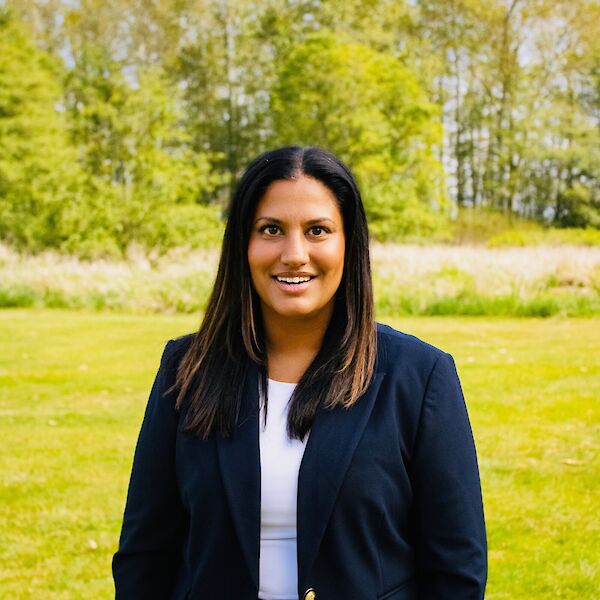
Jennifer Johal

Jennifer Johal

Council · Delta
Delta 15 yrs

About

I a mom, former teacher and financial lead in our family business in Tilbury. I’m proud to serve on Delta Council and am seeking re-election with One Delta, bringing my community, business and education experience to the table.

Policy commitments

Buildings

We all want healthy, affordable, and comfortable homes. These policies will help to lower energy bills, cut pollution, and improve indoor air quality.

✓ Support electrification of new buildings. Supportive
✓ Incentivize electric heat pumps and air filtration systems. Supportive
✓ Incentivize renewable energy, battery storage, and smart-grid technologies in new and existing buildings to improve energy security. Supportive
✓ Scale up energy retrofits for existing homes, businesses, and public buildings. Supportive
✓ Implement a 'right to cool' bylaw to protect tenants during extreme heat events. Supportive
Climate Justice

Our community is already experiencing the harmful impacts of climate change caused by fossil fuel pollution, and taxpayers are on the hook to upgrade and repair critical infrastructure.

✓ Endorse the fossil fuel treaty and commit to phase out fossil fuels. Supportive
✓ Enact a moratorium on AI data centres to protect our energy and water resources. Supportive
✓ Pursue available legal options to recover a fair share of the climate costs facing our community from fossil fuel companies and other big polluters. Supportive
✓ Collaborate with Indigenous peoples as partners in the stewardship of the land, air, and water, and work towards reconciliation. Supportive
Ecosystems

The air we breathe, the water we drink, and the food we eat all rely on healthy ecosystems. Nature can also help protect our community from extreme weather by controlling floods, protecting shorelines, and cooling neighbourhoods. Access to nature improves the health and well-being of residents, and supports biodiversity.

✓ Protect and restore ecosystems, which are essential to human survival, health, and economic well-being. Supportive
✓ Expand and protect tree canopy, parks, and green infrastructure to cool neighbourhoods, clean air, and manage stormwater. Supportive
✓ Prioritize native tree planting in all areas, especially those with low tree cover, higher population densities, and more vulnerable residents. Supportive
✓ Create connected urban greenways for people and wildlife. Supportive
Land Use

We envision vibrant, walkable communities that protect nature and improve food security.

✓ Build affordable homes near jobs, schools, shops, and transit. Supportive
✓ Upgrade critical infrastructure for heat, fire, flood, and storm resilience. Supportive
✓ Increase food security by supporting local agriculture and community gardens. Supportive
Transport

Connecting neighbourhoods through public transit and active transportation networks will cut pollution, improve public health, and make our communities more affordable (and fun!).

✓ Deliver reliable, frequent, affordable local transit. Supportive
✓ Advocate to improve regional public transit between communities. Supportive
✓ Build bike and roll networks that are safe for everyone. Supportive
✓ Expand EV charging infrastructure. Supportive
Watersheds

Climate change, increasing populations, and overconsumption threaten our water security. Healthy watersheds and forests are critical to support clean drinking water, stormwater management, climate resilience, and biodiversity for future generations.

✓ Implement water conservation plans and educate the public to conserve drinking water. Supportive
✓ Protect and restore watersheds as vital municipal infrastructure. Supportive
✓ Develop and implement a water security plan. Supportive
Zero Waste

Zero waste policies reduce pollution, keep waste out of landfills, build resilient local economies, and safeguard public health by shifting society away from a disposable culture toward a sustainable circular economy.

✓ Implement zero waste bylaws to divert organic waste and recyclables from disposal. Supportive
✓ Support the development of a circular economy to eliminate waste and improve resilience. Supportive
✓ Implement bylaws to eliminate waste from new buildings, renovation, and demolition projects and to use existing buildings as efficiently as possible. Supportive
✓ Supportive
~ Neutral
× Opposed
– No response

Climate action

How have you contributed to climate action in your community through advocacy, past work, advisory committees, volunteer work, and/or reducing your personal carbon footprint?
For me, reducing my carbon footprint isn’t about one big gesture. It’s about the choices I make every day. I try to buy local, support local farms and businesses, reduce waste, reuse and recycle, and be mindful of energy and water use at home. With a busy family and work schedule, I also combine trips and carpool when I can. I believe small, realistic changes, when made consistently, can have a meaningful impact.

Questions for Delta

Do you believe climate change requires urgent action, and why?
We believe climate change requires meaningful action, because cities like Delta are
already experiencing the effects of shifting weather patterns and coastal pressures. As
a port city, we rely on stable conditions for trade, transportation and community safety,
which makes planning and environmental stewardship essential.

Delta sits at the meeting point of industry, neighbourhoods and sensitive ecosystems.
Rising temperatures, wildfire smoke and more frequent extreme weather events affect
everything from air quality to infrastructure reliability. Coastal communities also face
longterm challenges related to sealevel rise and storm surges, which require thoughtful
planning today to avoid costly impacts tomorrow.

Meaningful action doesn’t have to be extreme - it can be practical, affordable and rooted
in improving daily life. Cleaner transportation options, efficient public buildings, strong
tree protection and resilient land use planning all help reduce emissions while making
neighbourhoods safer and more livable. For a port city, these steps also support
economic stability by ensuring that trade routes, industrial lands and transportation
corridors can operate reliably in changing conditions.

We believe climate action should be transparent and evidence-based. Residents
deserve to know that initiatives are effective, fiscally responsible, and aligned with
community priorities. When done well, climate solutions strengthen both environmental
health and local quality of life.
Do you support mandatory water meters in Delta?
We believe increasing the number of households that choose to install water meters is a
positive goal and one worth working towards. Water meters are a practical tool for
residents to understand their own water use, encourage conservation, and support
long term planning but we think the best approach is to expand access and incentives
rather than require them.
Will you commit to have Delta join the Sue Big Oil Program, a collaboration of British Columbia communities who have made a commitment with West Coast Environmental Law to sue fossil fuel companies to pay their fair share of climate costs?
No. Our focus will be on practical, local climate solutions that deliver measurable
results for Delta residents. We believe our efforts are best directed toward initiatives
within our jurisdiction that strengthen resilience and environmental stewardship.

Compiled & presented by

Vote4Tomorrow is an independent voter guide to evaluate where local candidates stand on climate and environmental policies that will affect our future.

© 2026 Vote4Tomorrow