
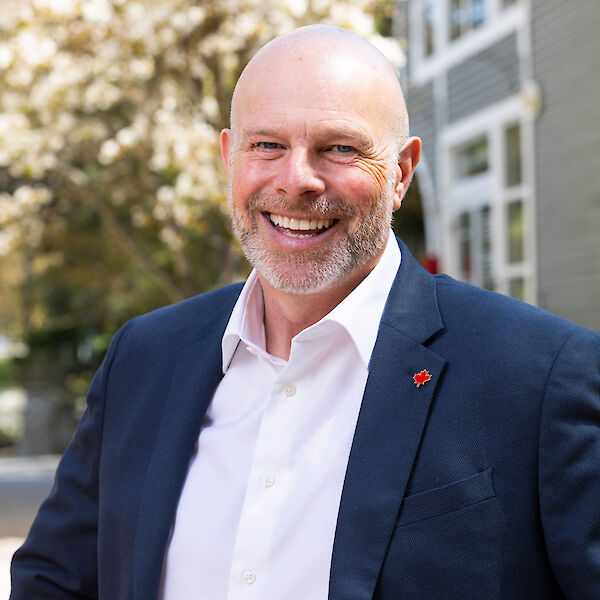
Ralph Forsyth

Ralph Forsyth

Council · Whistler
Alpine Meadows 35 yrs

About

A passionate (often failing to make the distinction between “inside” voice and “outside” voice) advocate for the citizens of Whistler, I've been elected four times 2005, 2008, 2018, 2022. Ski Instructor, Entrepreneur, Raconteur, Cachinnator.

Policy commitments

Buildings

We all want healthy, affordable, and comfortable homes. These policies will help to lower energy bills, cut pollution, and improve indoor air quality.

✓ Support electrification of new buildings. Supportive
✓ Incentivize electric heat pumps and air filtration systems. Supportive
✓ Incentivize renewable energy, battery storage, and smart-grid technologies in new and existing buildings to improve energy security. Supportive
✓ Scale up energy retrofits for existing homes, businesses, and public buildings. Supportive
~ Implement a 'right to cool' bylaw to protect tenants during extreme heat events. Neutral
Climate Justice

Our community is already experiencing the harmful impacts of climate change caused by fossil fuel pollution, and taxpayers are on the hook to upgrade and repair critical infrastructure.

× Endorse the fossil fuel treaty and commit to phase out fossil fuels. Opposed
~ Collaborate with Indigenous peoples as partners in the stewardship of the land, air, and water, and work towards reconciliation. Neutral
Ecosystems

The air we breathe, the water we drink, and the food we eat all rely on healthy ecosystems. Nature can also help protect our community from extreme weather by controlling floods, protecting shorelines, and cooling neighbourhoods. Access to nature improves the health and well-being of residents, and supports biodiversity.

✓ Protect and restore ecosystems, which are essential to human survival, health, and economic well-being. Supportive
✓ Expand and protect tree canopy, parks, and green infrastructure to cool neighbourhoods, clean air, and manage stormwater. Supportive
✓ Create connected urban greenways for people and wildlife. Supportive
Land Use

We envision vibrant, walkable communities that protect nature and improve food security.

✓ Build affordable homes near jobs, schools, shops, and transit. Supportive
✓ Upgrade critical infrastructure for heat, fire, flood, and storm resilience. Supportive
✓ Increase food security by supporting local agriculture and community gardens. Supportive
Transport

Connecting neighbourhoods through public transit and active transportation networks will cut pollution, improve public health, and make our communities more affordable (and fun!).

✓ Deliver reliable, frequent, affordable local transit. Supportive
✓ Advocate to improve regional public transit between communities. Supportive
✓ Build bike and roll networks that are safe for everyone. Supportive
~ Expand EV charging infrastructure. Neutral
Watersheds

Climate change, increasing populations, and overconsumption threaten our water security. Healthy watersheds and forests are critical to support clean drinking water, stormwater management, climate resilience, and biodiversity for future generations.

✓ Implement water conservation plans and educate the public to conserve drinking water. Supportive
✓ Protect and restore watersheds as vital municipal infrastructure. Supportive
✓ Develop and implement a water security plan. Supportive
Zero Waste

Zero waste policies reduce pollution, keep waste out of landfills, build resilient local economies, and safeguard public health by shifting society away from a disposable culture toward a sustainable circular economy.

✓ Implement zero waste bylaws to divert organic waste and recyclables from disposal. Supportive
~ Support the development of a circular economy to eliminate waste and improve resilience. Neutral
✓ Implement bylaws to eliminate waste from new buildings, renovation, and demolition projects and to use existing buildings as efficiently as possible. Supportive
✓ Supportive
~ Neutral
× Opposed
– No response

Climate action

How have you contributed to climate action in your community through advocacy, past work, advisory committees, volunteer work, and/or reducing your personal carbon footprint?
As a volunteer in the early 2000's I worked on Whistler 2020, Whistler's sustainability plan.
As a Councillor I was on the Council that adopted that plan. it utilized "The Natural Step" framework to integrate science-based sustainability principles across 17 different community strategies, and establishing long-term environmental benchmarks. Our current council has adopted the Big Moves Climate Action Implementation Plan.

Questions for Whistler

What should Whistler's top priorities be over the next four years to prepare for climate-related risks such as extreme weather, wildfire impacts, and changing environmental conditions?
My Priorities are:
1. Data-Driven Risk Assessment
The RMOW currently is finalizing a comprehensive Strategic Climate Risk and Resilience Assessment.
2. Protecting Local Ecosystems and Biodiversity
By Minimizing Wildfire Risks via Fuel Management Projects like our partnerships with the Cheakamus Community Forest and Lil'wat Forestry Ventures to execute extensive fuel-thinning and vegetation management along high-risk zones. Also by Minimizing habitat fragmentation, linking sensitive ecosystems, such as aquatic habitats, to parks, greenways or other natural areas to minimize that fragmentation.
3. Emergency Planning
By continuing to Update the official Whistler Evacuation Plan.
How should the Resort Municipality of Whistler strengthen its partnerships with community organizations to advance environmental sustainability, climate action, and community resilience?
As the chair of Whistler's smart tourism committee I believe we should embed community partners into the Smart Tourism Framework and policy development process. Whistler's Smart Tourism Strategy is designed to treat destination management as a mechanism for community health and environmental protection rather than purely economic growth.
What indicators should Council use to evaluate Whistler's success beyond economic growth and tourism, and how would those indicators influence your decision-making?
Council receives regular updates on our Annual Greenhouse Gas Inventory and Climate Action Progress Report.
These metrics directly impact our planning procurement and budgeting processes.
Whistler's natural environment is central to its identity, economy, and quality of life. What actions would you prioritize to protect local ecosystems, biodiversity, and watershed health over the next four years?
As Whistler continues to evolve, how would you balance growth and development with environmental protection and long-term climate goals?

Campaign contributions

Public records from Elections BC — 12 contributions totalling $6,120.00.

2022 GENERAL LOCAL ELECTIONS

6 contributions · $2,800.00

Contributor Date Amount Office Jurisdiction
STEVE BAYLY Oct 15, 2022 $200.00 COUNCILLOR WHISTLER
RALPH DESMOND FORSYTH Oct 15, 2022 $1,500.00 COUNCILLOR WHISTLER
RALPH DESMOND FORSYTH Oct 15, 2022 $400.00 COUNCILLOR WHISTLER
DUANE JACKSON Oct 15, 2022 $250.00 COUNCILLOR WHISTLER
WILLIAM KUNZWEILLER Oct 15, 2022 $250.00 COUNCILLOR WHISTLER
JAMES G WATTS Oct 15, 2022 $200.00 COUNCILLOR WHISTLER

2018 GENERAL LOCAL ELECTIONS

6 contributions · $3,320.00

Contributor Date Amount Office Jurisdiction
RICHARD M COHEN Sep 20, 2018 $100.00 COUNCILLOR WHISTLER
CROSLAND DOAK Oct 9, 2018 $100.00 COUNCILLOR WHISTLER
RALPH FORSYTH Sep 4, 2018 $1,020.00 COUNCILLOR WHISTLER
RALPH FORSYTH Sep 6, 2018 $1,000.00 COUNCILLOR WHISTLER
AMOS MICHELSON Oct 2, 2018 $600.00 COUNCILLOR WHISTLER
TIM REGAN Oct 22, 2018 $500.00 COUNCILLOR WHISTLER

Compiled & presented by

Vote4Tomorrow is an independent voter guide to evaluate where local candidates stand on climate and environmental policies that will affect our future.

© 2026 Vote4Tomorrow
