
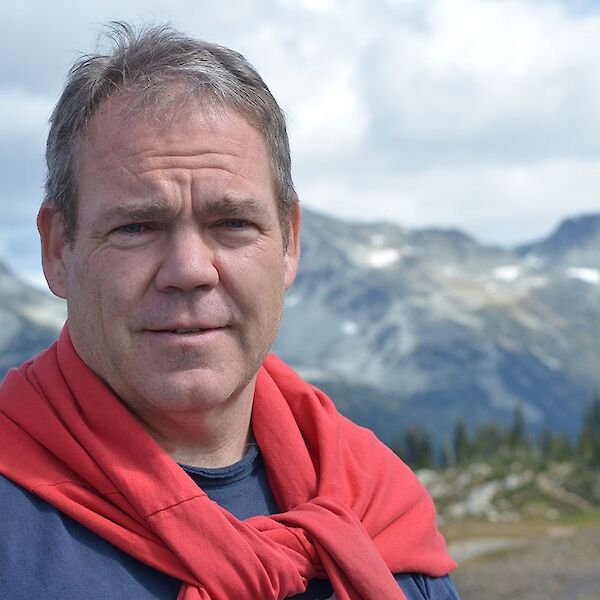
Lance Bright
About
Policy commitments
We all want healthy, affordable, and comfortable homes. These policies will help to lower energy bills, cut pollution, and improve indoor air quality.
Our community is already experiencing the harmful impacts of climate change caused by fossil fuel pollution, and taxpayers are on the hook to upgrade and repair critical infrastructure.
The air we breathe, the water we drink, and the food we eat all rely on healthy ecosystems. Nature can also help protect our community from extreme weather by controlling floods, protecting shorelines, and cooling neighbourhoods. Access to nature improves the health and well-being of residents, and supports biodiversity.
We envision vibrant, walkable communities that protect nature and improve food security.
Connecting neighbourhoods through public transit and active transportation networks will cut pollution, improve public health, and make our communities more affordable (and fun!).
Climate change, increasing populations, and overconsumption threaten our water security. Healthy watersheds and forests are critical to support clean drinking water, stormwater management, climate resilience, and biodiversity for future generations.
Zero waste policies reduce pollution, keep waste out of landfills, build resilient local economies, and safeguard public health by shifting society away from a disposable culture toward a sustainable circular economy.
Climate action
In 2018 I ran for Council on wildfire and Highway 99. That year I wrote a series of public letters arguing that Whistler was under-spending on fire response and prevention compared with West Vancouver and the North Shore, and that Council had chosen the cheaper of the two Blackwell Report options, treating 25 percent of our high-risk forest over ten years instead of 50 percent. I have been making that argument for eight years.
I also brought Council two detailed transit proposals. One would convert a 450 metre stretch of Valley Trail between Spring Creek and Bayshores into a restricted bus and bike lane, cutting roughly 9,490 kilometres of bus travel a year, giving Bayshores service, creating a fuel break and opening a second emergency route. The other would shorten Route 20 through Cheakamus by 1.5 kilometres, saving about 24,090 kilometres a year, and extend the Valley Trail so commuters stop riding on Highway 99.
Personally, I invested in JustBioFiber, a company making structural building blocks from hemp waste that sequester carbon instead of emitting it. I recycle obsessively. I have written publicly about repurposing restaurant waste oil as fuel and about keeping plastic out of the landfill and the ocean.
I am also a part-time first responder here. I have seen what a warming climate is already doing.
Questions for Whistler
First, fuel. Council's July contract to thin about 125 hectares is a start. But much of the forest around us is provincial Crown land and other stakeholders' land, and Whistler cannot cut what it does not own. Within 30 days of taking office, I will send the Province a formal written demand for funded, dated fuel treatment on that land, backed by an evidence file and a coalition of Sea to Sky communities. If refused, I will pursue every available remedy.
Second, evidence. Thinning is debated here. I would run it as a monitored pilot: independent monitoring, published data, and trials of alternatives, including cultural and prescribed burning with the Squamish and Lil'wat Nations.
Third, heat and smoke. The 2021 heat dome killed hundreds of British Columbians, most of them indoors and older. I support incentives for heat pumps and air filtration, a right to cool bylaw for tenants, and clean-air and cooling spaces staffed and open when the air is bad, with outreach to people who live alone or do not read English.
Fourth, water. I will not support new density without confirmed water, sewer and fire-flow capacity. I want a water security plan that treats our watersheds as municipal infrastructure.
Fifth, the highway. Atmospheric rivers and slides close Highway 99. Corridor resilience is a climate file, not only a transportation one.
None of these are optional. One of them decides whether the others still matter.
Three changes.
First, a standing resilience table with a published work plan, a budget line and named staff support, bringing together AWARE, Whistler Community Services Society, the Chamber, the Mature Action Committee, Whistler Blackcomb, BC Wildfire and the Lil'wat and Squamish Nations. Not an annual open house. A working body that meets on a schedule and publishes its decisions.
Second, real partnership with the Lil'wat and Squamish Nations on land, fire and water. Cultural and prescribed burning is thousands of years of applied knowledge about this landscape, and it belongs in Whistler's fire strategy as a partner-led practice, not a consultation item. I want that relationship built before the emergency, not during it.
Third, pay the volunteers. Community groups here run on unpaid labour and then get asked to absorb municipal work. When the RMOW asks an organization to deliver something, it should fund it through a simple service agreement with clear reporting.
I would also take another look at the Whistler FIRST concept, the not-for-profit first-response firefighting trust proposed by local pilot Stu Wild. It was a serious idea from this community, and it deserved a serious answer.
Partnership means the other side can say no and change the outcome. If that is not true, it is consultation with better catering.
I would publish seven indicators every year, in one report, with the previous year printed beside them:
1. Hectares of high-risk fuel treated, against hectares still outstanding.
2. Modelled whole-valley evacuation clearance time, updated as population and the road change.
3. Share of the workforce that sleeps in Whistler, not in Squamish or Pemberton.
4. Housing cost as a share of median local worker income.
5. Potable water use per capita, plus reservoir and fire-flow headroom.
6. Waste diverted from landfill as a share of waste generated.
7. Residents over 65 living in housing that actually suits them.
How would they change decisions? Directly. One, two and five become gates. If a rezoning cannot show that evacuation time, water supply and fire flow still work afterwards, it waits until it can. Three is how I would judge whether a housing policy worked, instead of counting units built.
Rhonda Millikin's peer-reviewed work found that thinned stands here were warmer, drier and windier, and argues that conventional thinning can raise flammability. The RMOW's consultant disagrees. I am not going to pretend that is settled, and I am not going to dismiss a local scientist because her findings are inconvenient for my platform.
So: publish the monitoring data from every stand Whistler has already treated, microclimate included, and fund a real side-by-side pilot of the alternatives against the standard prescription. If the data says our method is wrong, we change the method. Doing the wrong treatment for forty years is not caution; it is waste.
Beyond that, four priorities.
Bring cultural and prescribed burning into the fire strategy, led jointly with the Lil'wat and Squamish Nations.
Treat watersheds as municipal infrastructure with the same standing as pipes: riparian protection, source water protection, and a water security plan with real targets.
Protect wildlife connectivity across the valley floor. That is exactly where our development pressure sits, and the corridors are already pinched by the highway and the rail line.
Keep old growth out of fuel treatment entirely. The stands that threaten this town are the dense replanted blocks from the 1960s logging, not the mature forest.
Ecosystem health and fire safety are not opposites here. A badly managed forest is bad for both.
My position is that Whistler approves no new density until it can show, publicly and in writing, that evacuation, water, sewer, and fire flow still work afterward. Capacity first, then growth. That is not anti-development. It is the order in which the two things have to happen.
I would keep the OCP visitor bed unit cap. The cap should limit visitors, not the people who serve them.
Then I would aim the growth we do allow at the people who already work here. My housing plan is market means, local ends: a 90-day fast lane for projects that accept a worker occupancy covenant; buying occupancy covenants on existing homes on the Vail, Colorado InDEED model, starting with a 25-home pilot; and leasing municipal land to private, non-profit, and employer builders. Keep and strengthen the WHA, which works.
Housing the existing workforce locally is a climate measure in itself. Every worker commuting from Squamish or Pemberton is a commute we built.
Three concessions I owe you. This will slow some projects, and some proponents will be angry. Covenant purchases are public money and need a hard cap and annual reporting. And I would fund it from visitor taxes and development contributions rather than the property tax bill, because taxes here have risen more than 35 percent across four budgets.
Growth that outruns the water and the road is not prosperity. It is exposure.
Campaign contributions
Public records from Elections BC — 3 contributions totalling $4,692.96.
2018 GENERAL LOCAL ELECTIONS
3 contributions · $4,692.96
| Contributor | Date | Amount | Office | Jurisdiction |
|---|---|---|---|---|
| LANCE BRIGHT | Oct 20, 2018 | $2,400.00 | COUNCILLOR | WHISTLER |
| LANCE BRIGHT | Jan 1, 2019 | $1,200.00 | COUNCILLOR | WHISTLER |
| ANN E BRIGHT | May 22, 2019 | $1,092.96 | COUNCILLOR | WHISTLER |
Compiled & presented by

Vote4Tomorrow is an independent voter guide to evaluate where local candidates stand on climate and environmental policies that will affect our future.