
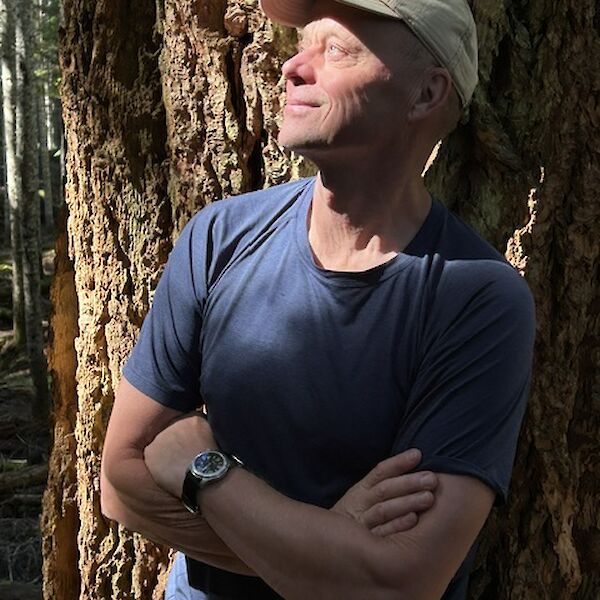
Arthur De Jong
About
Policy commitments
We all want healthy, affordable, and comfortable homes. These policies will help to lower energy bills, cut pollution, and improve indoor air quality.
Our community is already experiencing the harmful impacts of climate change caused by fossil fuel pollution, and taxpayers are on the hook to upgrade and repair critical infrastructure.
The air we breathe, the water we drink, and the food we eat all rely on healthy ecosystems. Nature can also help protect our community from extreme weather by controlling floods, protecting shorelines, and cooling neighbourhoods. Access to nature improves the health and well-being of residents, and supports biodiversity.
We envision vibrant, walkable communities that protect nature and improve food security.
Connecting neighbourhoods through public transit and active transportation networks will cut pollution, improve public health, and make our communities more affordable (and fun!).
Climate change, increasing populations, and overconsumption threaten our water security. Healthy watersheds and forests are critical to support clean drinking water, stormwater management, climate resilience, and biodiversity for future generations.
Zero waste policies reduce pollution, keep waste out of landfills, build resilient local economies, and safeguard public health by shifting society away from a disposable culture toward a sustainable circular economy.
Climate action
Results:
- Eco-efficiencies provide annual savings to the company in excess of $1.0 million, primarily from waste and energy reduction.
- Whistler Blackcomb has received over 40 national and international awards for its environmental and social performance.
- Whistler Blackcomb’s sustainability performance became an effective recruitment and retention factor for staff, raised the company brand and built considerable social capital.
- Member of the Design team and directly responsible for the environmental stewardship of over $250 million in ski area capital development projects required to host the 2010 Olympic & Paralympic Winter Games. Selected by the Whistler community as a local area Olympic Torch Bearer.
- Pioneered long-lasting community relationships, which have resulted in Whistler Blackcomb being recognized with three North American awards for Excellence in Stakeholder Relations.
- Manager of the Year 2006. Leadership Distinction Award 2018. Selected to the Clean Canada 50 in 2017.
- Formally recognized by the Lil’wat Nation for leadership in the development of economic opportunities with First Nations.
- Formally recognized by the Mayor of the Resort Municipality of Whistler for environmental leadership to the community of Whistler. 2016 Civic service award.
(okay enough of that!)
Currently chair Whistler Climate Change committee and make environment the core focus of my role as a Municipal Councilor.
My 2026 goal is to reduce my carbon footprint by another 25 % and waste by 30%.
Questions for Whistler
The six Big Moves
1. Move beyond the car — get more people walking, biking, e-biking and taking transit.
2. Decarbonize transportation — move vehicles toward electric/zero-emission.
3. Reduce visitor travel emissions — tackle the very large footprint associated with people travelling to Whistler.
4. Build zero-emission buildings — make new construction substantially lower-carbon.
5. Make existing buildings better — retrofit homes, hotels and commercial buildings.
6. Close the loop — reduce waste, landfill emissions and the carbon
That said- the sad reality is that even if Whistler makes meaningful steps to reduce its emissions the world is not!
Therefore we need to go into deep adaptation as well.
My adaptation priorities are:
1) Fire Smarting/fuel reduction - its not if but when Whistler will have a catastrophic fire.
2) Weather proof - future proof our local economy.
3) Limits to the future growth of Whistler and increase ecosystem protection and services.
On the Board of CCF and working closely with Heather Beresford we have reframed our Forrest management practices to focus entirely on Climate resilience and Bio Biodiversity. This has been a long term challenge with the province but we finally now have the right priorities.
- Our challenge is getting our overall community on side. Aware is our most important community partner with environmental stewardship and plays a deep advocacy role with the community. I will always support Aware in anyway that I can in the council seat!
- We engage with: Add your voice events, Coffee with council, Budget engagement sessions, Public comment and answer, etc.
- RMOW staff have been working thru a cultural leadership development process breaking down silos and creating a more open creative culture.
- As Chair of the Climate committee I need to continue to improve the influence and impacts the committee has with the community.
- I am also monitoring how much the RMOW spends on community engagement as we have budget challenges.
- I am always monitoring this carefully. Again I believe the Resort is at or near its carrying capacity limits with respect to the natural environment, infrastructure, and community - guest experience.
- Declining snowpacks and smoke impacted summers in my view may reduce visitation.
- In my time at Whistler Blackcomb I was frequently asked to speak in other countries and the UN/World Bank on Whistlers success ( We were rated number one in the world) which I broke into 3 parts.
A) Natural assets: Long wide low elevation lake endowed valley. 3 bioclimatic zones toped with massive alpine zones. Ideal for four season tourism provided our stewardship of these assets is world class.
B) Built environment: Attributes like the pedestrian village, scale of WB, and extensive parks and trails system - and how we manage and maintain them.
C) Community: Without community we simply would not have culture, stewardship, and authenticity that made Whistler # 1.
With the sustainability lens of experience I have - I tend to mostly assess A-B-C in integration as opposed to independent values.
For example if the economy declines we lose capacity to steward our natural environment and community.
That said if we all left Whistler tomorrow the natural environment would be much better off - my compromise is limits to growth.
2) Protect sensitive ecosystems- Keep development away from wetlands, streams, riparian areas, old growth forests and other high value habitat. Development permits are intended to do this.
3)Reduce human - wildlife conflict. We are having a very difficult year with very low mountain berry production.
4) Where still possible keep wildlife habitats connected.
5) Manage tourism and recreation carefully - get legislation to remove long term campers from FSR etc.
6) Control invasive species. Keep funding this as much as possible.
7) Management ethos of fix what we have vs. build more. An example being trail systems. Perhaps deactivate
high impact - low use trails.
8) Again limits to growth. The one exception is we do need to build more futureproof - weather proof
recreation facilities.
1. WILDFIRE The number 1 priority of local government is to keep its community safe. Whistler’s greatest threat is wildfire. The most sustainable action we can take is not lose the town to a catastrophic fire. 70% of our land area is in forest. By late century we expect the temperature to be about five degrees warmer than pre industrial age. The question is not IF a large wildfire will happen, the concern for our community is WHEN.
ACTION: Prioritize community education. Push for greater funding from all levels of government for fire smarting with the goal of becoming fully fire smarted! Continue to support our community for 100% climate resiliency.
2. PLANNED GROWTH
My experience as a youth building a large family-run dairy farm and in developing WB, understanding carrying capacity thresholds has been a leadership imperative. Whistler is at or near carrying capacity thresholds including the highway, infrastructure delivery like water, and the capacity of Whistler Blackcomb with climate related decreases in snowpack. Overbuilding impacts community livability and guest experience.
ACTION: Hold the cap. Limit further construction to employee housing needs and focus tourism growth on shoulder seasons.
3. CLIMATE ADAPTATION
Although Whistler is making some progress on GHG reduction, the world is not. The planet will continue to warm quickly. Whistler’s winter business model is in decline, being proactive is vital. Futureproofing by building weatherproof experiences is essential.
Campaign contributions
Public records from Elections BC — 1 contribution totalling $634.48.
2018 GENERAL LOCAL ELECTIONS
1 contribution · $634.48
| Contributor | Date | Amount | Office | Jurisdiction |
|---|---|---|---|---|
| ARTHUR DE JONG | Oct 20, 2018 | $634.48 | COUNCILLOR | WHISTLER |
Compiled & presented by

Vote4Tomorrow is an independent voter guide to evaluate where local candidates stand on climate and environmental policies that will affect our future.