
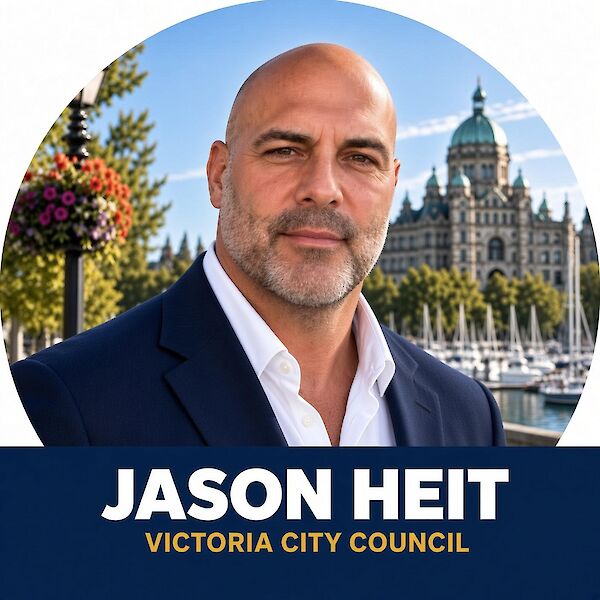
Jason Heit
About
Policy commitments
We all want healthy, affordable, and comfortable homes. These policies will help to lower energy bills, cut pollution, and improve indoor air quality.
Our community is already experiencing the harmful impacts of climate change caused by fossil fuel pollution, and taxpayers are on the hook to upgrade and repair critical infrastructure.
The air we breathe, the water we drink, and the food we eat all rely on healthy ecosystems. Nature can also help protect our community from extreme weather by controlling floods, protecting shorelines, and cooling neighbourhoods. Access to nature improves the health and well-being of residents, and supports biodiversity.
We envision vibrant, walkable communities that protect nature and improve food security.
Connecting neighbourhoods through public transit and active transportation networks will cut pollution, improve public health, and make our communities more affordable (and fun!).
Climate change, increasing populations, and overconsumption threaten our water security. Healthy watersheds and forests are critical to support clean drinking water, stormwater management, climate resilience, and biodiversity for future generations.
Zero waste policies reduce pollution, keep waste out of landfills, build resilient local economies, and safeguard public health by shifting society away from a disposable culture toward a sustainable circular economy.
Climate action
Much of my community work has focused on creating opportunities close to home. Through local boxing and fitness programs, including programs for youth and community organizations, I have worked to provide accessible activities within our community while making use of facilities that are already here.
Personally, I try to be conscious of my own environmental footprint. I cycle regularly, combine trips when possible, and believe that individuals, businesses, and governments all have a role to play in reducing waste and using resources responsibly.
I also believe climate action at the municipal level should be practical, measurable, and balanced with affordability. We should look for solutions that reduce emissions and waste while improving transportation options, protecting our natural environment, and ensuring that the costs of those decisions are sustainable for residents and businesses.
Questions for Victoria
First, we need to protect and expand our urban forest, parks and green spaces. Trees and natural infrastructure help manage heat and stormwater, improve air quality and contribute to the quality of life that makes Victoria a desirable place to live.
Second, I would focus municipal resources on environmental initiatives that demonstrate measurable results. That includes improving energy efficiency, reducing waste and supporting transportation options that make walking, cycling and transit practical. Climate programs and spending should be regularly reviewed so residents can see what we are spending and what results we are achieving.
Third, we need to connect environmental planning with housing and economic development. Building more housing in appropriate locations near employment, services and transportation can reduce longer vehicle trips while supporting local businesses and stronger communities.
When environmental protection appears to conflict with housing or economic growth, I would look for practical solutions and balance rather than automatically choosing one over the other. We can protect important environmental assets while recognizing that people need affordable places to live and businesses need opportunities to succeed.
Good environmental policy should produce measurable results while considering affordability. Environmental protection, housing and economic prosperity can
I would prioritize protecting mature, healthy shade trees and expanding Victoria’s tree canopy, particularly in neighbourhoods with higher heat exposure and vulnerable populations. New trees are important, but they take years to provide the benefits of mature trees, so retaining healthy existing trees should be a priority wherever reasonably possible.
We should also expand access to shade, drinking water, misting stations and air-conditioned public spaces such as community centres and libraries. During extreme heat events, residents need clear information about where these resources are located and extended access where necessary.
Protecting vulnerable residents requires coordination. The City should work with Island Health, emergency services, housing providers, community organizations and agencies serving seniors and vulnerable populations to establish outreach and wellness-check systems before an emergency occurs.
I would also support reviewing City buildings, parks and public spaces to identify practical opportunities for additional shade, water access and cooling infrastructure, prioritizing neighbourhoods where the need is greatest.
Most importantly, we should measure results. Preparing for extreme heat should be treated like other emergency planning: identify the risks, invest strategically, establish responsibilities in advance, communicate clearly and continually review what is working and where improvements are needed.
I would support requiring tree retention, where reasonably possible, along with adequate soil, permeable surfaces and consideration of significant natural features early in the development process. Mature trees provide benefits that cannot immediately be replaced by planting a small new tree. At the same time, we have to recognize legitimate construction requirements, site conditions, infrastructure and, in some cases, blasting.
Garry oak ecosystems are particularly important in our region and should receive appropriate protection. Where development affects these areas, ecological impacts should be identified early and reasonable options for avoiding or mitigating those impacts should be considered.
However, environmental requirements also have costs. Every additional requirement can affect construction costs, timelines and ultimately housing affordability. We need to understand those impacts and avoid creating unnecessary barriers to building the housing Victoria needs.
Development standards should be clear, practical and predictable, with reasonable requirements for tree replacement, adequate soil and permeable ground where appropriate.
Finally, the 40% canopy target needs measurable public reporting. We should track canopy gains and losses, tree removals and replacements, and progress by neighbourhood. If we are falling behind, Council should have the information necessary to determine why and make evidence-based adjustments while considering environmental protection, housing affordability and economic realities.
I would prioritize buildings, transportation and waste, while ensuring climate policies do not make housing or everyday life less affordable. For existing homes, apartments and commercial buildings, I would support energy-efficiency improvements and transitions to lower-emission heating, using incentives, rebates and partnerships with provincial and federal governments wherever possible. Programs should be accessible to renters, strata buildings, lower-income households and small businesses, not just those who can afford major upgrades.
Transportation improvements should focus on giving residents practical choices. That means better transit, safe walking and cycling connections, and continued expansion of charging infrastructure, while recognizing that many residents and businesses still depend on vehicles.
On waste, I would support practical measures that reduce material going to landfill through reuse, recycling, composting and improved construction-waste practices.
Affordability must be part of every decision. Before introducing new requirements, Council should understand their costs and avoid unnecessarily increasing housing and construction costs.
Finally, I would insist on transparent annual reporting. We should measure community emissions, building emissions, transportation emissions and waste reductions against clear annual targets. If programs are not producing results, we should adjust them. Climate spending should be judged by measurable emissions reductions and value for taxpayers, with progress clearly reported to the public.
Compiled & presented by

Vote4Tomorrow is an independent voter guide to evaluate where local candidates stand on climate and environmental policies that will affect our future.