
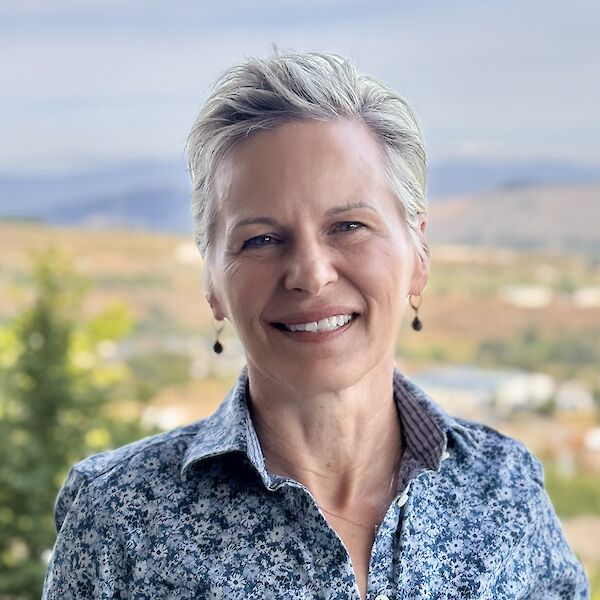
Diana Wilson
About
Policy commitments
We all want healthy, affordable, and comfortable homes. These policies will help to lower energy bills, cut pollution, and improve indoor air quality.
Our community is already experiencing the harmful impacts of climate change caused by fossil fuel pollution, and taxpayers are on the hook to upgrade and repair critical infrastructure.
The air we breathe, the water we drink, and the food we eat all rely on healthy ecosystems. Nature can also help protect our community from extreme weather by controlling floods, protecting shorelines, and cooling neighbourhoods. Access to nature improves the health and well-being of residents, and supports biodiversity.
We envision vibrant, walkable communities that protect nature and improve food security.
Connecting neighbourhoods through public transit and active transportation networks will cut pollution, improve public health, and make our communities more affordable (and fun!).
Climate change, increasing populations, and overconsumption threaten our water security. Healthy watersheds and forests are critical to support clean drinking water, stormwater management, climate resilience, and biodiversity for future generations.
Zero waste policies reduce pollution, keep waste out of landfills, build resilient local economies, and safeguard public health by shifting society away from a disposable culture toward a sustainable circular economy.
Climate action
Cycling has always been important to me. As President of the North Okanagan Cycling Society, I promoted cycling and responsible trail use and helped educate people about the role NOCS plays in managing and maintaining our trail network. When I worked at Kal Tire, I participated in Bike to Work Week, and today, if I can reasonably ride my bike instead of driving, I do. I've also worked primarily from home for the past four years, eliminating a daily commute. I keep my vehicles for as long as they're serviceable, and my next vehicle will be electric.
At home, we use a heat pump, LED lighting, a programmable thermostat and energy-efficient appliances. We're careful about water use, recycle extensively and compost virtually all our food waste. I use reusable water bottles, shopping bags, coffee cups and food containers and avoid single-use products where I can.
I'm also a big believer in repairing and reusing rather than replacing. I'm quite handy (for example, I replaced the motherboard in our refrigerator rather than replacing the fridge). Before buying something new, I'll often check Marketplace for a good second-hand option, and we donate clothing and household items we no longer need.
At our cabin in the Kootenays, we have a large vegetable garden and fruit trees. My partner preserves much of what we grow, and we donate excess fruit to local nonprofit organizations.
Questions for Vernon
The proposed 580 Commonage development is an example of growth I did not support. It was outside the urban containment boundary and would have required significant new infrastructure and services—contrary to the direction established in the OCP.
The proposed Vis District is a more positive example. While still in the early planning stages, and with legitimate questions around traffic flow and building height to address, its location and higher-density, mixed-use approach are much better aligned with the OCP’s vision for accommodating growth within existing urban areas.
We need more housing, but where and how we build it matters.
The City has a Climate Action Plan, but residents need to know that it exists, understand what we're doing to implement it, see the progress we're making, and most importantly understand what they can practically do themselves. This is particularly important because the vast majority of Vernon's community-wide emissions come from the community rather than City operations.
There is already good work to build on: resiliency workshops, sustainability grants, EV education, youth programs and Retrofit Assist, which provides homeowners with one-on-one help to make their homes more energy efficient and access available rebates. The City is also exploring a Climate Engagement Center with UBC that could help connect residents with information, programs and resources.
I would like to see us build on these initiatives and make education and engagement a much more visible part of implementing the Climate Action Plan. People are more likely to participate when they understand what they can do, why it matters and what support is available.
For the 2027 review, I would like to see clear priorities, realistic costs and resource requirements, measurable targets and regular public reporting on progress.
I would also want the revised plan to clearly identify what the City can directly control, where we need partnerships with other levels of government and community organizations, and where education and incentives can help residents and businesses take action.
I would look at the ecological significance of the land, its importance to watersheds and wildlife corridors, the long-term community benefit, the cost, and opportunities to partner with other governments or conservation organizations.
I would also set a very high bar for converting land of high ecological value to urban development. Our first approach should be to accommodate housing and economic growth within our existing urban area and make efficient use of infrastructure we already have.
If development of ecologically significant land were proposed, I would want to know: Is there a compelling community need that can't reasonably be met elsewhere? What would be lost? Can the impacts realistically be mitigated? What are the water and infrastructure implications and long-term costs?
These decisions may involve difficult trade-offs, but once some natural assets are lost, they can be extremely difficult or impossible to replace. That needs to carry significant weight in the decision.
I would focus on protecting our watersheds and source-water areas, maintaining healthy creeks, lakes and aquifers, reducing the risk of contamination, and ensuring agricultural and environmental water needs are considered alongside residential demand.
We also need to make better use of the water we already have by reducing system losses, conserving water, expanding the use of reclaimed water, and investing strategically in infrastructure.
Greater Vernon Water's Water Capacity Study will help us better understand current and future supply, the impacts of growth and climate change, and where additional infrastructure may be needed.
Water availability also needs to be part of our growth decisions. We shouldn't approve growth without understanding whether our water system and the natural systems it depends on can sustainably support it.
These are complex decisions requiring expertise in water management, agriculture, infrastructure and environmental protection. Council needs to use reliable data, understand the trade-offs and make decisions with a long-term view.
One of the most valuable parts of this campaign has been the opportunity to meet with local environmental and community leaders and learn more about the work already happening in Vernon. I have learned about our Climate Action Plan, water conservation and reuse, local food security, programs that engage young people in climate action, community resiliency initiatives, and the City's work to identify and value our natural assets.
These conversations have given me a much greater appreciation for both the work already underway and the opportunities ahead. I have come away from them a stronger advocate for environmental stewardship.
If elected, I will bring that learning to Council. I will continue to listen to experts and community organizations, ask good questions, and ensure environmental considerations are part of our long-term decisions about water, growth, infrastructure and our natural environment.
Wildfire concerns me because of the immediate threat to public safety, homes and neighborhoods. Vernon’s Community Wildfire Resiliency Plan identifies our dry climate, extreme summer heat and increasing development in the wildland-urban interface among our risks. I support continuing FireSmart education, fuel management, emergency preparedness and incorporating wildfire risk into land-use decisions.
If I had to identify one risk as my greatest concern, however, it would be drought and water shortages because the impacts reach virtually every part of our community—residents, agriculture, businesses, development, recreation, our economy and our natural environment. Greater Vernon experienced Stage 3 restrictions this summer following low snowpack, early snowmelt, below-average precipitation and declining reservoir levels.
I would prioritize protecting our watersheds and water sources, reducing system losses, conservation, expanding the use of reclaimed water, and making strategic investments in water infrastructure.
I also believe water capacity needs to be considered as we make decisions about future growth. We need reliable information about supply and demand and a clear understanding of what our water system can sustainably support.
For both wildfire and drought, my approach would be to use the plans and expertise we already have, identify our highest risks, prioritize investments and measure whether we are becoming more resilient.
Compiled & presented by
Vote4Tomorrow is an independent voter guide to evaluate where local candidates stand on climate and environmental policies that will affect our future.