
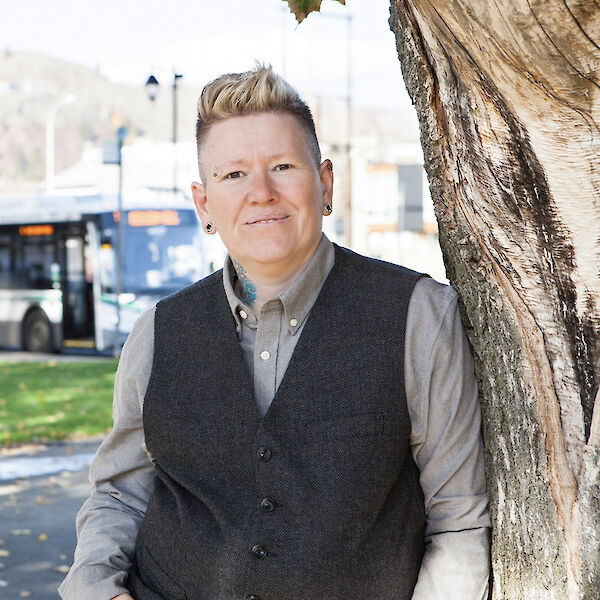
Dawn Tucker
About
Policy commitments
We all want healthy, affordable, and comfortable homes. These policies will help to lower energy bills, cut pollution, and improve indoor air quality.
Our community is already experiencing the harmful impacts of climate change caused by fossil fuel pollution, and taxpayers are on the hook to upgrade and repair critical infrastructure.
The air we breathe, the water we drink, and the food we eat all rely on healthy ecosystems. Nature can also help protect our community from extreme weather by controlling floods, protecting shorelines, and cooling neighbourhoods. Access to nature improves the health and well-being of residents, and supports biodiversity.
We envision vibrant, walkable communities that protect nature and improve food security.
Connecting neighbourhoods through public transit and active transportation networks will cut pollution, improve public health, and make our communities more affordable (and fun!).
Climate change, increasing populations, and overconsumption threaten our water security. Healthy watersheds and forests are critical to support clean drinking water, stormwater management, climate resilience, and biodiversity for future generations.
Zero waste policies reduce pollution, keep waste out of landfills, build resilient local economies, and safeguard public health by shifting society away from a disposable culture toward a sustainable circular economy.
Climate action
Questions for Vernon
b) Good: Alexis Park, where small-scale infill is replacing older homes close to transit, services and downtown, using pipe we already maintain. Also good: council's unanimous vote requiring a protection plan for the great blue heron nesting site on 20th Street before any building permit.
Not good: council continuing to approve affordable developments outside the current transit network, leaving the residents who most need affordable housing to choose between a home they can afford and transit they can rely on. Growth and transit planning must happen together.
b) A revised CAP should extend beyond City Hall's own operations into the community, with measurable targets and annual public reporting. I'd add water security as a core pillar: stormwater, septic-to-sewer conversions, and permanent reclaimed water expansion, not just the temporary approval to 2028 as well as looking at development approval tied to proven water capacity rather than assumed capacity. Plus grants for resident-driven improvements, with provincial and federal funding pursued before property taxes.
On trading away high-value natural lands, my bar is very high. We have room to grow inside the urban containment boundary through infill and missing-middle housing, and sprawl costs more in pipes, roads and services than it brings in. I've pushed for protection before: the great blue heron nesting grounds on 20th Street, native cactus and the lava-flow feature at Becker Park during pump-track construction, and keeping the 580 Commonage proposal outside our growth plans. Housing is urgent, but sacrificing ecologically valuable land is almost never the only option, and I'd need to see that proven first.
Second, make reclaimed water permanent. I pushed for years to expand it; this July the Province approved expanded use only until September 2028. Sports fields, parks and agricultural users should be on reclaimed water permanently so drinking water goes further.
Third, real timelines on storage. Reservoir capacity was flagged in RDNO's 2012 Master Water Plan and is still at the study stage. Seat at the RDNO table or not, I'll push for public deadlines.
I've also raised MacKay Reservoir contamination risk to Bolter's Creek. Protecting source water means acting before a crisis, not during one.
Compiled & presented by
Vote4Tomorrow is an independent voter guide to evaluate where local candidates stand on climate and environmental policies that will affect our future.