
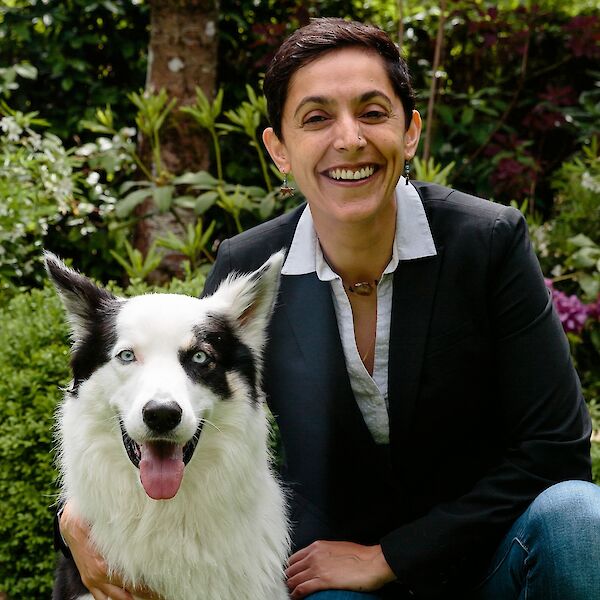
Devyani Singh
About
Policy commitments
We all want healthy, affordable, and comfortable homes. These policies will help to lower energy bills, cut pollution, and improve indoor air quality.
Our community is already experiencing the harmful impacts of climate change caused by fossil fuel pollution, and taxpayers are on the hook to upgrade and repair critical infrastructure.
The air we breathe, the water we drink, and the food we eat all rely on healthy ecosystems. Nature can also help protect our community from extreme weather by controlling floods, protecting shorelines, and cooling neighbourhoods. Access to nature improves the health and well-being of residents, and supports biodiversity.
We envision vibrant, walkable communities that protect nature and improve food security.
Connecting neighbourhoods through public transit and active transportation networks will cut pollution, improve public health, and make our communities more affordable (and fun!).
Zero waste policies reduce pollution, keep waste out of landfills, build resilient local economies, and safeguard public health by shifting society away from a disposable culture toward a sustainable circular economy.
Climate action
I've been a climate activist for years, working alongside many other NGOs and organizations in the climate movement. We can only win this fight together. In Vancouver, I've written climate justice motions that passed across party lines.
That's the thread running through all of it: research, activism, policy. Climate action falls apart the moment we treat it as separate from affordability and equity. The people paying the highest price for this crisis are not the ones who caused it. Every piece of work I've done has been about closing that gap, and exposing the role of big money in politics.
Questions for Vancouver
Vancouver already had this, but Ken Sim's council rolled it back, framing it as an affordability issue. That is wrong. Heat pumps cost less to run than gas, and they double as air conditioning during heat waves — which saves lives.
This isn't just something I'm saying as policy — it's what I research and advocate for in my day job, too. I've spent my career exposing exactly this move: an industry using an affordability argument to protect its profit margin while residents and the climate absorb the real cost.
As a councillor, I'd fight to reinstate the ban. New construction is the cheapest place to get this right — there's no version of climate-serious policy that keeps building in gas.
Ken Sim's council cut this office by 14% and eliminated 400 jobs city-wide — gutting the exact team meant to prepare us for what's coming. I'd restore full funding - Because the alternative isn't neutral. It's a city caught flat-footed by a crisis it saw coming and chose not to plan for.
And the questions go beyond power and water. The technology is changing so fast that we don't have a real handle on the e-waste it'll generate, or what the noise and heat mean for the neighbourhoods living next to it.
We rallied at the W Georgia site this September, and we held a townhall — because people don't want their utility bills subsidizing someone else's infrastructure. A moratorium isn't anti-innovation. It's refusing to approve something this resource-intensive before we actually understand what it costs the people living here.
That plan would have blanket upzoned 1000’s of parcels putting hundreds of tenants at real risk of displacement without strong renter protections in place. That's not climate adaptation. If growth pushes people out of their neighbourhoods and into car-reliant areas further from transit, we haven't adapted — we've just relocated the harm.
Real climate-resilient growth protects current affordable housing and builds density around it: anti-displacement policy with teeth, protecting naturally occurring affordable housing from redevelopment, and tying density to the transit and amenities that make it livable.
It also means genuine community-led planning — residents at the table from the start, not informed after the rezoning's already drawn up. The Villages Plan didn't fail because Vancouver needs less growth. It failed because a rushed rezoning, with no protection for tenants already there, delivers displacement with a climate label on it. We can do both — density and protection — but only if we build it that way from the start.
Cooling spaces need to be genuinely accessible during extreme heat because outdoor workers and unhoused residents are the most at risk during climate extremes.
I will fight to expand deeply affordable and supportive housing, because the actual safeguard against climate extremes is a stable climate resilient home in the first place — not a cooling center you have to find out about and get to on your own during a crisis.
For the broader population, that means retrofitting existing housing so it doesn't become dangerous in a heat wave, restoring the sustainability department this council gutted, and building genuine climate adaptation — living shorelines, expanded tree canopy, and cooling infrastructure — into every neighbourhood, not just the ones that already have it.
Climate safety has to include everyone, or it isn't really safety. It's just protection for people who can already afford it
Compiled & presented by

Vote4Tomorrow is an independent voter guide to evaluate where local candidates stand on climate and environmental policies that will affect our future.