
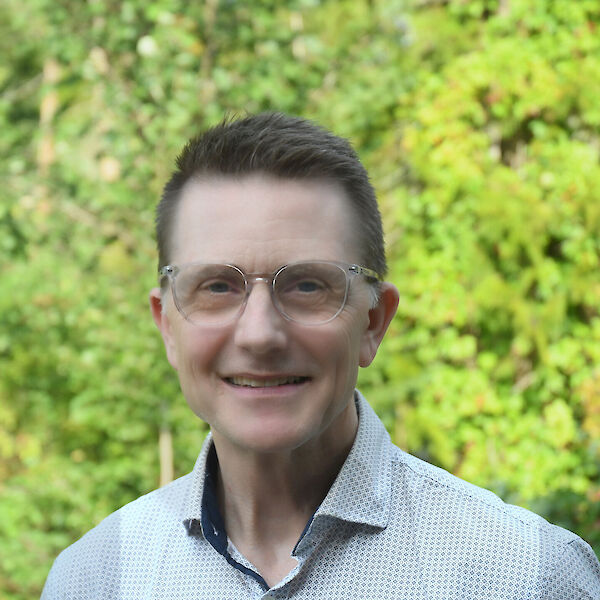
Victor Hamilton
- Neighbourhood:
- Salmon Arm
- Years in the community:
- 28
About
Policy commitments
We all want healthy, affordable, and comfortable homes. These policies will help to lower energy bills, cut pollution, and improve indoor air quality.
Our community is already experiencing the harmful impacts of climate change caused by fossil fuel pollution, and taxpayers are on the hook to upgrade and repair critical infrastructure.
The air we breathe, the water we drink, and the food we eat all rely on healthy ecosystems. Nature can also help protect our community from extreme weather by controlling floods, protecting shorelines, and cooling neighbourhoods. Access to nature improves the health and well-being of residents, and supports biodiversity.
We envision vibrant, walkable communities that protect nature and improve food security.
Connecting neighbourhoods through public transit and active transportation networks will cut pollution, improve public health, and make our communities more affordable (and fun!).
Climate change, increasing populations, and overconsumption threaten our water security. Healthy watersheds and forests are critical to support clean drinking water, stormwater management, climate resilience, and biodiversity for future generations.
Zero waste policies reduce pollution, keep waste out of landfills, build resilient local economies, and safeguard public health by shifting society away from a disposable culture toward a sustainable circular economy.
Climate action
Questions for Salmon Arm
I’d rank the plan’s actions on three tests: how many tonnes each one cuts, what it costs residents and taxpayers, and whether the City controls it.
On transportation, the City’s strongest tools are the ones it already holds: where and how we grow, and what we build. Compact neighbourhoods, connected sidewalks and bike routes, better transit and public charging all cut driving and make electric vehicles practical. That is what I mean by responsible growth.
On buildings, new construction comes first, because building it right once costs far less than retrofitting later. For existing homes, I’d focus on removing permitting barriers and helping homeowners reach provincial and utility rebates. After 35 years in the mortgage business, I know a retrofit only happens when the household budget works.
I also want to be straight with you. A 48% cut from 2019 levels by 2030 is a steep climb, and 2030 is the end of the next council term. The City cannot get there alone; much depends on the Province, the utilities and the choices each household makes. What council can do is fund the staff capacity the plan calls for, pursue every outside dollar, and report progress every year so residents can see what is working.
Preparation costs far less than recovery. The Climate Resiliency Plan already calls for reviewing and updating our emergency plans, and I’d make that an early priority. I’d also support low-cost prevention such as FireSmart work in neighbourhoods and using existing civic buildings as cooling and clean-air spaces.
During an event, people need clear, timely information from one trusted source. Salmon Arm is served by the regional Shuswap Emergency Program, and I’d work to keep that partnership strong and well practised, with a particular eye on seniors and residents who live alone.
Afterward, one of the hardest parts is the paperwork. I’d push for a single local point of contact to help residents and businesses through insurance and provincial assistance claims. After 35 years of helping families through mortgage applications, I know how much a guide matters when the forms pile up.
Finally, I’d press the Province and Ottawa, alongside neighbouring communities, for faster and more predictable recovery funding. Where new spending is proposed, I’d want to see the cost and the funding source before committing.
Compiled & presented by
Vote4Tomorrow is an independent voter guide to evaluate where local candidates stand on climate and environmental policies that will affect our future.