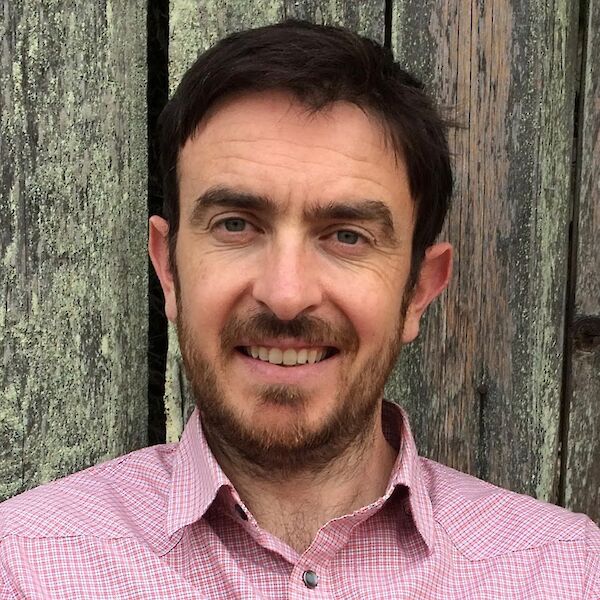
Owen Madden

Owen Madden

Council · Salmon Arm
Climate Leader
Salmon Arm 10 yrs

About

I first practiced criminal law in Ireland before re-educating in Global Climate Change Law and then uprooting to Vancouver where I worked for Ecojustice and Wilderness Committee. I now farm organic vegetables which we deliver to Salmon Arm households

Policy commitments

Buildings

We all want healthy, affordable, and comfortable homes. These policies will help to lower energy bills, cut pollution, and improve indoor air quality.

✓ Support electrification of new buildings. Supportive
✓ Incentivize electric heat pumps and air filtration systems. Supportive
✓ Incentivize renewable energy, battery storage, and smart-grid technologies in new and existing buildings to improve energy security. Supportive
✓ Scale up energy retrofits for existing homes, businesses, and public buildings. Supportive
✓ Implement a 'right to cool' bylaw to protect tenants during extreme heat events. Supportive
Climate Justice

Our community is already experiencing the harmful impacts of climate change caused by fossil fuel pollution, and taxpayers are on the hook to upgrade and repair critical infrastructure.

✓ Endorse the fossil fuel treaty and commit to phase out fossil fuels. Supportive
✓ Enact a moratorium on AI data centres to protect our energy and water resources. Supportive
✓ Pursue available legal options to recover a fair share of the climate costs facing our community from fossil fuel companies and other big polluters. Supportive
Ecosystems

The air we breathe, the water we drink, and the food we eat all rely on healthy ecosystems. Nature can also help protect our community from extreme weather by controlling floods, protecting shorelines, and cooling neighbourhoods. Access to nature improves the health and well-being of residents, and supports biodiversity.

✓ Protect and restore ecosystems, which are essential to human survival, health, and economic well-being. Supportive
✓ Expand and protect tree canopy, parks, and green infrastructure to cool neighbourhoods, clean air, and manage stormwater. Supportive
✓ Prioritize native tree planting in all areas, especially those with low tree cover, higher population densities, and more vulnerable residents. Supportive
✓ Create connected urban greenways for people and wildlife. Supportive
Land Use

We envision vibrant, walkable communities that protect nature and improve food security.

✓ Build affordable homes near jobs, schools, shops, and transit. Supportive
✓ Upgrade critical infrastructure for heat, fire, flood, and storm resilience. Supportive
✓ Increase food security by supporting local agriculture and community gardens. Supportive
Transport

Connecting neighbourhoods through public transit and active transportation networks will cut pollution, improve public health, and make our communities more affordable (and fun!).

✓ Deliver reliable, frequent, affordable local transit. Supportive
✓ Advocate to improve regional public transit between communities. Supportive
✓ Build bike and roll networks that are safe for everyone. Supportive
✓ Expand EV charging infrastructure. Supportive
Watersheds

Climate change, increasing populations, and overconsumption threaten our water security. Healthy watersheds and forests are critical to support clean drinking water, stormwater management, climate resilience, and biodiversity for future generations.

✓ Implement water conservation plans and educate the public to conserve drinking water. Supportive
✓ Protect and restore watersheds as vital municipal infrastructure. Supportive
✓ Develop and implement a water security plan. Supportive
Zero Waste

Zero waste policies reduce pollution, keep waste out of landfills, build resilient local economies, and safeguard public health by shifting society away from a disposable culture toward a sustainable circular economy.

✓ Support the development of a circular economy to eliminate waste and improve resilience. Supportive
~ Implement bylaws to eliminate waste from new buildings, renovation, and demolition projects and to use existing buildings as efficiently as possible. Neutral
✓ Supportive
~ Neutral
× Opposed
– No response

Climate action

How have you contributed to climate action in your community through advocacy, past work, advisory committees, volunteer work, and/or reducing your personal carbon footprint?
I have put myself before the electorate for the BC Green Party (2020) and Green Party of Canada (2025) and provided a clear choice to voters concerning transitioning our economies away from fossil fuel production. I have farmed and distributed organically-grown vegetables in the Shuswap for a decade (2016-2026). I was the Climate Campaigner for the Wilderness Committee (2012-2015) and legal support staff at Ecojustice (2011-2012) where I sought to advance climate awareness and legal solutions. I successfully completed the world's first post-graduate law course on Global Climate Change (University of Edinburgh 2010-2011). I live alongside the newly-constructed Shuswap North Okanagan Rail Trail and use it to commute by bicycle to the local school dropoff. I am lucky-enough to own a Nissan Leaf but feel this should not be a litmus test for climate responsibility given affordability challenges facing our region. I advocate as best I can about the ease and enjoyment experienced from EV adoption.

Questions for Salmon Arm

How will you prioritize implementing actions identified in the Climate Resilience Plan that target community emissions from buildings and transportation to reach a 48% GHG emission reduction by 2030?
I will oversee the application of the mandatory BC Energy Step Code within the city's permitting processes. I will advocate for the provision of EV charging availability in multi-dwelling developments. I will work towards the electrification of the City's fleet come replacement stage reached for equipment. I will work towards better public transit options within City limits. I will push for the development of two separate and connected walking/biking corridors running from Downtown to Uptown (corridor 1) and a school connector along 30th Street NE and Uptown (corridor 2 connecting to corridor 1 at Uptown). This will provide much greater short-trip options to city drivers and school kids and will include a safe crossing of the TransCanada Highway at Uptown.
During recovery after an emergency like a wildfire, flood or heat event, support and resources from all levels of government are lacking. What will you do to ensure that your constituents are supported during and after such an event?
I will conduct an audit of all resources and skills available within the City for emergency events and compile the results into a preparedness plan. This must include a food supply/security component. As a local food supplier who was active during the highway washout of late 2021 (the "atmospheric river") I quickly learned how vulnerable the existing local food system is and how dependent it can be on local growers! Emergency Centres with adequate short-term housing must be pre-constructed in the City and surrounding region. I will demand provincial support via our MLA (oh dear) and federal support via our MP (who knows?). If nothing develops on that front I will exercise every lever available to have our voices heard by both levels of government.

Compiled & presented by

Authorized by Shuswap Climate Action Society, registered sponsor under LECFA, info@shuswapclimate.org

Vote4Tomorrow is an independent voter guide to evaluate where local candidates stand on climate and environmental policies that will affect our future.

© 2026 Vote4Tomorrow