
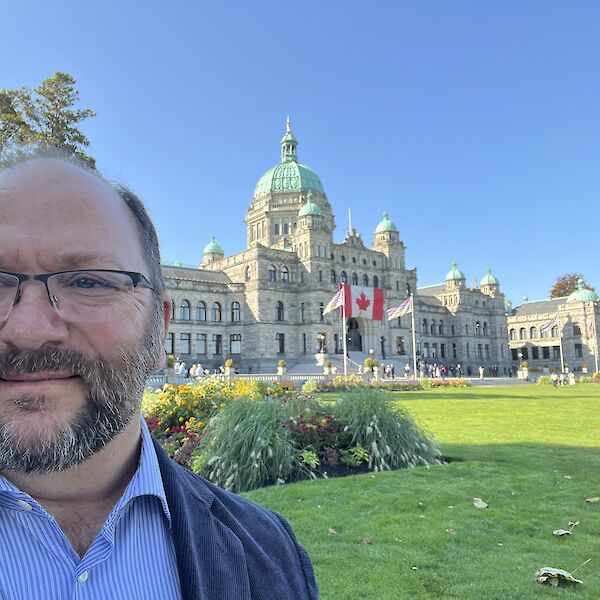
David Gonella
About
Policy commitments
We all want healthy, affordable, and comfortable homes. These policies will help to lower energy bills, cut pollution, and improve indoor air quality.
Our community is already experiencing the harmful impacts of climate change caused by fossil fuel pollution, and taxpayers are on the hook to upgrade and repair critical infrastructure.
The air we breathe, the water we drink, and the food we eat all rely on healthy ecosystems. Nature can also help protect our community from extreme weather by controlling floods, protecting shorelines, and cooling neighbourhoods. Access to nature improves the health and well-being of residents, and supports biodiversity.
We envision vibrant, walkable communities that protect nature and improve food security.
Connecting neighbourhoods through public transit and active transportation networks will cut pollution, improve public health, and make our communities more affordable (and fun!).
Climate change, increasing populations, and overconsumption threaten our water security. Healthy watersheds and forests are critical to support clean drinking water, stormwater management, climate resilience, and biodiversity for future generations.
Zero waste policies reduce pollution, keep waste out of landfills, build resilient local economies, and safeguard public health by shifting society away from a disposable culture toward a sustainable circular economy.
Climate action
As a councillor, I have contributed through my work on the Development & Planning Services Committee and Agricultural Advisory Committee. These roles have given me opportunities to consider how development, land use, agriculture, infrastructure and growth affect our environment and community over the long term. My previous experience in resource management has also brought a practical environmental perspective to the council table.
I believe our community forest is an important part of our climate response. Protecting our forest resources, maintaining healthy ecosystems and recognizing the environmental benefits of trees and natural areas are important considerations as Salmon Arm grows. Protecting and strengthening our community forest is one of my priorities for the next term.
Through my employment with the Salmon Arm Folk Music Society, I have also been involved in operating community events where responsible use of resources, waste reduction and environmental considerations are part of planning and day-to-day operations.
I also recognize that climate action isn't only the responsibility of government. Personally, I try to be conscious of my energy use, transportation choices and consumption.
I don't claim to have all the answers on climate change. I believe my contribution has been bringing a practical, long-term perspective to decisions about how Salmon Arm grows, while balancing environmental, social and financial considerations.
Questions for Salmon Arm
For buildings, I support initiatives that improve energy efficiency, encourage retrofits, and make it easier for residents and businesses to adopt lower-carbon heating and energy systems. I voted in favour of the Zero Carbon initiative brought forward to Council because I believed it was a meaningful step toward reducing emissions from new buildings. Although the initiative was defeated, I believe Council should continue looking for practical ways to reduce building-related emissions.
For transportation, I would prioritize making it easier for people to choose alternatives to driving alone by improving walking and cycling infrastructure, supporting public transportation, and ensuring new development creates connected neighbourhoods. We should also support appropriate expansion of electric vehicle charging infrastructure.
A 48% reduction by 2030 is ambitious, so implementation needs clear priorities, timelines and measurable outcomes. I would focus first on actions with the greatest potential impact and identify available grants, partnerships and other funding opportunities to reduce the financial burden on taxpayers.
Climate action should also be integrated into the decisions we are already making about infrastructure, transportation, development and community investment—not treated as a separate initiative.
The CSRD Emergency Operations Centre was instrumental in coordinating the response, establishing a plan and putting it into action. As a municipality, we need to continue strengthening our relationships with the CSRD and provincial and federal governments so that responsibilities, communication and resources are clearly understood before an emergency occurs.
During an event, my priority would be protecting life, keeping residents informed and ensuring that vulnerable residents, farmers and local businesses have access to the support they need. Recovery is equally important. I would advocate for timely access to government recovery programs, support local organizations delivering assistance, and work to ensure that infrastructure and essential services are restored as quickly as possible.
It is easy to point fingers at shortcomings or overstate positive outcomes after an emergency. Instead, we need to honestly assess what worked, identify gaps and make improvements. Our approach must always have a clear focus: protect life in every form, support our agricultural community, protect critical infrastructure and help Salmon Arm recover stronger and better prepared for the next emergency.
Compiled & presented by
Vote4Tomorrow is an independent voter guide to evaluate where local candidates stand on climate and environmental policies that will affect our future.