
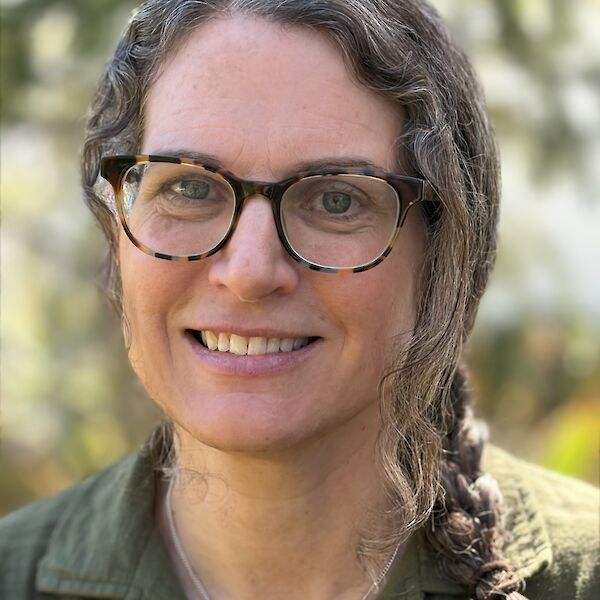
Trista Sulman
About
Policy commitments
We all want healthy, affordable, and comfortable homes. These policies will help to lower energy bills, cut pollution, and improve indoor air quality.
Our community is already experiencing the harmful impacts of climate change caused by fossil fuel pollution, and taxpayers are on the hook to upgrade and repair critical infrastructure.
The air we breathe, the water we drink, and the food we eat all rely on healthy ecosystems. Nature can also help protect our community from extreme weather by controlling floods, protecting shorelines, and cooling neighbourhoods. Access to nature improves the health and well-being of residents, and supports biodiversity.
We envision vibrant, walkable communities that protect nature and improve food security.
Connecting neighbourhoods through public transit and active transportation networks will cut pollution, improve public health, and make our communities more affordable (and fun!).
Climate change, increasing populations, and overconsumption threaten our water security. Healthy watersheds and forests are critical to support clean drinking water, stormwater management, climate resilience, and biodiversity for future generations.
Zero waste policies reduce pollution, keep waste out of landfills, build resilient local economies, and safeguard public health by shifting society away from a disposable culture toward a sustainable circular economy.
Climate action
That is still how I think about climate action. Regulation matters, but the impact of changes we make come from engagement. A city can create a climate for the changes to flourish within but it takes a person approach to ground the work in day to day life
Through a nursing lens, climate change governance integrates planetary health lenses, sustainable operations, and policy advocacy into leadership and recognises the social and environmental determinants of health and how its not just strategies we can undertake to lessen the impact of climate change and our contributions to the problem, its also building resiliency by strengthening community connections and emergency preparedness that's equitable and contains additional considerations for vulnerable or marginalised residents.
Everyone has to start where they are. Civic leadership can lead by example, be grounded in research and science, and this has already informed the Integrated Climate Action Plan. Continuing efforts to integrate this into community engagement remain to be done.
Questions for Rossland
Locally: In March 2025 Rossland recommended rejecting this application through the Mining Development Review Committee, citing unresolved concerns. That position should be restated, not quietly allowed to lapse. The Environmental Management Act discharge permit, remains undecided. The City should make a formal, evidence-based submission on it, focused on what we can speak to with authority — water, air and the impact of ore transport through town and on roads integral to our community. I would push for baseline water and air monitoring now, because without baseline data the City cannot later demonstrate harm. We should coordinate with the RDKB and the Area B director rather than acting alone, and support the Save Record Ridge Action Committee with position statements and information; rather than committing a city of our size to a litigation risk it cannot carry.
Provincially: The project escaped an environmental assessment because projected output falls below the 75,000-tonne threshold. No EA is the problem, and it is provincial. Continue to lobby at AKBLG and UBCM toward regional response, strengthens position- not power to stop it.
Four things I would push for:
Retrofits for existing homes, concentrated where they do the most good. A retrofit that lowers a fixed-income household's bill is climate action and affordability in the same motion. I support the work of the Retrofit Assist program. Where the City identifies barriers some residents encounter in making the switch, and offers supports to remove them is critical.
Use the zoning work already underway. Zoning Bylaw #2864 was adopted July 2026. Land use and building standards are where a municipality actually has jurisdiction, and decisions made there, lock in emissions for decades.
Finish the unfinished priorities Rossland itself identified: EV charging strategy: within Development Permit guidelines and its Zoning Bylaw, consider creating infographic to integrate feedback and improve engagement, regional organics composting, and the trail network between Rossland, Warfield and Trail.
Report progress publicly every year, with real indicators. Residents are entitled to see whether this is working and as they witness the progress being made: increased opportunity for influencing buy-in.
Fifty-seven per cent of our five-year capital plan depends upon grants. I would prioritize actions that cut operating costs or attract outside funding, so positioning our efforts as climate work provides opportunity.
Wildfires are our greatest environmental risk, a potential immediate threat to life. BC's Human Rights Commissioner has documented vulnerabilities in our mitigations. Income, age, disability and housing quality determine who can prepare, evacuate and recover. The RDKB's Firesmart funding allotment for 2026 was drawn down through high participation rates, 1000+ homes. Residents are keen to improve wildfire resilience. I ask that Council consider there are overlapping vulnerabilities, if we can adopt a person centred approach we can advocate for the more vulnerable and design around it. Some Firesmart funding is 50% cost share, this can become a barrier to accessing supports. The BC Government has announced funding $15 million toward the 2027 programs. A three-day go-bag assumes disposable income to buy supplies that may never be used, a vehicle to put it in, somewhere to go, and someone at the other end. Evacuation guidance written for the average household quietly excludes the households furthest from average.
Smoke is health event, not weather. Protective factors are sealed housing, filtration and timely air-quality information, and these are not equally available. Designated clean-air space, and a way to reach people who cannot leave home, costs little.
The Kirkup pump station backup-power study matters because losing power takes water, communications and home medical equipment. Much remains to be done.
ROSSLAND'S CLIMATE RISK & VULNERABILITY ASSESSMENT June 2024 and theINTERGRATED CLIMATE ACTION PLAN articulates our framework/ actions.
The City's investment in water meters is already helping detect leaks. Keep responding to that leak data as a standing priority, and report the efforts being made publicly so residents can see conservation working rather than only being asked to sacrifice through restrictions.
Consider solutions being promoted elsewhere, ie rain barrels and grey water recovery solutions for toilet flushing. Drought mitigation strategies like beaver dam analogues, to improve water storage, and combat climate change.
Dam Review Findings: potential failure of the two dams containing the Centre Star Gulch reservoir has been assessed as "very high consequence." The City has now contracted a Dam Safety Review at $129,920. These recommendations it identifies will need a funded place in the capital plan.
Build an water security plan, integrating snowpack variability, drought staging, wildfire risk inside the watershed, and include growth projections. Integrate with efforts from Streamkeepers and Water Stewardship Task Force and increase membership within it. We are strengthened by a broad approach to understanding solutions.
Our water supply depends on three small streams which are dependent on precipitation, largely snowpack (supply vulnerability). Prioritize watershed protection: safeguarding the forested source areas from development, forestry and mineral claim, industrial impacts.
Contrasting community perceptions have the potential to divide: some feel that every kilometre of new service is more expenses to pay for and therefore a burden on existing residents who are already struggling to cover the costs of the aging infrastructure. Others may believe that development is the only answer, and an expanded population and attracting businesses and opportunities is the solution we need. The constrained financial and pressures on staff and public works that 'flow' from this situation have the potential to create division. When our community is divided we are less resilient and less responsive in adapting to the economic, social and climate challenges we face.
It falls to City Council and City Staff to occupy this space of ambiguity between resident's perceptions and beliefs about how we go forward and the planning it takes. We all know there are no easy answers. The 'living document' that is the Official Community Plan was designed to reflect values and propose policies and hopefully provide guidance in decision making. When considered in concert with the upgraded Zoning Bylaw this year, Imagine Rossland Future Ready," is centered around containing expansion, encouraging infill development, and protecting the surrounding natural alpine environment. Compact, infill development uses infrastructure we have already paid for. Sprawl commits us to pipe, road and plow in perpetuity.
The City does not run hospitals or clinics. Interior Health and the Province do, and I will not promise what belongs to them. What Rossland controls are the social and environmental determinants of health—influencing the built environment, community design, housing, and social connectedness from being part of a community.
This is why I consider our recreational assets as health infrastructure, not amenities: a community space where people from many backgrounds and differing generations to mix; is preventive care delivered locally. Retaining spaces where residents can meet and be active and support one another in an affordable and inclusive environment is key to our collective wellbeing.
Volunteerism is probably our greatest asset as a community. The impacts of donated time, efforts and expertise have been foundational to our collective identity as Rosslanders and have been the historical source of some of the facilites we still enjoy today. We have always used people power to get around barriers we encounter, and have a rich history in not letting fiscal constraints limit the quality of life that Rosslanders can attain. Contributing to these groups
Substantive equity has to be at the forefront. People do not experience climate pressure equally, and those with the least power face the most harm. Leadership means understanding those constraints before proceeding.
The City's other real power is advocacy — access to services, physician recruitment, transit, mental health, social prescribing.
Compiled & presented by

Vote4Tomorrow is an independent voter guide to evaluate where local candidates stand on climate and environmental policies that will affect our future.