
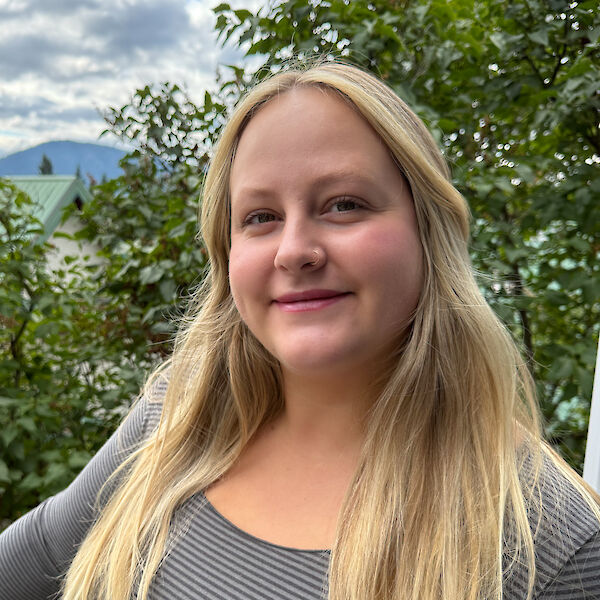
Maya Provencal
About
Policy commitments
We all want healthy, affordable, and comfortable homes. These policies will help to lower energy bills, cut pollution, and improve indoor air quality.
Our community is already experiencing the harmful impacts of climate change caused by fossil fuel pollution, and taxpayers are on the hook to upgrade and repair critical infrastructure.
The air we breathe, the water we drink, and the food we eat all rely on healthy ecosystems. Nature can also help protect our community from extreme weather by controlling floods, protecting shorelines, and cooling neighbourhoods. Access to nature improves the health and well-being of residents, and supports biodiversity.
We envision vibrant, walkable communities that protect nature and improve food security.
Connecting neighbourhoods through public transit and active transportation networks will cut pollution, improve public health, and make our communities more affordable (and fun!).
Climate change, increasing populations, and overconsumption threaten our water security. Healthy watersheds and forests are critical to support clean drinking water, stormwater management, climate resilience, and biodiversity for future generations.
Zero waste policies reduce pollution, keep waste out of landfills, build resilient local economies, and safeguard public health by shifting society away from a disposable culture toward a sustainable circular economy.
Climate action
In 2022, I was elected to Rossland City Council with meaningful climate action as one of my key campaign pillars. Over the past four years, I have consistently delivered on those promises by advocating for climate action to remain a priority in the City’s strategic planning and decision-making processes. As Council liaison to the Sustainability Commission, I have worked closely with community volunteers and City staff on initiatives related to emissions reduction, climate adaptation, food security, and environmental health.
One of the things I am most proud of is my work to champion Rossland’s early implementation of the Zero Carbon Step Code, so that new buildings are not only more energy efficient but also powered by clean energy. I have also supported work on Rossland’s Integrated Climate Action Plan, advocated for stronger climate mitigation measures, and supported climate and environmental projects through the City’s grant-in-aid and regional funding processes.
Questions for Rossland
I have been shocked by the disregard for the concerns expressed by the City of Rossland and its residents throughout this process, both by the proponent and, in many cases, by the provincial government. From the Mine Development Review Committee process onward, I have watched our community raise legitimate questions and struggle to get clear answers.
I have not seen enough evidence to give me confidence that the health of residents or our local environment will be adequately protected from the potential impacts of this mine. With each additional permit approval, I have become increasingly concerned about the integrity of the regulatory system.
The mine itself is outside Rossland’s jurisdiction, so Council cannot simply approve or reject it. What we can do is advocate for our community. I believe it is the Province’s responsibility to make sure that resource extraction does not come at the expense of human health or the environment, and I am committed to continuing to hold them to account.
I would focus on the areas where the ICAP and 100% Renewable Kootenays Plan overlap: buildings and transportation. These are also where Rossland has the greatest opportunity to reduce local emissions. The ICAP identifies vehicle transportation and building heating as the primary areas for emissions reductions and specifically points to building standards, land-use policy and municipal infrastructure as tools available to the City.
That means continuing to advance the Zero Carbon and Energy Step Codes, advocating for better senior-government support for local home energy retrofit programs, supporting EV-ready development and public charging infrastructure, electrifying our municipal fleet as vehicles are replaced, investing in safe active transportation, and working with regional partners to improve public transit and other low-carbon transportation options.
Over the next four years, I would advocate to continue investing in FireSmart initiatives and advocating to the Province for predictable, sustained funding for FireSmart and Community Resiliency Investment programs as recent program changes have made it harder for communities like Rossland to plan and sustain long-term wildfire mitigation work. I would also support bylaws and development standards that incorporate FireSmart principles and encourage fire- and drought-resistant landscaping.
I also want to make sure our emergency planning reflects who is most vulnerable when disasters occur. As the RDKB develops its new regional emergency and disaster management plan, I would work with our regional partners to ensure that the B.C. Human Rights Commissioner’s recommendations for a human rights-based approach to emergency management are incorporated, including planning specifically for people who may experience disproportionate impacts during emergencies.
I would also prioritize investment in community assets that can provide recreational opportunities (or simply safe refuge) during extreme heat, wildfire smoke and extreme cold.
Finally, I would continue protecting Rossland’s tree canopy, forests, and natural assets through land-use policy, recognizing the important role they play in wildfire resilience, shade, stormwater management, biodiversity and water security.
Over the next four years, I would prioritize implementing the water-security actions already identified in the ICAP. That includes completing a watershed-level climate risk assessment to understand how changing snowpack and precipitation will affect our water storage and supply, and improving stream-flow monitoring and ecological-flow assessments so that water restrictions and other management decisions can be based on good local data. I would also continue implementing the WaterSmart Action Plan to reduce per-capita and municipal water use, while investing in resilient infrastructure and incorporating natural assets and green infrastructure into our long-term planning. Lastly, I would continue supporting organizations like the Rossland Streamkeepers and Living Lakes Canada, recognizing the important advocacy and water-monitoring work they do in and on behalf of our community.
I support densification rather than sprawl. Through our recent zoning bylaw update, we voluntarily upzoned most of the community to allow more housing within existing neighbourhoods, including carriage homes, suites and small-scale multi-unit housing. That helps us make better use of the infrastructure we already have while creating more housing options for year-round residents.
At the same time, development needs to respect the environmental protections we already have in place. I would continue to support strong application of our OCP and zoning requirements through the development permit process, including protections for riparian areas, tree retention and other environmentally sensitive lands.
I also want to see us move forward with a forest management plan so that we are taking a more coordinated, long-term approach to protecting and managing the forests and natural areas around our community.
Finally, I support continuing to require new development to be increasingly energy efficient and powered by clean energy, while incorporating things like FireSmart design and drought-resistant landscaping so that new development is non-polluting and resilient.
For me, the goal is to accommodate growth in a way that adds housing and economic activity without losing the natural environment, neighbourhood character and sense of community that make people want to live in Rossland in the first place.
Community health should be considered in every decision we make at the council table. At the same time, where services fall primarily under provincial jurisdiction, our role should be to listen to residents, advocate strongly on their behalf, and hold senior levels of government accountable for providing the services they are responsible for.
There are also opportunities to collaborate with regional partners and senior levels of government to promote community health and wellbeing. Rossland Yards is a great example of the City contributing land to help make an affordable housing project possible, and I would be interested in exploring a similar model for something like seniors housing, childcare, or other social services if the opportunity arose.
For regional services like public transit, we need to make sure Rossland’s needs are represented at the table, protect the service we have, and advocate for expansion of services where the data supports it.
I also strongly support maintaining a vibrant recreation department. During my last term, I advocated for subsidizing and prioritizing facility access for children and youth, as well as programming that benefits vulnerable residents, including support for the local postpartum support group.
Compiled & presented by


Vote4Tomorrow is an independent voter guide to evaluate where local candidates stand on climate and environmental policies that will affect our future.