
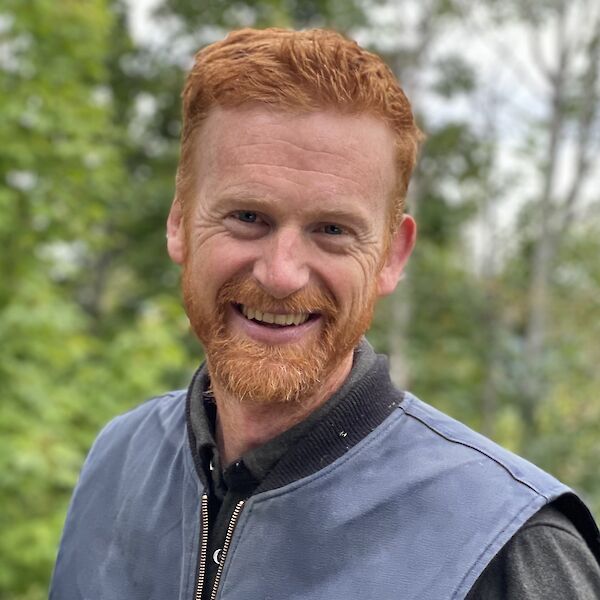
Matthew Watkins
About
Policy commitments
We all want healthy, affordable, and comfortable homes. These policies will help to lower energy bills, cut pollution, and improve indoor air quality.
Our community is already experiencing the harmful impacts of climate change caused by fossil fuel pollution, and taxpayers are on the hook to upgrade and repair critical infrastructure.
The air we breathe, the water we drink, and the food we eat all rely on healthy ecosystems. Nature can also help protect our community from extreme weather by controlling floods, protecting shorelines, and cooling neighbourhoods. Access to nature improves the health and well-being of residents, and supports biodiversity.
We envision vibrant, walkable communities that protect nature and improve food security.
Connecting neighbourhoods through public transit and active transportation networks will cut pollution, improve public health, and make our communities more affordable (and fun!).
Climate change, increasing populations, and overconsumption threaten our water security. Healthy watersheds and forests are critical to support clean drinking water, stormwater management, climate resilience, and biodiversity for future generations.
Zero waste policies reduce pollution, keep waste out of landfills, build resilient local economies, and safeguard public health by shifting society away from a disposable culture toward a sustainable circular economy.
Climate action
Personally, my family shares a single car, a Kona EV. I’m an aspiring vegan—I say aspiring because I still have a weakness for baked goods. I recently cut the natural gas line to my house, and I am currently wrapping our home in 12 inches of recycled newspaper as part of a Passive House retrofit. Flying remains a tough balance. I'd put it this way, I do more than I’d like, but less than my out-of-town in-laws would prefer.
Professionally, environmental issues motivated me to pursue a BA in economics. If you are going to challenge the system, you had better understand its rules. I followed that with a Master’s in Environmental Policy and Planning.
Initially, I put this training toward helping governments chart sustainable paths forward. However, after meeting my wife and chasing her to this magnificent town, I pivoted that energy toward local grassroots efforts. I have served on the Rossland Sustainability Commission for seven years, acting as Chair for six and am currently the Lead of its Climate Action Task Force. In these roles, I have worked closely with staff, council and residence on a wide range of initiatives aimed at improving the economic and environmental sustainability of Rossland.
Questions for Rossland
The project still carries unresolved metal leaching risk, inadequate asbestos characterization, and real gaps in baseline environmental data. The fact that the company has also dramatically reduced its stated production capacity to fall just under the environmental assessment threshold is deeply suspicious. None of that is NIMBYism - it's an honest accounting of what hasn't been done and what a safe and environmentally responsible mine would do.
Unfortunately, permitting this project is provincial jurisdiction, not council's, but Rossland has a real seat at the table through the Mining Development Review Committee, and I'd keep using it — pushing the company and the Ministry toward commitments on trail access, reclamation and buffer zones. At the same time I'd be pushing on our MLA and the Ministry to require a completed environmental assessment, Human Health Risk Assessment and air dispersion modelling before this project takes another step.
First, new buildings. As part of my work with the Sustainability Commission I helped push Rossland to adopt its current building code. It is now time to take the next step and mandate step code 4 and full electrification of all new buildings. I would also actively monitor whether industry is ready for Step 5 and evaluate its adoption during this term.
Second, retrofiting existing buildings. Step code only sets the standard for new construction — most of Rossland's buildings are already built, and heating them is where a lot of our emissions actually sit. I'd push to relaunch a retrofit concierge for existing homes, sized to match the 100% Renewables target of 40% of existing Rossland building reducing their energy use by 33% by 2030.
Third, transportation. The city has less say over what cars people buy, but real leverage over how often they use them. I'd prioritize real investment in active transportation infrastructure and public transit, guided by public consultation to identify which corridors and neighbourhoods would benefit most, and pair that with targeted density increases, so more people can walk, bike or bus to work, school and downtown instead of driving.
First, wildfire. The city have a very effective fire smart program. However it is still reliant on bi-annual funding. I would push to integrate fuel treatment into infrastructure planning. I'd expand FireSmart incentives for private landowners in high-risk areas and require FireSmart assessment for new development in the interface.
Second, water security. Median snowfall is projected to fall from a historical 235 cm to roughly 108 cm by mid-century, threatening both our water supply and winter economy. I'd push to complete the watershed-level climate risk assessment the plan already calls for.
Third, emergency preparedness. The plan calls for a community response plan for extreme heat and wildfire smoke, including cooling and clean-air centers at municipal facilities. That work is underway — I'd finish it and make sure vulnerable residents know where to go.
Fourth, natural assets. Rossland has a 2021 natural asset inventory we haven't yet built into infrastructure planning. The Sustainability Commission is already advising on the city's stormwater modeling project — I'd push that same natural-assets-first lens onto it and other water, sewer, and development projects, asking whether a wetland or forest buffer can do the job cheaper and better than another concrete culvert. That's asset management, not just conservation.
I believe we need to prioritize water security through three actions:
Closing the Knowledge Gap: Rossland already uses stream flow data to trigger restrictions, as we saw this year, but the Environmental Flow Needs Assessment that the Climate Action Plan calls for, the study showing whether supply can handle a changing climate and growth, still isn't done. I'd push to finish it and use the findings to drive spending under our 20-year Utilities Master Plan, prioritizing projects like replacing aging water mains by failure risk.
Watershed Protection: The forests and wetlands in our source watershed provide ecosystem services, filtering and buffering our water supply more cheaply than added treatment. I'll fund the environmental monitoring partnership calls for in the Climate Action Plan, working with groups like the Rossland Streamkeepers to track changing water availability.
Demand Management: Rossland has had universal water metering since 2009. The Climate Action Plan commits to using that data to cut per capita and municipal water use, a goal I'd keep funded, not let stall. I'll also push to keep development pacing within our watershed's safe capacity.
To keep our community inclusive, we should prioritize three strategies:
Leverage Smart Zoning: Our updated Zoning Bylaw lets us champion gentle density inside our footprint. Infill and secondary suites protect green space from sprawl while creating diverse housing — letting young families enter the market and seniors downsize and age in place close to downtown.
Secure Local Workforce and Seniors Housing: Community connection means keeping Rossland affordable for the people who keep it running — and the seniors who built it. Rossland Yards, our 37-unit workforce housing partnership with the Lower Columbia Affordable Housing Society, is a real start. I'd build on it with zoning incentives and partnership tools for more below-market housing protected from short-term rental use. I'd also look at the empty lot across from Rossland Yards for a mixed-use project — a commercial anchor paying its way, with affordable seniors housing stacked above.
Developer Accountability: Growth should pay its own way, but our infrastructure deficit is mostly decades of underinvestment and under-filled reserves, not underfunded growth. Our development charge tools aren't optimized, though. I'll push to finalize updated Development Cost Charges and Amenity Cost Charges — the city already has a provincial grant to study where they'd apply best — and look at employee housing mandates for major resort development.
An addition worth considering is a reliable, safe, and reasonably frequent public transit system between Rossland and Trail. Given how many essential health services are located in Trail, this matters especially for seniors who may not be able to, or feel safe trying to, make the drive down the sometimes treacherous hill. That specific need should be front and center whenever we talk about funding regional transit.
Doctors are in high demand, and small communities are in a real fight to retain them. What family doctor wants to move to a resort town with no character, rising taxes, and no real response to climate change? Our trail network and recreation culture, the same character we're protecting from unmanaged growth, are part of what makes Rossland a place doctors would want to put down roots. I'd tie that directly to recruitment and retention for local clinics.
Big thank you to everyone involved in putting this survey together. Great questions — valuable for our neighbours to think through these issues, and to hear the candidates' thoughts on them. I've had the opportunity to work with both the Kootenay Climate Hub and Doctors and Nurses for Planetary Health in the past, and I greatly appreciate your contributions to the community. Keep up the great work!
Compiled & presented by


Vote4Tomorrow is an independent voter guide to evaluate where local candidates stand on climate and environmental policies that will affect our future.