
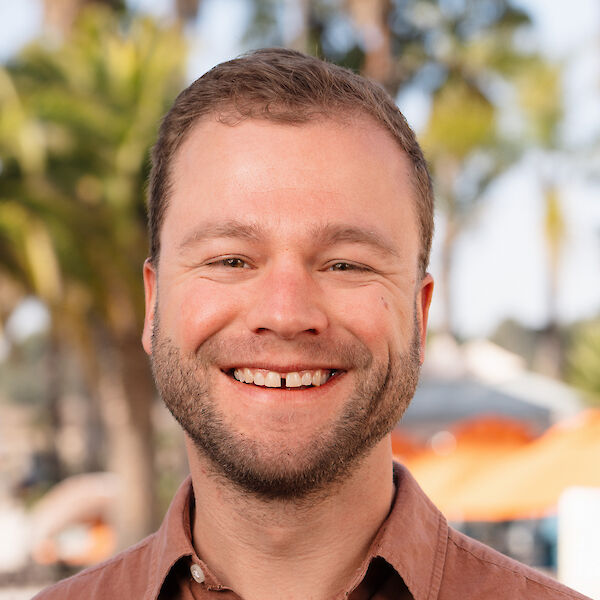
Mark Godin

Mark Godin

Council · Rossland
5 yrs

About

Mark is a candidate for City Councillor. He spends his days trail running, alpine skiing, and (poorly) mountain biking. He works with large cities to improve transit with technology and has a degree in Electrical Engineering.

Policy commitments

Buildings

We all want healthy, affordable, and comfortable homes. These policies will help to lower energy bills, cut pollution, and improve indoor air quality.

– Support electrification of new buildings. No response
– Incentivize electric heat pumps and air filtration systems. No response
– Scale up energy retrofits for existing homes, businesses, and public buildings. No response
– Implement a 'right to cool' bylaw to protect tenants during extreme heat events. No response
Climate Justice

Our community is already experiencing the harmful impacts of climate change caused by fossil fuel pollution, and taxpayers are on the hook to upgrade and repair critical infrastructure.

– Pursue available legal options to recover a fair share of the climate costs facing our community from fossil fuel companies and other big polluters. No response
– Collaborate with Indigenous peoples as partners in the stewardship of the land, air, and water, and work towards reconciliation. No response
Ecosystems

The air we breathe, the water we drink, and the food we eat all rely on healthy ecosystems. Nature can also help protect our community from extreme weather by controlling floods, protecting shorelines, and cooling neighbourhoods. Access to nature improves the health and well-being of residents, and supports biodiversity.

– Protect and restore ecosystems, which are essential to human survival, health, and economic well-being. No response
– Expand and protect tree canopy, parks, and green infrastructure to cool neighbourhoods, clean air, and manage stormwater. No response
Land Use

We envision vibrant, walkable communities that protect nature and improve food security.

– Build affordable homes near jobs, schools, shops, and transit. No response
– Upgrade critical infrastructure for heat, fire, flood, and storm resilience. No response
– Increase food security by supporting local agriculture and community gardens. No response
Transport

Connecting neighbourhoods through public transit and active transportation networks will cut pollution, improve public health, and make our communities more affordable (and fun!).

– Deliver reliable, frequent, affordable local transit. No response
– Advocate to improve regional public transit between communities. No response
– Expand EV charging infrastructure. No response
Watersheds

Climate change, increasing populations, and overconsumption threaten our water security. Healthy watersheds and forests are critical to support clean drinking water, stormwater management, climate resilience, and biodiversity for future generations.

– Implement water conservation plans and educate the public to conserve drinking water. No response
– Protect and restore watersheds as vital municipal infrastructure. No response
– Develop and implement a water security plan. No response
Zero Waste

Zero waste policies reduce pollution, keep waste out of landfills, build resilient local economies, and safeguard public health by shifting society away from a disposable culture toward a sustainable circular economy.

– Support the development of a circular economy to eliminate waste and improve resilience. No response
– Implement bylaws to eliminate waste from new buildings, renovation, and demolition projects and to use existing buildings as efficiently as possible. No response
✓ Supportive
~ Neutral
× Opposed
– No response

Climate action

How have you contributed to climate action in your community through advocacy, past work, advisory committees, volunteer work, and/or reducing your personal carbon footprint?
For the last decade of my career, I've been working directly with cities around the world to improve public transportation and encourage people to choose the bus or train instead of a car. My work helps people complete 2 billion trips on transit each year. Here in Rossland, I focus on supporting our local farmers and food supply, our trail network, and local groups focused on maintaining our environment.

Questions for Rossland

Do you support saving Record Ridge, and if so what will you do a) locally to make sure it doesn’t happen and b) in your work with the Province?
I'm opposed to the development of the proposed Record Ridge mine, and I've personally contributed time and money to opposition efforts. I am endlessly thankful to the team of volunteers who have contributed their hearts and thousands of hours to bring our local voices to the fore throughout the process. Local mining is our legacy, not our future.

The mine itself is a provincial decision, not a City of Rossland decision, so my job as a Councillor is to ensure Rossland's voice carries as much weight as possible in that process. I'd continue the City's existing engagement on the Mine Development Review Committee and keep up direct pressure through our MLA and provincial officials. I wouldn't create new City bylaws or policy on a decision that isn't Council's to make.
What next steps will you prioritize over the next 4 years to move forward on Rossland’s 100% Renewable Kootenay Plan?
Since 2020, the City of Rossland has continued to refine and implement our approach to climate resilience. We've taken practical steps, such as purchasing hybrid and electric city fleet vehicles. As a councillor, I will focus on climate resilience by making sustainable infrastructure-building decisions and choosing low- or no-emission options when renewing end-of-life city assets. I would also work with Tourism Rossland to provide environmentally friendly tips to tourists, such as how to recycle and local shared transportation options.

To help support commuters, I would also work to renew the Wagon Road trail alongside the necessary sewer main replacement project (Rossland/Warfield Green Link trail).
What steps would you take to reduce environmental risks, support long-term prosperity and strengthen Rossland’s resilience as a mountain community closely connected to its natural environment?
Climate change matters to everyone, and I'd argue it matters even more here than in most places. Rossland's economy depends on reliable snow at the resort, and our surrounding forests put us squarely in wildfire country. This isn't a distant issue for us; it's tied directly to how we make a living and how safe our homes are.
That said, a lot of the policy levers that actually move the needle on climate change aren't municipal levers at all. My approach is to focus on what's actually within our control, things like FireSmart planning and wildfire-interface work, and building our infrastructure (retaining walls, stormwater, water supply) to withstand more extreme weather. I’d rather Council do a few concrete, locally controlled things well than adopt sweeping goals we don't have the money or authority to deliver on.
How should the City plan for long-term water security, and what investments, policies or changes in water management would you prioritize to ensure Rossland has a reliable and resilient water supply for both current and future residents?
Rossland's water use has actually decreased by 20% in the last 15 years - since we installed water meters. Still, I understand that Rosslanders are concerned about our drinking water supply in light on continued development, especially in the Red Resort area. Good news, we planned ahead for this! Constructed in 2008, the Ophir Reservoir (reservoir at Black Jack) substantially increased the City's raw/untreated water storage to account for planned growth and well beyond then-current needs. As part of the Utilities Master Plan (City of Rossland, 2025), our treated water supply was determined to be sufficient for planned growth (Official Community Plan) through at least 2051. However, that same report did identify serious deficiencies in other parts of our water system requiring important infrastructure upgrades.

As a Councillor, I will also introduce a consideration for long-term raw water supply, the water we get from streams and rivers, into our Offical Community Plan revision process to ensure that the changing climate remains in line with our water needs from development.
How would you balance the financial benefits of development with protecting the natural environment and ensuring Rossland remains a strong, connected community for year-round residents?
Our Official Community Plan and Zoning Bylaw will be updated during the next council term. The Official Community Plan is particularly important as it defines how (and if) we grow as a community. During the 2nd half of my council term, I will work to ensure that the Community Plan is an up-to-date reflection of our community's needs. I will also investigate whether we can include consideration of future raw water capacity in our capacity planning.

Council is currently considering rezoning a downtown property from Medium Density Residential to Downtown Residential to allow more housing near our core. This is the kind of change I generally support. Rossland's Official Community Plan already identifies downtown density as one of the more sensible ways to add housing without expanding our infrastructure footprint (new roads, water and sewer lines to service sprawl), which ties directly to the capital cost pressures I talk about in my priorities. That said, "generally support" isn't "always support". Each application still deserves a real look at parking, character, and neighbour impact, before I'd take a firm position on any specific project.
What role do you believe the municipal government should play in supporting the health of residents?
Our local government's role in supporting residents' health is somewhat limited, as that is principally a provincial role. However, we can foster a community with strong access to recreation, such as our exceptional trail network. I also feel that our city can support healthy living by providing organizational support to community groups like the Farmer's Market, the Food Bank, and supportive housing through the Lower Columbia Affordable Housing Society.
If you wish to clarify or add information you may use this space.
I have declined to respond to the Policy Commitments section of this questionnaire because I feel that it isn't possible to capture important nuance in multiple-choice responses. Policies and commitments require detail and thought, not headlines. Instead of committing here, I will listen to residents and understand their actual needs, rather than making a top-down decision in advance.

Compiled & presented by

Authorized by West Kootenay Climate Hub, registered sponsor under LECFA, wkclimatehub@gmail.com

Vote4Tomorrow is an independent voter guide to evaluate where local candidates stand on climate and environmental policies that will affect our future.

© 2026 Vote4Tomorrow