
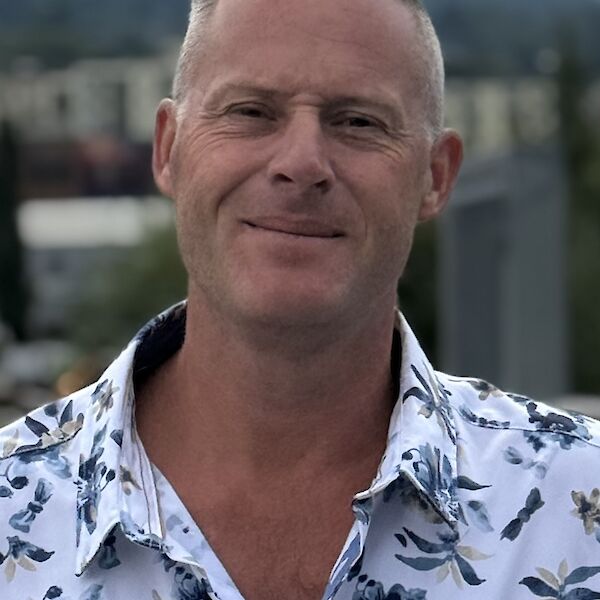
Jeff Weaver

Jeff Weaver

Council · Rossland
Rossland 15 yrs

About

Own a couple of businesses in the West Kootenays, served on council for 4 years in Rossland, soccer coach. Married with 10 and 13 year old girls.

Policy commitments

Buildings

We all want healthy, affordable, and comfortable homes. These policies will help to lower energy bills, cut pollution, and improve indoor air quality.

✓ Support electrification of new buildings. Supportive
✓ Incentivize electric heat pumps and air filtration systems. Supportive
✓ Scale up energy retrofits for existing homes, businesses, and public buildings. Supportive
✓ Implement a 'right to cool' bylaw to protect tenants during extreme heat events. Supportive
Climate Justice

Our community is already experiencing the harmful impacts of climate change caused by fossil fuel pollution, and taxpayers are on the hook to upgrade and repair critical infrastructure.

~ Pursue available legal options to recover a fair share of the climate costs facing our community from fossil fuel companies and other big polluters. Neutral
✓ Collaborate with Indigenous peoples as partners in the stewardship of the land, air, and water, and work towards reconciliation. Supportive
Ecosystems

The air we breathe, the water we drink, and the food we eat all rely on healthy ecosystems. Nature can also help protect our community from extreme weather by controlling floods, protecting shorelines, and cooling neighbourhoods. Access to nature improves the health and well-being of residents, and supports biodiversity.

✓ Protect and restore ecosystems, which are essential to human survival, health, and economic well-being. Supportive
✓ Expand and protect tree canopy, parks, and green infrastructure to cool neighbourhoods, clean air, and manage stormwater. Supportive
Land Use

We envision vibrant, walkable communities that protect nature and improve food security.

✓ Build affordable homes near jobs, schools, shops, and transit. Supportive
✓ Upgrade critical infrastructure for heat, fire, flood, and storm resilience. Supportive
✓ Increase food security by supporting local agriculture and community gardens. Supportive
Transport

Connecting neighbourhoods through public transit and active transportation networks will cut pollution, improve public health, and make our communities more affordable (and fun!).

✓ Deliver reliable, frequent, affordable local transit. Supportive
✓ Advocate to improve regional public transit between communities. Supportive
✓ Expand EV charging infrastructure. Supportive
Watersheds

Climate change, increasing populations, and overconsumption threaten our water security. Healthy watersheds and forests are critical to support clean drinking water, stormwater management, climate resilience, and biodiversity for future generations.

✓ Implement water conservation plans and educate the public to conserve drinking water. Supportive
✓ Protect and restore watersheds as vital municipal infrastructure. Supportive
✓ Develop and implement a water security plan. Supportive
Zero Waste

Zero waste policies reduce pollution, keep waste out of landfills, build resilient local economies, and safeguard public health by shifting society away from a disposable culture toward a sustainable circular economy.

✓ Support the development of a circular economy to eliminate waste and improve resilience. Supportive
✓ Implement bylaws to eliminate waste from new buildings, renovation, and demolition projects and to use existing buildings as efficiently as possible. Supportive
✓ Supportive
~ Neutral
× Opposed
– No response

Climate action

How have you contributed to climate action in your community through advocacy, past work, advisory committees, volunteer work, and/or reducing your personal carbon footprint?
We take personal responsibility and accountability for ourselves in our day to day - only use the car for 90% of transport(not truck), car pool, walk/ebike to work and groceries, kids must walk/bike everywhere. I have installed heat pumps at my commercial building.

Questions for Rossland

Do you support saving Record Ridge, and if so what will you do a) locally to make sure it doesn’t happen and b) in your work with the Province?
This is a big issue for Rossland but this a very small part of our overall responsibilities at CIty Hall. The challenge is that the mine is in the Regional District, is ultimately a provincial decision, and I worry that geopolitics will ultimately make the decision on our behalf in the end.

With what we do have control over at the City, we as councilors have always supported advocacy efforts to ensure an environmental review is required and have reiterated our various concerns in the stakeholder roundtable discussions over and over again, along with First Nations representatives, The City of Trail and Warfield, the RDKB, SRRAC and others. Transportation of ore (truck traffic in town), dust mitigation, environmental impacts on land and water table have all been brought to the forefont on mulitple occasions and we as Councilors have met with the minister of mines or their designate at each UBCM meeting. Their are aspects of the application that are still being reviewed by the province and we will continue to advocate in the channels that we have available. You have to be very careful as a councilor not to cross into an area where you will expose the city to litigation.
What next steps will you prioritize over the next 4 years to move forward on Rossland’s 100% Renewable Kootenay Plan?
Rossland is very dependent on provincial programming to fund electricity retrofit programs (ie. funding dropped by the province) but we supported them while we could and the program was well received. We have supported (decision came from previous council) the implementation of the composting program and it has been a great success. Lastly, Rossland remains committed to an active transportation corridor in the Kootenay Boundary region as is evidenced by the paving of the Centenial trail and the continued support and advocacy by the KCTS and the City for further bike path connectivity. Money is the going concern and our taxes are already going towards our massive infrastructure needs and our ageing recreational amenities, which we need to discuss.
What steps would you take to reduce environmental risks, support long-term prosperity and strengthen Rossland’s resilience as a mountain community closely connected to its natural environment?
We have done our best to continue the fire smart program, but the province has also cut future funding, but we will make that money last as long as we can and stretch the program as far as it will go.
How should the City plan for long-term water security, and what investments, policies or changes in water management would you prioritize to ensure Rossland has a reliable and resilient water supply for both current and future residents?
Growth and fresh water is a going concern for all small BC communities, particularly communities like Rossland with a ski resort in our city limits. The City of Rossland public works staff does an excellent job monitoring our water levels. Should any action be required, I am prepared to limit water use where and when appropriate. The ski hill uses some of our water for snowmaking but there are strict rules already in place to ensure that our water table is not affected in any meaningful way. If our water is low, there is no snowmaking allowed. Population growth vis a vis the water is a growing concern for many rural BC communities and I am prepared to make any hard decisions that are required should we have to limit water use due to population growth.
How would you balance the financial benefits of development with protecting the natural environment and ensuring Rossland remains a strong, connected community for year-round residents?
This is a question that is on the minds of most Rosslanders but it can really be an eye of the beholder sort of situation. Have you heard the saying "everyone wants to be the last to arrive"? I mean that tongue in cheek, of course, but essentially people discover Rossland at different stages in their lives, and i don't think anyone comes to Rossland and says "wow, i can't wait until it becomes busier." We all want it to stay the way it was when we arrived.

We must face these issues as they arise, because we cannot just shut down development. The zoning for most of the development at the ski hill has been in place for over 20 years. With any new development, our city staff request a lot of stipulations, and an environmental engineer is required to sign off on all development in sensitive areas, and then it comes to council and we vote on the development proposal. Any developer has a legal right to develop and we cannot just tell someone we don't want more people here - that's not legal and it's in our OCP to develop - and they have a right to develop the zoned land. What we do have control over is the aforementioned stipulations and their enforcement.
What role do you believe the municipal government should play in supporting the health of residents?
Many of the issues facing Rossland are provincial jurisdiction, access to healthcare and housing being the most pressing in Rossland. Where we do have a lot of potential is ensuring our residents have safe and convenient access to the outdoors that benefits their mental and physical health.
If you wish to clarify or add information you may use this space.

Compiled & presented by

Authorized by West Kootenay Climate Hub, registered sponsor under LECFA, wkclimatehub@gmail.com

Vote4Tomorrow is an independent voter guide to evaluate where local candidates stand on climate and environmental policies that will affect our future.

© 2026 Vote4Tomorrow