
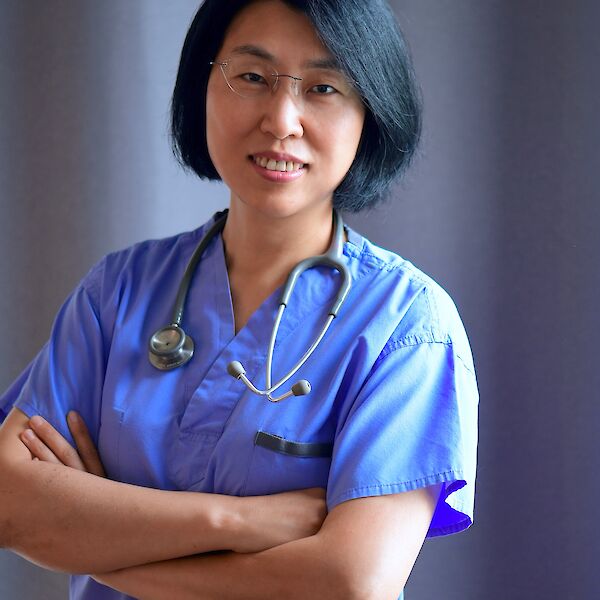
Melody Hong Yan Pan

Melody Hong Yan Pan

Council · Richmond
Richmond

About

Serving Richmond for 26+ years, Registered Nurse and leader Melody Pan believes in service, listening and accountability. She advocates for inclusive communities, emergency preparedness, seniors, people with disabilities, and those too often unheard.

Policy commitments

Buildings

We all want healthy, affordable, and comfortable homes. These policies will help to lower energy bills, cut pollution, and improve indoor air quality.

✓ Support electrification of new buildings. Supportive
✓ Incentivize electric heat pumps and air filtration systems. Supportive
✓ Incentivize renewable energy, battery storage, and smart-grid technologies in new and existing buildings to improve energy security. Supportive
✓ Scale up energy retrofits for existing homes, businesses, and public buildings. Supportive
✓ Implement a 'right to cool' bylaw to protect tenants during extreme heat events. Supportive
Climate Justice

Our community is already experiencing the harmful impacts of climate change caused by fossil fuel pollution, and taxpayers are on the hook to upgrade and repair critical infrastructure.

✓ Enact a moratorium on AI data centres to protect our energy and water resources. Supportive
✓ Pursue available legal options to recover a fair share of the climate costs facing our community from fossil fuel companies and other big polluters. Supportive
✓ Collaborate with Indigenous peoples as partners in the stewardship of the land, air, and water, and work towards reconciliation. Supportive
Ecosystems

The air we breathe, the water we drink, and the food we eat all rely on healthy ecosystems. Nature can also help protect our community from extreme weather by controlling floods, protecting shorelines, and cooling neighbourhoods. Access to nature improves the health and well-being of residents, and supports biodiversity.

✓ Protect and restore ecosystems, which are essential to human survival, health, and economic well-being. Supportive
✓ Expand and protect tree canopy, parks, and green infrastructure to cool neighbourhoods, clean air, and manage stormwater. Supportive
✓ Prioritize native tree planting in all areas, especially those with low tree cover, higher population densities, and more vulnerable residents. Supportive
✓ Create connected urban greenways for people and wildlife. Supportive
Land Use

We envision vibrant, walkable communities that protect nature and improve food security.

✓ Build affordable homes near jobs, schools, shops, and transit. Supportive
✓ Upgrade critical infrastructure for heat, fire, flood, and storm resilience. Supportive
✓ Increase food security by supporting local agriculture and community gardens. Supportive
Transport

Connecting neighbourhoods through public transit and active transportation networks will cut pollution, improve public health, and make our communities more affordable (and fun!).

✓ Deliver reliable, frequent, affordable local transit. Supportive
✓ Advocate to improve regional public transit between communities. Supportive
✓ Expand EV charging infrastructure. Supportive
Watersheds

Climate change, increasing populations, and overconsumption threaten our water security. Healthy watersheds and forests are critical to support clean drinking water, stormwater management, climate resilience, and biodiversity for future generations.

✓ Implement water conservation plans and educate the public to conserve drinking water. Supportive
✓ Protect and restore watersheds as vital municipal infrastructure. Supportive
✓ Develop and implement a water security plan. Supportive
Zero Waste

Zero waste policies reduce pollution, keep waste out of landfills, build resilient local economies, and safeguard public health by shifting society away from a disposable culture toward a sustainable circular economy.

✓ Implement zero waste bylaws to divert organic waste and recyclables from disposal. Supportive
✓ Support the development of a circular economy to eliminate waste and improve resilience. Supportive
✓ Implement bylaws to eliminate waste from new buildings, renovation, and demolition projects and to use existing buildings as efficiently as possible. Supportive
✓ Supportive
~ Neutral
× Opposed
– No response

Climate action

How have you contributed to climate action in your community through advocacy, past work, advisory committees, volunteer work, and/or reducing your personal carbon footprint?
As a Registered Nurse, I believe environmental and climate well-being are fundamental to human and community health and are important social determinants of health.

My climate-action work includes protecting greenspace, reducing healthcare waste, and promoting responsible use of resources. In 2013–2014, I served as a volunteer coordinator in my neighbourhood and helped lead successful advocacy to preserve approximately five acres of greenspace at the former Steveston High School site for long-term community use.

In healthcare, I led a project to reduce waste in the Richmond home-care setting and presented this work internationally at an International Council of Nurses Congress. For more than 10 years, I have volunteered to redirect unused medical supplies to international medical-aid organizations, extending their useful life. For the past six years, I have also participated in food-allocation initiatives supporting Vancouver’s Downtown Eastside, helping reduce food waste while supporting community members.

I also see climate action as an investment in community resilience and future generations. My nursing background has shown me how environmental conditions, resource use, and social inequities can directly affect health. I believe local action matters from protecting natural spaces and reducing waste to building awareness and practical solutions. I value collaboration with residents, organizations, and community partners to turn sustainability principles into meaningful, measurable actions that improve both environmental well-being and quality of life.

Questions for Richmond

Do you support or oppose the Fortis Tilbury LNG expansion?
As a Registered Nurse, I believe environmental health and community health are closely connected. I would therefore expect rigorous, transparent assessment of greenhouse-gas emissions, air quality, cumulative environmental impacts, emergency preparedness, and potential effects on nearby communities and the Fraser River ecosystem.

I also believe Indigenous Peoples’ rights, knowledge, perspectives, and concerns must be meaningfully respected and considered throughout the decision-making process. I would support meaningful opportunities for Indigenous communities and Richmond residents to access information, participate, and have their voices heard.

My position would be informed by the best available evidence, Indigenous perspectives, community input, and the findings of the environmental assessment, rather than making a decision before those processes are complete.
Do you prioritize active transportation with investments in walking, rolling, and cycling infrastructure that is safe, connected, easy to navigate, and accessible?
I encourage investing in safe, connected, accessible infrastructure for walking, rolling, and cycling because active transportation can contribute to both mental well-being and overall physical health. With reasonable budgets, cities can also consider practical amenities such as self-service public bicycle repair stations, which make cycling more convenient and accessible for residents.
Do you support acceleration of the City's adoption of the Zero Carbon Step Code?
I support accelerating the City’s transition toward the Zero Carbon Step Code, while ensuring implementation is practical and considers housing affordability, construction costs, energy infrastructure, and the capacity of local builders.

As a Registered Nurse, I believe healthy buildings must address both environmental sustainability and indoor air quality. Energy-efficient buildings should have adequate ventilation and measures to address indoor pollutants such as radon, which is a significant preventable risk for lung cancer. Climate action should not unintentionally create new indoor-health concerns.

Richmond has already adopted the Energy Step Code and Zero Carbon Step Code. I would support clear timelines, practical guidance, and collaboration with builders, BC Hydro, residents, and local post-secondary institutions to make the transition achievable and equitable.

For me, climate action should mean healthier buildings as well as lower emissions, protecting both environmental sustainability and the health of the people who live and work in Richmond.
Do you support expansion of Richmond's award-winning district energy systems?
I support expanding Richmond’s district energy systems where they are technically and economically feasible. Richmond has demonstrated that district energy can provide reliable heating and cooling while supporting lower-carbon energy use, and the City Centre expansion is designed to incorporate sewer heat recovery.
What will you do to increase the number and types of green jobs and career training opportunities in Richmond?
I would support partnerships among the City, local employers, and Richmond’s post-secondary institutions including BCIT, KPU, and TWU to expand green-job pathways and career training in clean technology, energy efficiency, sustainable construction, waste reduction, urban agriculture, and environmental services. I would encourage apprenticeships, internships, and practical skills programs for youth, newcomers, people with disabilities, and workers transitioning into emerging green industries. This can connect Richmond’s environmental goals with local employment and skills development.

Compiled & presented by

Vote4Tomorrow is an independent voter guide to evaluate where local candidates stand on climate and environmental policies that will affect our future.

© 2026 Vote4Tomorrow