
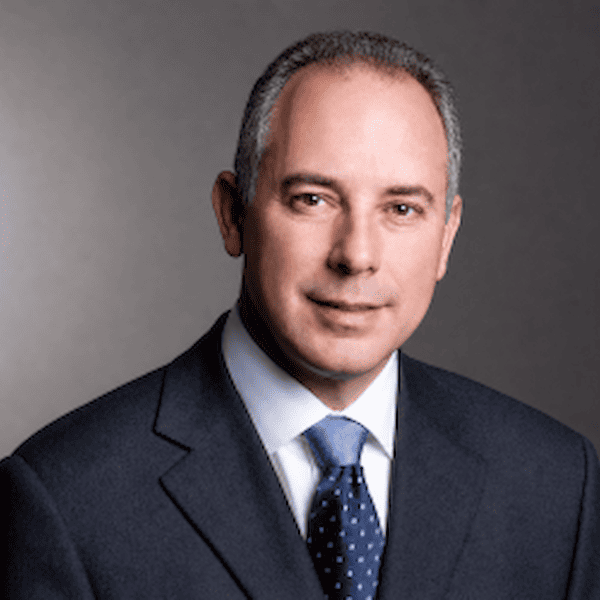
Howard Jampolsky
About
Policy commitments
We all want healthy, affordable, and comfortable homes. These policies will help to lower energy bills, cut pollution, and improve indoor air quality.
Our community is already experiencing the harmful impacts of climate change caused by fossil fuel pollution, and taxpayers are on the hook to upgrade and repair critical infrastructure.
The air we breathe, the water we drink, and the food we eat all rely on healthy ecosystems. Nature can also help protect our community from extreme weather by controlling floods, protecting shorelines, and cooling neighbourhoods. Access to nature improves the health and well-being of residents, and supports biodiversity.
We envision vibrant, walkable communities that protect nature and improve food security.
Connecting neighbourhoods through public transit and active transportation networks will cut pollution, improve public health, and make our communities more affordable (and fun!).
Climate change, increasing populations, and overconsumption threaten our water security. Healthy watersheds and forests are critical to support clean drinking water, stormwater management, climate resilience, and biodiversity for future generations.
Zero waste policies reduce pollution, keep waste out of landfills, build resilient local economies, and safeguard public health by shifting society away from a disposable culture toward a sustainable circular economy.
Climate action
In my own life, I have made choices to reduce my environmental footprint. I own only plug-in electric vehicles, and my home uses a heat pump for heating and cooling, reducing reliance on conventional fossil-fuel heating.
In my professional and community work, I have also looked for practical ways to conserve resources. At the cemetery I operate, I had a well installed for irrigation so that we are not using treated potable drinking water to maintain the grounds.
Through my municipal involvement, including my work as Chair of Richmond’s Economic Advisory Committee, I have supported economic development that recognizes the importance of sustainability, innovation and clean technology.
My approach to climate action is straightforward: set achievable goals, take practical action and measure real results. I support reducing actual emissions and conserving energy and water. I do not support purchasing carbon offset credits simply to achieve climate targets on paper. I would rather see resources invested in measures that produce tangible local improvements and genuine reductions in emissions and resource consumption.
Climate action also needs to be economically sustainable. We should continue finding practical opportunities for the City, residents and businesses to reduce their environmental impact while maintaining affordability and quality of life.
Questions for Richmond
I believe LNG can play an important role in our energy mix, particularly as a transition fuel and as an alternative to higher-emission fuels in applications such as marine transportation. The Tilbury facility also contributes to energy security and resiliency in the Lower Mainland.
However, my support is not unconditional. Any expansion must meet stringent standards for safety, air and water quality, greenhouse-gas emissions, emergency preparedness and protection of the Fraser River and surrounding communities.
My approach is to balance environmental responsibility with economic and energy realities. With proper controls, monitoring and enforcement, I believe LNG can be part of a responsible energy policy while supporting jobs, economic activity and energy security.
My priority is to make sure these investments are well planned and integrated with the broader transportation network. A bike lane or pathway is most useful when it connects people safely to schools, community centres, transit, shopping, employment areas and other existing routes. Sometimes relatively small connections between existing infrastructure can make a significant difference.
I also believe we need to recognize that Richmond residents travel in different ways. Active transportation should add safe and convenient choices without unnecessarily creating congestion or reducing the effectiveness of major transportation corridors.
Accessibility is equally important. Sidewalks, pathways, crossings and public spaces should work for seniors, people using mobility devices, families with strollers, cyclists and pedestrians.
My approach is practical rather than ideological: identify where connections are missing, determine where investments will improve safety and mobility, and prioritize projects that provide the greatest community benefit. A well-designed transportation system should allow drivers, transit users, cyclists, pedestrians and people with mobility challenges to move safely and efficiently throughout Richmond.
Richmond has already demonstrated leadership in energy-efficient building standards. I support continuing that progress, particularly where new construction can reduce energy consumption and emissions over the life of a building.
However, accelerating requirements should not happen without considering the effect on housing costs, the capacity of our electrical infrastructure, and whether builders and homeowners have practical and affordable ways to comply. Richmond itself has previously considered the need for flexibility where adequate electrical service may not be available.
My approach is to achieve real emissions reductions rather than simply meet targets on paper. Where technology, electrical capacity and economics support moving faster, I am supportive. Where legitimate infrastructure or affordability issues exist, there should be reasonable flexibility.
Climate policy should be ambitious, but it also needs to be practical, measurable and affordable.
District energy is a good example of the kind of climate action I support: practical infrastructure that produces measurable results while serving the community over the long term. By providing centralized heating and cooling to multiple buildings, district energy can improve energy efficiency, reduce emissions and create opportunities to use lower-carbon and renewable energy sources as technology evolves.
Richmond has already demonstrated that it can be a leader in this area. I would like to see us build on that success by identifying additional neighbourhoods and developments where expansion makes economic and operational sense.
At the same time, expansion should be based on sound business cases, lifecycle costs and measurable environmental benefits. We should ensure that investments provide good value for residents and businesses.
This is exactly the kind of environmental initiative I favour: invest in real infrastructure, achieve real reductions and measure the results.
I represented Richmond for nine years on the Vancouver Airport Authority Board, where I saw firsthand how major infrastructure and economic development can create thousands of jobs and support new technologies. Today, as Chair of Richmond’s Economic Advisory Committee, my focus is on attracting investment and creating high-quality, family-supporting employment in Richmond.
I want Richmond to actively pursue companies in clean technology, advanced manufacturing, energy innovation and other emerging industries. We have significant advantages: YVR, the Port, excellent transportation connections and valuable industrial lands. We need to protect those employment lands and increasingly consider jobs per acre when deciding how they are used.
Career training must be part of that strategy. The City should work with employers, educational institutions, industry associations and senior governments to identify the skills these emerging industries require and help connect Richmond residents with training opportunities.
Economic development and climate action do not have to compete. Done properly, attracting green industries can reduce environmental impacts while creating the next generation of well-paying Richmond jobs.
Compiled & presented by

Vote4Tomorrow is an independent voter guide to evaluate where local candidates stand on climate and environmental policies that will affect our future.