
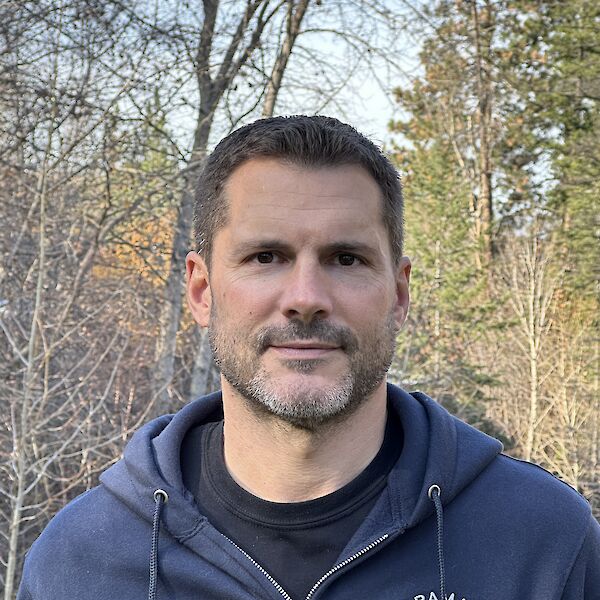
Rob Bilyk
About
Policy commitments
We all want healthy, affordable, and comfortable homes. These policies will help to lower energy bills, cut pollution, and improve indoor air quality.
The air we breathe, the water we drink, and the food we eat all rely on healthy ecosystems. Nature can also help protect our community from extreme weather by controlling floods, protecting shorelines, and cooling neighbourhoods. Access to nature improves the health and well-being of residents, and supports biodiversity.
We envision vibrant, walkable communities that protect nature and improve food security.
Connecting neighbourhoods through public transit and active transportation networks will cut pollution, improve public health, and make our communities more affordable (and fun!).
Climate change, increasing populations, and overconsumption threaten our water security. Healthy watersheds and forests are critical to support clean drinking water, stormwater management, climate resilience, and biodiversity for future generations.
Zero waste policies reduce pollution, keep waste out of landfills, build resilient local economies, and safeguard public health by shifting society away from a disposable culture toward a sustainable circular economy.
Climate action
At our Naramata property, we have installed solar generation and are working to expand that capacity. We are also preparing to replace one of our vehicles with an electric vehicle, with the goal of offsetting its charging through solar power generated on our property.
In constructing our new home, we prioritized long-term energy efficiency through an airtight ICF building envelope, heat-pump heating and cooling, a hybrid heat-pump water heater and energy-efficient appliances. These decisions required a greater upfront investment but should reduce energy consumption and emissions over the life of the home.
As a member of the Naramata Volunteer Fire Department and a First Responder, I have also contributed to our community's preparedness and resilience in the face of increasing wildfire risk. I have advocated for stronger collaboration between the RDOS, fire departments, volunteers and community representatives to improve long-term fire-service governance and planning.
I also regularly help with the local school garden, which supports hands-on learning and a greater understanding of local food production.
These experiences have reinforced my belief that climate action should combine responsible personal choices with practical, collaborative community leadership.
Questions for Regional District of Okanagan-Similkameen
I support safer walking and cycling connections between Naramata, other parts of Area E and Penticton. This includes working with the Province on priority safety improvements, pursuing grants for safer shoulders and separated routes where feasible, and connecting the KVR Trail with village destinations, parks, the school and transit stops.
For public transit, I would work with the RDOS and BC Transit to review Route 10 ridership and scheduling gaps. Improvements could include more useful travel times, better Penticton connections, and seasonal or evening service where demand supports it.
Reducing emissions also means bringing more services and activities into the community. I support a community center with exercise and sporting facilities, a year-round marketplace building on our farmers' market, and shared drop-in office space. These amenities would strengthen community life while reducing trips to Penticton for recreation, shopping and work.
I have also been discussing whether Naramata could become a safe, provincially approved golf-cart community, similar to programs elsewhere in B.C., allowing neighbourhood zero-emission vehicles to replace some short local car trips.
I also support strategically located public EV charging. My role would be to bring Area E priorities forward, pursue funding and partnerships, and work with the appropriate agencies to deliver practical results.
I support low-density options that fit the village's character, including smaller detached homes, secondary suites, seniors-oriented housing and small-scale developments such as the townhomes at 955 Robinson Avenue and Naramata Court at 650 Ellis Avenue. More opportunities for seniors to downsize could help long-time residents remain in the community and make existing family homes available.
Zoning alone cannot make housing affordable at every income level. I would not promise that the RDOS could directly provide housing for everyone, but would ensure our policies do not unnecessarily prevent attainable housing forms. I would consider proposals involving nonprofit organizations and provincial or federal partners when they demonstrate local need, sustainable funding and an appropriate community fit.
Affordability also includes the overall cost of living. Housing proposals should consider access to employment, transportation and essential services, not only the initial cost of the home.
Climate resilience should be incorporated through safe siting, water efficiency, FireSmart design, shade, durable materials and energy-efficient construction. I would advocate for measures that improve resilience without adding avoidable costs that place housing further out of reach.
My goal is to enable practical housing choices for different stages of life and income levels while maintaining Naramata's character, not development simply for the sake of growth.
The Area E OCP does not designate industrial land and directs larger industrial uses toward serviced areas in Penticton. The proposed Regional Growth Strategy reinforces that direction by discouraging industrial development in Village Settlement Areas such as Naramata. I would maintain that direction and ensure future OCP and zoning updates clearly address large data centers in our rural, agricultural and environmentally sensitive area.
If a data center were proposed where that use was not permitted, it would generally require rezoning and could also require an OCP amendment - not simply a variance. I would insist on a transparent process, meaningful community consultation and clear information before the RDOS Board considered the application.
Any proposal would need credible evidence regarding water demand, drought impacts, electricity and grid requirements, backup generation, noise, heat, wastewater, wildfire response, agriculture, ecosystems, and realistic long-term employment and tax benefits.
Based on Area E's limited services, water constraints, environmental values and established planning direction, I would oppose a large AI data center unless compelling evidence demonstrated clear community support and no unacceptable impacts. That is a very high bar, and I do not currently see Area E as an appropriate location.
I have presented a Collaborative Governance Review Proposal calling for a Volunteer Fire Services Governance Review Task Force. It would bring together RDOS representatives, fire chiefs, volunteer firefighters, community representatives and independent experts to assess the model, gather community feedback and recommend improvements. I have also shared a Fire Commission model as one option. It could provide focused strategic oversight, formal firefighter and community representation, and long-term planning, while the Board retains taxpayer accountability and fire chiefs retain operational authority. I would work to have the review undertaken and its recommendations acted upon.
Because much of the surrounding forest is Crown or privately owned, the RDOS cannot complete all risk-reduction work itself. I would bring the responsible parties together and advocate for funding, professionally designed fuel treatments and strategic fuel breaks. I would also seek a transparent, science-based review of forestry practices, including herbicide use that suppresses broadleaf growth, considering wildfire behaviour, biodiversity, water and forest health.
While wildfire would be my immediate focus, resilience requires an all-hazards approach. I would ask the Board to prioritize reviewing and updating RDOS emergency operations planning so responsibilities, inter-agency coordination, public communication and community preparedness are current, understood and regularly tested.
1. Building electrification: I support the transition and the provincial Zero Carbon Step Code, but not an immediate blanket RDOS requirement that every new building be fully electric.
2 and 3. Renewable energy, storage, smart-grid technology and retrofits: I support action on RDOS facilities, helping residents access programs, pursuing external funding and working with utilities and senior governments that control grid infrastructure and most incentives.
6. Affordable housing: I support using the OCP and zoning to enable attainable, appropriately scaled options, including seniors' and small-scale housing that fit Naramata's character. This is not a commitment for the RDOS to directly build housing or promote growth for its own sake.
10. Safe bike and roll networks: I would work with the Province and Penticton because rural roads are not controlled by the RDOS.
14. Zero-waste bylaws: I support practical measures developed through community consultation and matched with accessible services and facility capacity.
16. Construction, renovation and demolition waste: I support reuse and waste reduction, but 'eliminate' is an objective rather than an immediate absolute requirement. Implementation should be practical and proportionate and consider impacts on homeowners and builders.
Compiled & presented by
Vote4Tomorrow is an independent voter guide to evaluate where local candidates stand on climate and environmental policies that will affect our future.