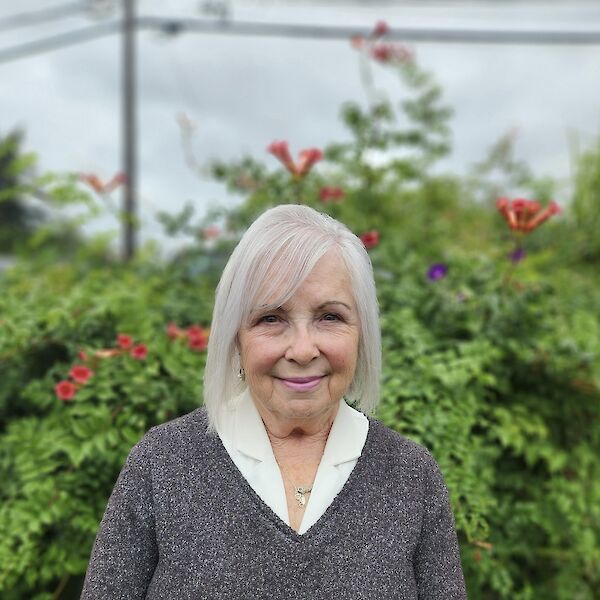
Cheryl Halla

Cheryl Halla

Director · Regional District of Okanagan-Similkameen
Area I 40 yrs

About

Moved to the area in 1980, and worked for the Kaleden Irrigation District for 38 years. My experience with not only Kaleden ID, but two other Improvement Districts as a Certified Public Administrator has enabled me to understand community needs.

Policy commitments

Buildings

We all want healthy, affordable, and comfortable homes. These policies will help to lower energy bills, cut pollution, and improve indoor air quality.

✓ Support electrification of new buildings. Supportive
✓ Incentivize renewable energy, battery storage, and smart-grid technologies in new and existing buildings to improve energy security. Supportive
~ Scale up energy retrofits for existing homes, businesses, and public buildings. Neutral
Ecosystems

The air we breathe, the water we drink, and the food we eat all rely on healthy ecosystems. Nature can also help protect our community from extreme weather by controlling floods, protecting shorelines, and cooling neighbourhoods. Access to nature improves the health and well-being of residents, and supports biodiversity.

✓ Protect and restore ecosystems, which are essential to human survival, health, and economic well-being. Supportive
✓ Expand and protect tree canopy, parks, and green infrastructure to cool neighbourhoods, clean air, and manage stormwater. Supportive
Land Use

We envision vibrant, walkable communities that protect nature and improve food security.

✓ Build affordable homes near jobs, schools, shops, and transit. Supportive
✓ Upgrade critical infrastructure for heat, fire, flood, and storm resilience. Supportive
✓ Increase food security by supporting local agriculture and community gardens. Supportive
Transport

Connecting neighbourhoods through public transit and active transportation networks will cut pollution, improve public health, and make our communities more affordable (and fun!).

✓ Advocate to improve regional public transit between communities. Supportive
~ Build bike and roll networks that are safe for everyone. Neutral
~ Expand EV charging infrastructure. Neutral
Watersheds

Climate change, increasing populations, and overconsumption threaten our water security. Healthy watersheds and forests are critical to support clean drinking water, stormwater management, climate resilience, and biodiversity for future generations.

✓ Implement water conservation plans and educate the public to conserve drinking water. Supportive
✓ Protect and restore watersheds as vital municipal infrastructure. Supportive
Zero Waste

Zero waste policies reduce pollution, keep waste out of landfills, build resilient local economies, and safeguard public health by shifting society away from a disposable culture toward a sustainable circular economy.

✓ Implement zero waste bylaws to divert organic waste and recyclables from disposal. Supportive
~ Support the development of a circular economy to eliminate waste and improve resilience. Neutral
~ Implement bylaws to eliminate waste from new buildings, renovation, and demolition projects and to use existing buildings as efficiently as possible. Neutral
✓ Supportive
~ Neutral
× Opposed
– No response

Climate action

How have you contributed to climate action in your community through advocacy, past work, advisory committees, volunteer work, and/or reducing your personal carbon footprint?
I have contributed to water conservation plans in the communities of Kaleden and Keremeos. I also am the exec director of the Water Supply Assoc of BC, who represents the interests of domestic and irrigation customers in BC. Preserving the water supply to a community is very important to me.

Questions for Regional District of Okanagan-Similkameen

Transportation is the largest source of climate pollution in the RDOS. What specific policies do you most support and will work for to address transportation emissions, including improved public transit, and safe walking and biking?
I will review current policies and bylaws and research existing issues regarding public transportation, school bussing and biking and move forward from there.
How will you approach land use and housing policies to ensure that people of all income levels—including low-income residents—have access to safe, affordable homes that are also resilient to a changing climate?
By reviewing current policies and bylaws, review issues already presented to the RDOS and determine if current plans address these issues.
AI data centres use a lot of energy and water. What will be your approach if an AI data centre is proposed for your Area?
Review all aspects of any AI proposal to ensure the best incentives for reducing energy consumption are utilized, and ensure there is enough water to sustain an AI proposal, considering the current drought situation.
The RDOS is vulnerable to many climate-related risks (e.g. wildfire, drought, smoke, flooding, heat, local supply chains). How will you address these risks to support our community’s resilience?
Review policies and bylaws related to risks; review Fire Smart incentives in my communities; review flood control policies; dam safety policies, and ensure they are up to date and utilized.
If you wish to clarify or add information you may use this space (250 word limit).
Throughout my career, as a Public Administrator, I have developed the skills to review, analyze, understand board meeting policies, examine and implement budgets, research grant programs for communities, understand financial documents, draft and implement bylaws and policies. Above all I have treated my customers with respect, listened to issues and concerns, and resolved many conflicts through communication. I have always felt that even though bylaws and policies are there for a reason, it is most important to ensure that the people in a community are listened to and it will be my job to help these communites in any way I can in my position.

Compiled & presented by

Authorized by First Things First Okanagan, registered sponsor under LECFA, info@firstthingsfirstokanagan.com

Vote4Tomorrow is an independent voter guide to evaluate where local candidates stand on climate and environmental policies that will affect our future.

© 2026 Vote4Tomorrow