
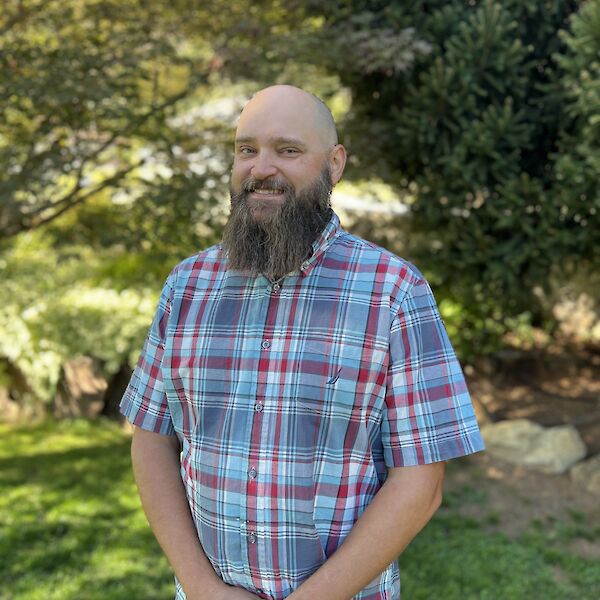
Landon Veregin
About
Policy commitments
We all want healthy, affordable, and comfortable homes. These policies will help to lower energy bills, cut pollution, and improve indoor air quality.
Our community is already experiencing the harmful impacts of climate change caused by fossil fuel pollution, and taxpayers are on the hook to upgrade and repair critical infrastructure.
The air we breathe, the water we drink, and the food we eat all rely on healthy ecosystems. Nature can also help protect our community from extreme weather by controlling floods, protecting shorelines, and cooling neighbourhoods. Access to nature improves the health and well-being of residents, and supports biodiversity.
We envision vibrant, walkable communities that protect nature and improve food security.
Connecting neighbourhoods through public transit and active transportation networks will cut pollution, improve public health, and make our communities more affordable (and fun!).
Climate change, increasing populations, and overconsumption threaten our water security. Healthy watersheds and forests are critical to support clean drinking water, stormwater management, climate resilience, and biodiversity for future generations.
Zero waste policies reduce pollution, keep waste out of landfills, build resilient local economies, and safeguard public health by shifting society away from a disposable culture toward a sustainable circular economy.
Climate action
Personally I try to live my life in a way that has a little waste as possible. We recycle aggressively which helps reduce the amount that our family of four sends to the landfill to a half bag per week. For this I am proud. I’m in the process of designing a rainwater collection system that I will use to irrigate our lawn and gardens. However, I do often feel guilty about not doing more. I think that’s a common theme among many of us. I want to compost but I am scared of attracting wildlife.
Questions for Regional District of Central Kootenay
We all cherish what we have, I hope to help show residents that we can help slow the deterioration that we have self-inflicted on our environment, by updating our practices. We can prove to our next generation that we care about what future we are creating for them. We can show them that it IS true that economic prosperity is environmental prosperity. They are not, and cannot be mutually exclusive. Old habits die hard. Holding on to a failing model only creates anger and resentment. Smart planning is the way to prosperity but actions must be taken now.
I would need to show the electorate that communication between local government and the electorate can be transparent, focused and easily accessible. It would be a main priority of mine to foster the healthiest possible relationship between government and citizen, one that embraces healthy discourse and supports scientific consensus so that mutual advanced is embraced by the majority.
I think consistent, easy to follow guidelines that follow the 10 point action plan have to be continuously made. People need to understand the plan to be onboard. If it seems convoluted, overly bureaucratic and laden with red tape or overly expensive visa via the benefits, people will jump ship.
Perhaps most obviously for us rural residents, particularly in areas E and F, we have been hit with incredibly high increases to our electricity bills. Nelson Hydro and Fortis BC have for decades provided an inconsistent product to our communities that features common outages for significant periods of time. Nelson Hydro and Fortis BC via the BCUC have now implemented up to a 15.98% increase adding insult to injury. Probably the most common concern I’ve heard when canvassing constituents on cost of living has been electricity. It is very difficult for residents of E and F to see the generating stations in front of our eyes and justify these cost increases. I have had residents suggest costly litigation measures due to perceived failure at the local government level to quell these unjustified cost increases. That cannot be the way forward.
It would be my absolute responsibility to do everything possible to combat this price gouging. Whether that means following the path of litigation is yet to be seen but that would be up to the electorate to decide. If checks and balances fail, we must fight.
Personally I believe that AI should be treated like a utility, one that’s managed by the people and for the people. There are certainly ways of achieving responsible AI advancements. The public must be made fully aware of all risks and rewards and have continual say in mitigating and promoting those.
One of my main mandates is to bring to light the severity of our situation. Often in discussions people tell me to “just look around, it’s nothing but trees everywhere. We have more water than anywhere else in the world. What are you so worried about. It’s just the Globalist Agenda fooling you into paying more at the pump.” What’s most concerning is the under-education of the real situation. Where to put the blame for that is irrelevant. How to mitigate that is my goal. Sowing the understanding of “Economics is Environment” just like “time is space”. Trying to put a dollar value on a forest is absurd. Discussing the currency equivalent of clean, fresh drinking water is impossible.
Discussing and planning how we can take steps to reduce our loss of prosperity both in pocket and underfoot is my passion and my privilege. Taking calculated, pinpointed measures is the method.
The fastest and loudest is fire. It comes without warning and takes everything it wants without consideration. It screams for attention. But fire isn’t as dangerous without draught. The frequency and severity of floods are scientifically proven to be directly related to drought. Fire is our main concern here for air quality and therefore again dictated by drought. Supply chains are broken by these all-interlinked disasters which all comes back to one main cause — inaction.
My job as director will be to connect with other directors within the adjacent RD. Without unified action our measures will be too little too late. Fostering relationships with the many other progressive environmentally-focused directors and municipal officials is the methodology. Convincing the rest is the challenge.
No two districts are the same. But no district is without the same environmental concern. We are not separated by a line on a map but by a figurative line in the sand. That can be kicked aside in the name of democracy and cooperation. Having consistent review, consultation and collaboration on RD actions will enable residents to see action happening and better gauge its implementation.
I believe it’s all about infrastructure. That can sound scary because it’s associated with increased spending in a time when fiscal responsibility is an ever expanding priority. Capital spending needs to provide capital investment in communities not just by building structures but by building futures through capacity and employment.
Goals like the 100% Renewable Energy Plan (by 2050) are already in place and need to be implemented responsibly and efficiently. For such lofty yet achievable goals, targets like the 50% reduction of 2018 levels by 2030 have to be hit consistently in order to make the plan feasible.
Not all infrastructure projects need to be enormous either. Initiatives to improve regional active transportation corridors and rural mobility can encourage usage. Once people start using these alternatives and realize their benefits attention is paid and expansion can occur. Literally squeaky wheels.
Land use planning and development based around convenient, consistent real-life-useful public transportation is something that needs to be considered more deeply in communities where driving is a major expense and a major contributor to pollution. OCPs can help define how that may look.
Finally lobbying provincial and federal government agencies for access to grants for EVs and rural charging stations to support those vehicles will make accessing cleaner personal transportation more feasible.
Compiled & presented by
Vote4Tomorrow is an independent voter guide to evaluate where local candidates stand on climate and environmental policies that will affect our future.