
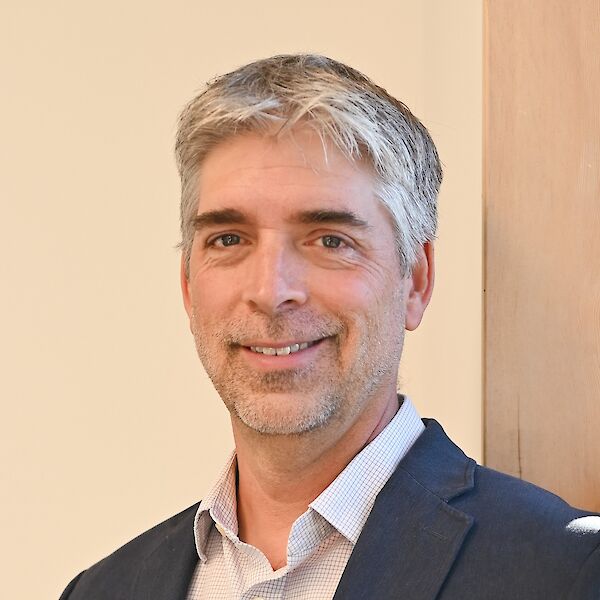
Danny Turner
About
Policy commitments
We all want healthy, affordable, and comfortable homes. These policies will help to lower energy bills, cut pollution, and improve indoor air quality.
Our community is already experiencing the harmful impacts of climate change caused by fossil fuel pollution, and taxpayers are on the hook to upgrade and repair critical infrastructure.
The air we breathe, the water we drink, and the food we eat all rely on healthy ecosystems. Nature can also help protect our community from extreme weather by controlling floods, protecting shorelines, and cooling neighbourhoods. Access to nature improves the health and well-being of residents, and supports biodiversity.
We envision vibrant, walkable communities that protect nature and improve food security.
Connecting neighbourhoods through public transit and active transportation networks will cut pollution, improve public health, and make our communities more affordable (and fun!).
Climate change, increasing populations, and overconsumption threaten our water security. Healthy watersheds and forests are critical to support clean drinking water, stormwater management, climate resilience, and biodiversity for future generations.
Zero waste policies reduce pollution, keep waste out of landfills, build resilient local economies, and safeguard public health by shifting society away from a disposable culture toward a sustainable circular economy.
Climate action
On our farm, we reworked our irrigation system with support from the Columbia Basin Trust and the Province of BC. It returned enough water to the Erickson water system to supply 25 households. We maintain a riparian area and pond. We heat and cool with heat pumps, drive electric vehicles, and have a L2 charging station on the farm.
In Edmonton, I built a food hub focused on local and organically sourced food, eventually sold to Calgary Co-op. Short supply chains cut transport emissions and keep money in the community. Here, all four Creston Valley packing houses have closed since 2002, and growers now truck fruit to the Okanagan or Washington State for packing. I've pushed the Province to change ALR rules so we can process local product locally.
I've served as Chair of the Fields Forward Society, on the Executive Committee of the Pacific Agricultural Certification Society, and as a Director of Organic BC. When I was chair of the Fields Forward Society we opened the Kootenay Farms Food Hub. I do regular public speaking events on farming and local business issues.
Questions for Regional District of Central Kootenay
Agriculture and water: The plan commits to helping farmers capture and store water on-farm, upgrade irrigation, and use water efficiently. In Erickson, where our Arrow Creek license doesn't meet current demand, that is the most practical first step: make the supply we have as efficient as possible. Provide support to farmers to implement these priorities.
Food systems: The plan calls for connected, resilient local food systems and help for producers adapting to weather extremes and wildfire. Getting fruit processed here again, instead of trucked to the Okanagan or Washington State, delivers on both. This requires stronger engagement with the ALC and reworking the current land use bylaw.
Flood and geohazards: The core question is where we can safely live and work. I'll push to evangelize the importance of our flood protection infrastructure. For those who find themselves in areas at risk, we need on-ramps and off-ramps: practical options to adapt where they are, or to move.
My test for every action: what does it cost, who pays, and what does it deliver? I've overseen more than a billion dollars in capital projects in my career. Plans succeed when they're budgeted, sequenced and held to their return on investment. I'll ask for plain progress reporting to the Board so residents can see results.
Second, lead by example. The RDCK should prove the business case for climate upgrades on its own facilities: measure the savings, publish the results, and show residents what pays back in our climate. The new ice plant at the Creston & District Community Complex is expected to cut energy use. Let's track it and report it. When the district can show real savings on its own buildings, residents have a reason to invest in theirs.
Third, the same partnership applies to building services. Building codes are set provincially, but permits and inspections are where residents meet the RDCK. Staff should help people get upgrades approved efficiently, not add cost and delay for families, farms and businesses already stretched by rising materials costs. Building inspections can be opportunities to teach residents the best practices, not be enforcement driven and compliance led.
Our Tree Fruit Growers have known for over a decade that our Arrow Creek water license doesn't cover current demand, let alone in years of significant climate change impacts or growth in production. Creek flows are already low, and the Goat River watershed governance process is still in consultation. Any large water user would have to show a supply that doesn't draw on water residents and farms already depend on, or will depend on in the future.
The second question is power. A data centre shouldn't raise costs or reduce reliability for existing users.
Third: what does the community actually get? Jobs, tax base, or just load on our systems?
I wouldn't pre-judge a proposal with a blanket moratorium. The land use process exists to weigh proposals on evidence, and I'd use it rigorously. But I would be very surprised if a water-intensive facility could pass that test here today. Certainly this isn't a permitted use in the ALR and shouldn't be considered.
Watersheds come first. Water is our tightest constraint. The Goat River watershed governance work is a multi-government process and should include agriculture.
My approach is:
First, get the supply we have as efficient and maximized as possible: manage demand and fix leaking infrastructure.
Second: Support/restore natural habitats in the flats and in the waterways.
Third: plan for the next century by investing in new supply.
Farmland and ecosystems are not in conflict. Well-managed farms, riparian buffers and working floodplains support habitat connectivity and flood resilience. Scattering development across the landscape does not.
I'll prioritize decisions that:
- keep development off floodplain and out of sensitive riparian areas;
- protect agricultural land from fragmentation; and
- let farmers add value locally, such as processing and agritourism, so farming stays viable and the land stays in agriculture.
Erickson's drinking water system carries a massive infrastructure deficit. The existing licence doesn't meet current demand. The presented $147M Kootenay River alternate supply, as designed, would cost more per connection than many properties are worth, and it wouldn't fix the drinking water system we already have. My approach: first, fix and maximize the supply we have. Second, plan for the next century by investing in new supply on terms residents can afford.
I'll also be straight with residents. Promising that senior government will pay for this is not a plan. The Province faces its own large deficit and we may see a change in government. We need a local plan that's honest about cost while managing people's ability to pay.
Upgrades need to go hand in hand with risk management. As I understand it, the RDCK's 2025 Area B wildfire plan can't confirm that our community water systems have backup power, and it confirms wildfire assessments only for the fire hall. Critical infrastructure should be assessed against climate risks and protected first.
On collaboration: water, fire and emergency planning are multi-government responsibilities. Area B should collaborate with the Town, neighboring Areas, and Yaqan Nukiy on shared water planning and emergency response. Residents should hear a consistent message, and RDCK staff should treat them with respect at public meetings.
What I'll work for:
Transit that people use: When we invest in transit, we should fund services that are actually used and are low barrier for the people who need them. That means routes and schedules that match where people need to go, and service that's easy to use.
Highway realignment: The Town of Creston has a Business Revitalization Plan that calls for realignment of Hwy3 to remove heavy truck traffic from our main street. This is a project that must move ahead to reduce the emissions of trucks being stopped every 100 feet and jamming our community with emissions it doesn't need.
Safer, better-maintained roads. These roads in Area B are provincial, so my role is to press the Ministry of Transportation, and I will. Where rural roads are in poor repair, I'll lead the charge to get these deficiencies prioritized correctly and ranked highly on the MOTI list.
Where the RDCK does have authority, I'm supportive and specific: water, watersheds, agricultural land, solid waste and emergency planning.
My approach is simple. Maximize what we have, then plan for the next century. Be honest about cost. Don't promise what we can't deliver. Climate resilience in the Creston Valley is about water, farmland and keeping our food economy secure while in balance with our rural residences, wildlands and other governments such as Yaqan Nukiy and the Town of Creston, and that's the work I intend to do.
Compiled & presented by
Vote4Tomorrow is an independent voter guide to evaluate where local candidates stand on climate and environmental policies that will affect our future.