
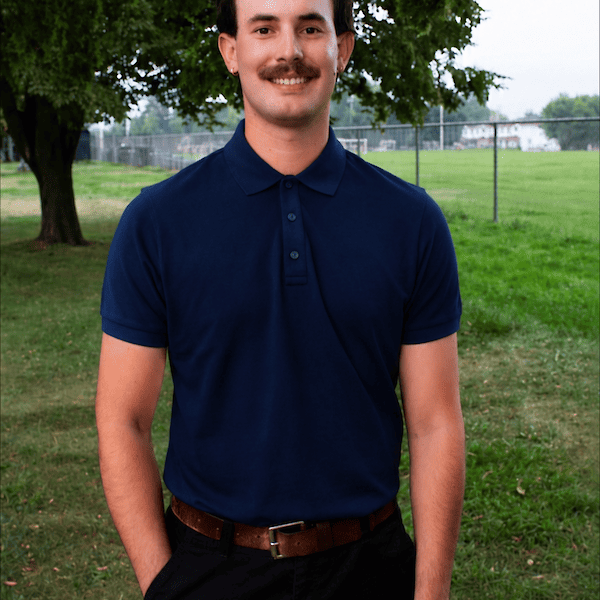
Riley Thompson

Riley Thompson

Council · Penticton
Eckhardt 20 yrs

About

I'm Riley Thompson, a 26-year-old apprentice electrician running for Penticton council. I grew up here and rent downtown. I'm running to give my generation a real voice at the table, and to build a city everyone can afford to stay in.

Policy commitments

Buildings

We all want healthy, affordable, and comfortable homes. These policies will help to lower energy bills, cut pollution, and improve indoor air quality.

✓ Support electrification of new buildings. Supportive
✓ Incentivize renewable energy, battery storage, and smart-grid technologies in new and existing buildings to improve energy security. Supportive
✓ Scale up energy retrofits for existing homes, businesses, and public buildings. Supportive
Ecosystems

The air we breathe, the water we drink, and the food we eat all rely on healthy ecosystems. Nature can also help protect our community from extreme weather by controlling floods, protecting shorelines, and cooling neighbourhoods. Access to nature improves the health and well-being of residents, and supports biodiversity.

✓ Expand and protect tree canopy, parks, and green infrastructure to cool neighbourhoods, clean air, and manage stormwater. Supportive
✓ Create connected urban greenways for people and wildlife. Supportive
Land Use

We envision vibrant, walkable communities that protect nature and improve food security.

✓ Build affordable homes near jobs, schools, shops, and transit. Supportive
✓ Upgrade critical infrastructure for heat, fire, flood, and storm resilience. Supportive
✓ Increase food security by supporting local agriculture and community gardens. Supportive
Transport

Connecting neighbourhoods through public transit and active transportation networks will cut pollution, improve public health, and make our communities more affordable (and fun!).

✓ Deliver reliable, frequent, affordable local transit. Supportive
✓ Advocate to improve regional public transit between communities. Supportive
~ Build bike and roll networks that are safe for everyone. Neutral
Watersheds

Climate change, increasing populations, and overconsumption threaten our water security. Healthy watersheds and forests are critical to support clean drinking water, stormwater management, climate resilience, and biodiversity for future generations.

✓ Implement water conservation plans and educate the public to conserve drinking water. Supportive
✓ Protect and restore watersheds as vital municipal infrastructure. Supportive
Zero Waste

Zero waste policies reduce pollution, keep waste out of landfills, build resilient local economies, and safeguard public health by shifting society away from a disposable culture toward a sustainable circular economy.

✓ Implement zero waste bylaws to divert organic waste and recyclables from disposal. Supportive
✓ Support the development of a circular economy to eliminate waste and improve resilience. Supportive
✓ Implement bylaws to eliminate waste from new buildings, renovation, and demolition projects and to use existing buildings as efficiently as possible. Supportive
✓ Supportive
~ Neutral
× Opposed
– No response

Climate action

How have you contributed to climate action in your community through advocacy, past work, advisory committees, volunteer work, and/or reducing your personal carbon footprint?
I have yet to volunteer or advocate directly for climate action. I am incredibly supportive of protecting our climate and am a firm believer in anthropogenic climate change. I do try and reduce my personal carbon footprint, my partner and I share one vehicle, I ride my bike as much as I am able, I am a consistent recycler and implemented a recycling program at one of my previous jobs. I also thoroughly support the 3 R's by reducing my single use garbage, reusing and repurposing what I can, and recycling whatever I cant.

Aside from that I'm an apprentice electrician. A lot of what I do every week is the physical work of the energy transition; EV charger installs, service upgrades to support heat pumps, and the electrical work that lets buildings run on electricity instead of gas.

In building my platform I tried to highlight two areas of improvement in the local climate picture; our organics waste stream, and the economics of solar on city-owned buildings. If you read my platform I would like to continue the work on the Campbell mountain composting program, and if that takes too long I would like to explore other options to get a green bin program in Penticton.

In short, I am supportive of protecting the environment and I take small steps, but honestly I could and should do more.

Questions for Penticton

Transportation is Penticton's largest source of climate pollution. How can we decrease reliance on gas vehicles and improve how people get around the city using low emission transport (e.g. walking, biking, carpooling, bus/transit, EV)?
First and foremost we can conduct a comprehensive study on the Lake-to-Lake route to determine successes and failures. As we all know there has a been a strong public backlash to the recent active transportation initiatives. I believe that in order to regain public support and continue building eco-friendly transportation infrastructure we need to take a look at the work that has been done and identify design choices that work for the whole community.

Secondly, Transit. I would advocate to the province/BC Transit to electrify our buses. BC Transit has said they want to electrify BC's entire fleet by 2040 I would like to begin the work to accommodate that transition. Which means we would need to develop the charging infrastructure needed to house and operate electric buses. I would also like to reevaluate our current transit schedules. Our ridership is less then optimal and that has much more to do with scheduling and consistency then anything else. I believe that by talking with riders we can determine if there are some routes that are just taking up resources without actually making transit more convenient.
Penticton Council adopted a Community Climate Action Plan in November 2021. How will you prioritize actions and set timelines to move the plan forward this term?
My focus for 2026–2030 would be turning its broad goals into specific, dated targets with a public progress report, which is the gap council identified in 2022. I'd prioritize actions two ways: by where the emissions are, and by what can realistically be delivered this term.

Waste is the first action I'd push. Organics are roughly 40% of what we landfill by weight, and the regional composting facility is rezoned, designed and grant-funded, with the curbside food-waste contract now being negotiated. I'd hold the contract to its schedule and set the household collection fee at a level residents can afford. If we are unable to move forward with the current plan to complete composting I would reach out to
Net Zero Waste who presented an alternate composting plan to council in January 2025.

Transportation is 55% of our emissions and BC Transit plans to electrify its fleet province-wide by 2040, and Penticton isn't in the current rollout. I'd advocate to move us up that timeline, and begin preparing the depot charging infrastructure the switch will require.

Buildings are 30%. The programs already exist; the Home Energy Loan Program, EV Ready Homes, and Green Build standards. I would focus on a communication and engagement campaign to increase uptake in these programs rather then starting something new.
Resilience is about being ready for unexpected shocks. Along with emergency response, what long-term planning measures would you recommend to protect our community from the impacts of increasingly severe weather events and wildfires?
Most of what makes a city resilient is unglamorous maintenance. Knowing that I would start with the pipes and roads. The city's own budget admits to a $10.4 million a year gap between what we should spend renewing our infrastructure and what we do. Undersized storm drains and aging water mains are the first things to fail when the weather turns extreme. Replacing them on schedule, and sizing new ones for heavier storms, gets us ready for the next one.

On wildfire, Penticton already has a FireSmart program and a Community Wildfire Resiliency Plan from 2022. The job now is following through: keeping the provincial FireSmart grants coming so we keep thinning fuel on the hillsides, and getting defensible space and fire-resistant materials into how we approve new homes at the edge of town.

With water supply is the harder question. We rely on a snowpack-fed system that's just come through four straight drought years and a record-low snowpack this spring. Before we count on it carrying twenty more years of growth, I'd want an updated supply-and-demand assessment under today's drought conditions, expand our reclaimed water network so parks are watered with treated water instead of drinking water, and build on the bulk water agreement with the Penticton Indian Band.
How will you balance immediate local priorities—like housing, jobs, and healthcare—with the need to reduce emissions and protect the environment so we can secure a sustainable future for our children?
I don't believe we need to balance local priorities with emission reduction and environmental protection. Rather I believe these to be complementary or parallel priorities. While pursing immediate local objectives the environment should always be in mind and considered when pursing those ends. For example, There is a path to increase the affordable housing stock while at the same time maintaining environmental protections. In fact environmental building techniques often lend themselves to affordability by reducing heating/cooling costs or reducing utility bills with water smart appliances and energy efficient appliances.

If elected I will not choose antagonistic paths to achieving goals. Instead I will aim to collaborate and cooperate whenever and wherever possible. At the end of the day we are all in this together. As such I believe that by coming together as a community and as a species we can simultaneously solve the issues of today while working towards eliminating the problems of tomorrow.

Compiled & presented by
Authorized by First Things First Okanagan, registered sponsor under LECFA, info@firstthingsfirstokanagan.com

Vote4Tomorrow is an independent voter guide to evaluate where local candidates stand on climate and environmental policies that will affect our future.

© 2026 Vote4Tomorrow