
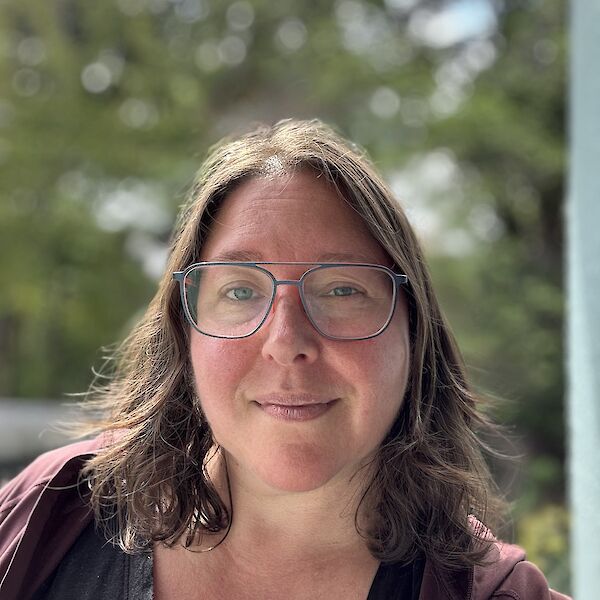
Sarah Starkweather
About
Policy commitments
We all want healthy, affordable, and comfortable homes. These policies will help to lower energy bills, cut pollution, and improve indoor air quality.
Our community is already experiencing the harmful impacts of climate change caused by fossil fuel pollution, and taxpayers are on the hook to upgrade and repair critical infrastructure.
The air we breathe, the water we drink, and the food we eat all rely on healthy ecosystems. Nature can also help protect our community from extreme weather by controlling floods, protecting shorelines, and cooling neighbourhoods. Access to nature improves the health and well-being of residents, and supports biodiversity.
We envision vibrant, walkable communities that protect nature and improve food security.
Connecting neighbourhoods through public transit and active transportation networks will cut pollution, improve public health, and make our communities more affordable (and fun!).
Climate change, increasing populations, and overconsumption threaten our water security. Healthy watersheds and forests are critical to support clean drinking water, stormwater management, climate resilience, and biodiversity for future generations.
Zero waste policies reduce pollution, keep waste out of landfills, build resilient local economies, and safeguard public health by shifting society away from a disposable culture toward a sustainable circular economy.
Climate action
More broadly, I speak out and vote and donate based on my principles, which include the belief that we should be prioritizing immediate, ongoing actions to slow climate change and protect our environment: by reducing greenhouse gas emissions, by improving our built landscape to protect from extreme weather events, by preserving and restoring our native ecosystems, and by making good development decisions.
Questions for Oak Bay
- Revising boulevard planting and maintenance guidelines to discourage monoculture turf grass and encourage planting of native species, and auditing municipal lands to find opportunities to do the same.
- Supporting continued restoration of Bowker Creek.
- Codifying approaches to requiring or incentivizing proven stormwater management design features in all redevelopment.
- Improving road safety for pedestrians and cyclists to make these modes more appealing and reduce the total number of automobile trips.
- Promoting a natural design approach when developing shoreline inundation protections at McNeill Bay and elsewhere.
- Supporting engagement with Coolkit strategies by neighbours in additional locations, and exploring possibilities for expansion (e.g. recruiting champions through workshops offered by the Parks and Recreation system, interfacing with Oak Bay High students, etc.).
- Reporting out--by public-facing means other than municipal reports--on how Council decisions impact our environmental and climate action goals, and on our measurable progress in terms of GHG reduction, urban canopy expansion, habitat restoration, etc.
In brief: I think we need to prioritize codifying specific requirements rather than expressing general lofty principles without giving them teeth. This means creating new bylaws for environmental protection as well as strengthening the OCP to include more specific goals and metrics.
Some ways of doing this:
- Quickly follow through on the promise in the OCP to write and pass a stormwater management bylaw. This bylaw should state specific stormwater management requirements for all developments, and offer incentives (such as density bonuses or fee reductions) for going above and beyond these requirements.
- Apply a development permit area to a specific zone around Bowker Creek, where more stringent stormwater runoff measures are required.
- Revise the tree protection bylaw to be more specific about the types of trees that are protected, the types of trees that should be planted, and the metrics for replacement. (For example, one-to-one replacement might not always be sufficient if the species is different.)
- Create a program offering height bonuses for new developments that are designed with less total lot coverage.
- Add more specific language to the OCP to create measurable goals for planting more native species and naturalizing public lands (based on naturalized area as a percent of public lands).
- Using the OCP to more clearly identify less sensitive areas where we want to direct redevelopment.
So, how would I support allocating these funds? If I could go back in time I'd advocate for applying for funds for one or more practical actions, rather than paying a consultant to write a plan: we could use funds for speeding up our tree-planting efforts; installing bump-outs with native plantings and street trees; electrifying our municipal fleet; commissioning and retrofitting our municipal buildings; revising our OCP and municipal bylaws to ensure that development protects the tree canopy and provides stormwater mitigation ... Any of these would be better than yet another planning exercise.
Given our current reality: I would advocate for developing action plan on the shortest possible timeline. That plan must focus on establishing quantitative measures and clear metrics, provide a commitment to regular reporting on progress, and be paired with the adoption of new bylaws and updates to the OCP that directly support key principles and goals.
Compiled & presented by
Vote4Tomorrow is an independent voter guide to evaluate where local candidates stand on climate and environmental policies that will affect our future.