
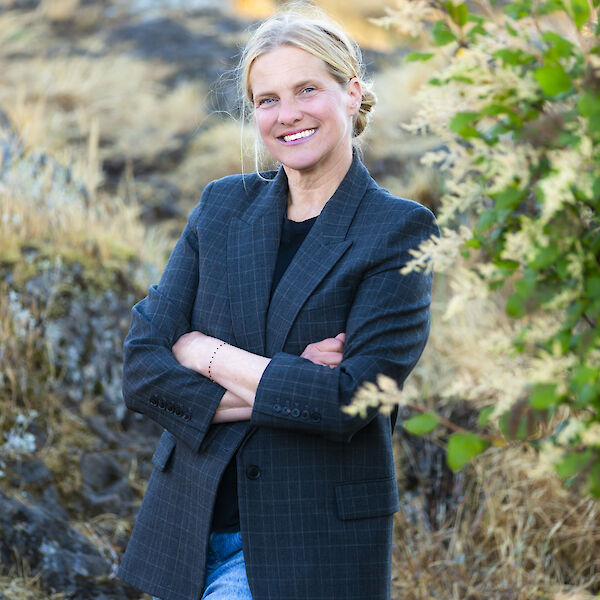
Karin Sweeney
About
Policy commitments
We all want healthy, affordable, and comfortable homes. These policies will help to lower energy bills, cut pollution, and improve indoor air quality.
Our community is already experiencing the harmful impacts of climate change caused by fossil fuel pollution, and taxpayers are on the hook to upgrade and repair critical infrastructure.
The air we breathe, the water we drink, and the food we eat all rely on healthy ecosystems. Nature can also help protect our community from extreme weather by controlling floods, protecting shorelines, and cooling neighbourhoods. Access to nature improves the health and well-being of residents, and supports biodiversity.
We envision vibrant, walkable communities that protect nature and improve food security.
Connecting neighbourhoods through public transit and active transportation networks will cut pollution, improve public health, and make our communities more affordable (and fun!).
Climate change, increasing populations, and overconsumption threaten our water security. Healthy watersheds and forests are critical to support clean drinking water, stormwater management, climate resilience, and biodiversity for future generations.
Zero waste policies reduce pollution, keep waste out of landfills, build resilient local economies, and safeguard public health by shifting society away from a disposable culture toward a sustainable circular economy.
Climate action
In Oak Bay, I served on the District of Oak Bay's Parks, Recreation and Culture Advisory Committee (2022–2026), including as Co-Chair in 2026. I have been a climate champion with the Oak Bay Coolkit program since 2022, engaging residents in climate solutions, and an active member of Oak Bay Climate Force since 2024, supporting climate-friendly policies, working with climate organizations across the Capital Regional District, and advocating directly with the District of Oak Bay on climate policy.
Beyond Oak Bay, I have volunteered as a climate facilitator with RegenerateBC (2025–2026) and served on Dogwood's South Island Regional Team (2024–2025), advocating for climate justice and against fracking and LNG pipeline expansion.
Every day, I work to reduce my own carbon footprint through conscious choices, from how I get around to what I eat and buy.
Questions for Oak Bay
Deliver on Oak Bay’s climate plans: Complete the Community Climate Action Plan in 2027, implement the Corporate Climate Action Plan including the EV-Ready Fleet Plan, and uphold the Zero Carbon Step Code.
Plan growth around nature: Build canopy retention, climate resilience and stormwater management into new housing and density decisions. Uphold the Urban Forest Management Strategy and Tree Protection Bylaw, and expand nature-based solutions. Support the updated Bowker Creek Blueprint. Design homes and infrastructure to withstand projected climate impacts.
Make low-carbon choices easy. Follow through on the Active Transportation Strategy, advocate for EV charging and e-bike support, expand car-share access to all Oak Bay neighbourhoods, and improve access to clean energy retrofits and rebates.
Prepare and protect residents: Strengthen the Emergency Response Plan and public education through the Oak Bay Emergency Program, advocate for a Right to Cool bylaw to protect renters during extreme heat, and continue supporting the Oak Bay Coolkit and other climate education opportunities.
On private land with significant natural assets, a development permit area (DPA) would require an environmental assessment before development proceeds. These assessments would allow flexible siting and variances so buildings can be shifted away from significant trees. The DPA guidelines would be anchored in OCP policy and reinforced by the Tree Protection Bylaw, which I would work to strengthen. Through the Rainwater Management Bylaw, I would work to strengthen the OCP requirement for permeable surfaces and a 40% canopy requirement by 2045.
For public land, the OCP calls for a new Parks Master Plan, enhanced biodiversity corridors, and partnerships with volunteer-led stewardship groups such as Friends of Uplands Park and the Friends of Bowker Creek, to advance community-led restoration and monitoring. I would also work to include Indigenous knowledge and collaboration on natural areas management, and support the Community Green Mapping Project.
For Bowker Creek, the OCP sets out several objectives in support of the updated Bowker Creek Blueprint, including acquiring land along the creek; supporting daylighting, habitat restoration, and greenway corridors; monitoring and community stewardship; and the Watercourses Development Permit Area. Beyond the OCP, I would support bylaws with these objectives in the Cadboro Bay/Foul Bay Village Plan and complete flood mapping.
This program could be modelled on the City of Victoria's Rainwater Rewards Program, offering design guidelines and practical, hands-on solutions that help maintain and restore natural water cycles. In turn, this program would support community health and safety by reducing flood risk, improving water quality, cooling the air during extreme heat events, and strengthening social wellbeing.
Compiled & presented by
Vote4Tomorrow is an independent voter guide to evaluate where local candidates stand on climate and environmental policies that will affect our future.