
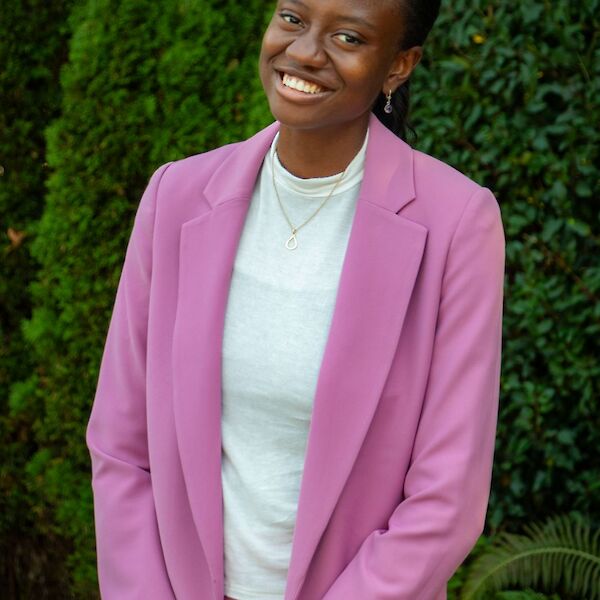
Victoria Nwabuisi
- Neighbourhood:
- District of North Vancouver
About
Policy commitments
We all want healthy, affordable, and comfortable homes. These policies will help to lower energy bills, cut pollution, and improve indoor air quality.
Our community is already experiencing the harmful impacts of climate change caused by fossil fuel pollution, and taxpayers are on the hook to upgrade and repair critical infrastructure.
The air we breathe, the water we drink, and the food we eat all rely on healthy ecosystems. Nature can also help protect our community from extreme weather by controlling floods, protecting shorelines, and cooling neighbourhoods. Access to nature improves the health and well-being of residents, and supports biodiversity.
We envision vibrant, walkable communities that protect nature and improve food security.
Connecting neighbourhoods through public transit and active transportation networks will cut pollution, improve public health, and make our communities more affordable (and fun!).
Zero waste policies reduce pollution, keep waste out of landfills, build resilient local economies, and safeguard public health by shifting society away from a disposable culture toward a sustainable circular economy.
Climate action
I have organized multiple shoreline cleanups and community electronic recycling campaigns, helping ensure more than 400 pounds of electronic waste was properly recycled rather than sent to landfill.
Through my service on the Social Planning Advisory Council with the City Council, including as Vice Chair, I helped advise on grants supporting local non-profit organizations and community initiatives. This experience gave me a deeper understanding of how strong, connected communities can respond to local challenges and build resilience.
I have also volunteered locally with families who need additional support during times of transition. While this work is not specifically climate-focused, I see community resilience and climate resilience as closely connected. Strong communities are better able to support one another as we navigate change.
Our family also does not own a car. We use public transit, walking and car-sharing when needed, which has made reducing our reliance on private vehicle ownership a practical part of our everyday lives.
For me, climate action is about more than one initiative or policy. It is about being thoughtful about how we use resources, caring for our natural environment, supporting resilient communities and making decisions today with future generations in mind.
Questions for North Vancouver (District of)
As our community grows, I would want climate risk considered alongside infrastructure, transportation, housing and development decisions. That means looking carefully at flood and drainage risks, wildfire exposure, slope stability, emergency access and the ability of our infrastructure to withstand more extreme weather.
I also believe our natural environment is part of our resilience. Protecting forests, tree canopy, streams, wetlands, natural drainage and wildlife habitat can help reduce some climate-related risks while preserving the natural systems that make North Vancouver special.
We also need to prepare our neighbourhoods and residents. I would support practical emergency preparedness, clear communication during extreme weather events, and accessible supports during periods of wildfire smoke, extreme heat or other emergencies, particularly for seniors, people with disabilities and others who may be more vulnerable.
Finally, I would take a long-term approach. The decisions we make about infrastructure and development today will shape how resilient our community is decades from now. The District already has important climate adaptation work and risk mapping underway; I would want to build on that work and ensure it meaningfully informs future decisions.
For me, resilience is not simply about responding better when something goes wrong. It is about making thoughtful decisions today that help our community withstand the challenges of tomorrow.
Compiled & presented by

Vote4Tomorrow is an independent voter guide to evaluate where local candidates stand on climate and environmental policies that will affect our future.