
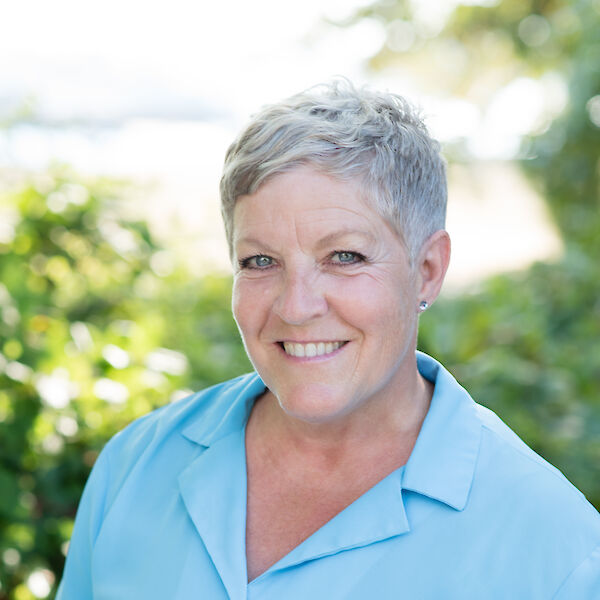
Tammy Bentz
About
Policy commitments
We all want healthy, affordable, and comfortable homes. These policies will help to lower energy bills, cut pollution, and improve indoor air quality.
The air we breathe, the water we drink, and the food we eat all rely on healthy ecosystems. Nature can also help protect our community from extreme weather by controlling floods, protecting shorelines, and cooling neighbourhoods. Access to nature improves the health and well-being of residents, and supports biodiversity.
We envision vibrant, walkable communities that protect nature and improve food security.
Connecting neighbourhoods through public transit and active transportation networks will cut pollution, improve public health, and make our communities more affordable (and fun!).
Zero waste policies reduce pollution, keep waste out of landfills, build resilient local economies, and safeguard public health by shifting society away from a disposable culture toward a sustainable circular economy.
Climate action
We went to great expense and red-tape to replace our gas burning furnace with an electric heat pump as well as an electric hot water tank. Indeed, we renovated our 100 year old home to increase and replace the bare-bones insulation. In addition, I choose to walk wherever and whenever I can. This includes visiting the grocery store, community events, going out to dinner and doing all our errands within our neighbourhood since this also supports our local small businesses. With transit, as well as EVO car/bike share, we can generally accomplish all our errands with a low carbon footprint. Currently, we are looking into solar energy as well.
Questions for North Vancouver (City of)
LEC already has targets of 40% low-carbon energy by 2027, 60% by 2030, an 80% emissions reduction by 2040 and net-zero by 2050. Great. Now let's put some dates, dollars and accountability underneath them.
I would also require Council to receive an annual “Are we actually on track?” report. If we miss a milestone, residents need to hear about it from us—not discover it three years later in a footnote.
Promises are cheap. Heat is expensive. Let's publish the receipts.
I would direct LEC to establish a time-limited phase-out plan for RNG, with a clear end date and annual reduction targets. The goal needs to be to replace RNG with genuinely renewable or recovered energy—not simply swap one fossil fuel bill for another and declare victory.
That means accelerating the projects already underway: sewer-heat recovery, electric boilers, geoexchange, solar and recovered waste heat. LEC expects sewer-heat recovery and the electric boiler project to make a substantial contribution to its low-carbon supply.
I would also require a transparent comparison of the lifetime cost and carbon impact of every proposed energy source before Council approves major investments.
RNG may have been useful as a bridge. But bridges are supposed to get us somewhere. My objective would be to get LEC across the bridge and onto a system based primarily on electricity, recovered heat and other genuinely low-carbon sources—while protecting reliability and keeping customers informed about the cost.
But we can—and absolutely need to be—a persistent pain in Metro Vancouver's neck.
The North Shore wastewater project has risen from an original estimate of about $700 million to a current $3.86 billion program budget. Metro Vancouver says the North Shore Sewerage Area is responsible for 37% of the increased costs. The City says final household impacts remain uncertain, with a preliminary 2024 estimate of $997 annually over 30 years.
I would push for three things:
1. An independent public review of the project, its governance and cost allocation.
2. Full financial transparency, including a 10-year outlook for North Shore ratepayers.
3. Every available dollar of recovery applied to the bill—including the $235 million settlement with Acciona.
I would also continue pushing for fair regional cost-sharing and a 30-year financing approach that prevents the North Shore from being disproportionately punished for a regional infrastructure project. The City is already pursuing these measures. I'd be tenacious about it.
Residents deserve sewage treatment. They do not deserve having to hand over a blank cheque.
The City’s own Urban Forest Directions report identifies zoning, development-permit guidelines and the Tree Bylaw as tools to increase retention and canopy.
I would use those tools aggressively:
* Require a tree-retention plan early in development applications.
* Make retention the starting assumption for significant mature trees, with removal requiring justification.
* Use zoning setbacks, building envelopes and parking requirements to make retention physically possible.
* Offer density or design flexibility where it helps save significant trees.
* Strengthen replacement requirements, especially for large-canopy trees.
* Protect critical root zones during construction—not merely the visible trunk.
* Track canopy loss and gain publicly so we know whether policy is actually working.
We need housing, and we need trees. Good planning should not force us to choose between them every time. If the only way to fit a building on a lot is to remove every mature tree, perhaps the problem is the plan—not the tree. There can be more than one solution to every issue, we need the political will to ensure we stay collaborative and creative.
Our urban forest does not know whether a bulldozer is coming. A mature tree provides shade, habitat, stormwater management and carbon storage whether the neighbouring lot is being redeveloped or someone simply decides they're tired of raking leaves.
Currently, the City's Tree Bylaw requires permits for protected trees on many property types, but low-density residential properties have broader exemptions from tree-removal permits.
I would support a consistent city-wide protection framework for mature and otherwise significant trees, regardless of whether redevelopment is proposed. That does not mean every homeowner needs City Hall's permission to prune a rose bush or deal with a genuinely hazardous tree.
The rules need to be clear, proportional and enforceable, with exemptions for trees that are dead, dangerous or demonstrably damaging essential infrastructure.
But if a mature tree is healthy and valuable to the neighbourhood, “no redevelopment” shouldn't mean “no protection.”
In many cases, these mature trees are on a low-density site in a neighbour's yard but serve the entire street or neighbourhood. We cannot let these trees be sacrificed only to enhance someone's view. There are ways to trim and maintain mature trees without cutting down the whole tree.
Compiled & presented by

Vote4Tomorrow is an independent voter guide to evaluate where local candidates stand on climate and environmental policies that will affect our future.