
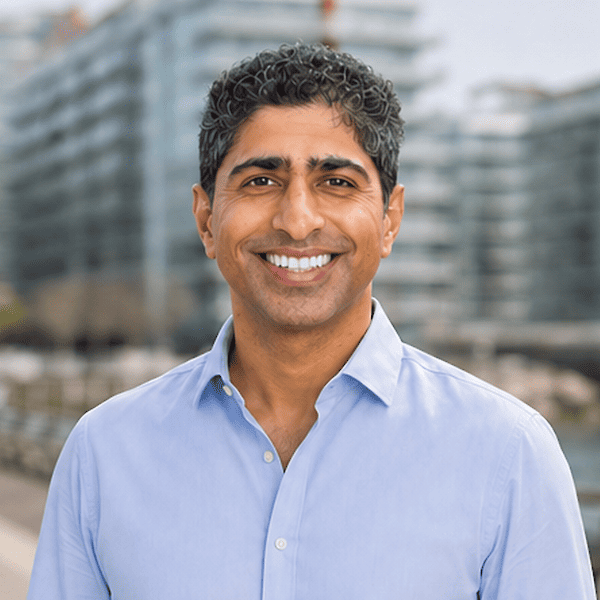
Krishna Raisinghani
About
Policy commitments
We all want healthy, affordable, and comfortable homes. These policies will help to lower energy bills, cut pollution, and improve indoor air quality.
The air we breathe, the water we drink, and the food we eat all rely on healthy ecosystems. Nature can also help protect our community from extreme weather by controlling floods, protecting shorelines, and cooling neighbourhoods. Access to nature improves the health and well-being of residents, and supports biodiversity.
We envision vibrant, walkable communities that protect nature and improve food security.
Connecting neighbourhoods through public transit and active transportation networks will cut pollution, improve public health, and make our communities more affordable (and fun!).
Zero waste policies reduce pollution, keep waste out of landfills, build resilient local economies, and safeguard public health by shifting society away from a disposable culture toward a sustainable circular economy.
Climate action
As Chair of the City's Advisory Planning Commission, I review housing and development proposals and consider how land use, transportation, public space and neighbourhood design work together. That experience has reinforced for me that climate action needs to be built into everyday City decisions, rather than treated as a separate issue.
I support higher-performing, low-carbon buildings, easier adoption of heat pumps and cooling retrofits, continued electrification, a larger and healthier urban tree canopy, and neighbourhoods where walking, cycling and transit are practical choices. I also support accelerating the decarbonization of Lonsdale Energy through sources such as sewer heat recovery and electrification.
In my campaign, I've made climate resilience a test for major decisions. As North Vancouver grows, I believe we should be asking whether our homes, streets, infrastructure and public spaces are prepared for hotter summers, heavier rainfall and a changing climate.
Questions for North Vancouver (City of)
Lonsdale Energy has already established important targets: 40% of district energy from low-carbon technologies by 2027, 60% by 2030, an 80% emissions reduction from 2007 levels by 2040, and net-zero emissions by 2050. The Clean Energy Action Roadmap is still described publicly as upcoming. Residents deserve a clear pathway showing how we get there.
As a Councillor, I would ask the City, as Lonsdale Energy's shareholder, to establish a clear timeline for publishing the roadmap or a public version of it. It should show the expected energy mix, emissions reductions, major projects, capital requirements, operating costs, impacts on customer rates, key risks and milestones.
I would also want progress reported publicly each year. Lonsdale Energy is an important City asset with significant potential to reduce building emissions. Clear public reporting will make it easier to measure whether its investments are delivering lower emissions while keeping energy reliable and affordable.
I would ask Lonsdale Energy to include a clear, time-bound RNG phase-out pathway in its Clean Energy Action Roadmap, showing how RNG use can decline as lower-carbon infrastructure comes online. That includes electrification, heat pumps, sewer heat recovery, geoexchange and other recovered-energy sources.
The new urban heat recovery project is particularly important. Lonsdale Energy expects it to come online in 2027 and avoid approximately 7,600 tonnes of greenhouse gas emissions annually.
I would want the roadmap to show the cost, emissions and reliability implications of each alternative, along with annual reporting of the actual fuel mix. My goal is to eliminate routine reliance on RNG while protecting reliability and avoiding unnecessary costs for customers. RNG should be a transitional tool where necessary, not the destination.
The project was initially estimated at $700 million and is now estimated at $3.86 billion. Current estimates suggest North Shore households could face additional annual costs ranging from roughly $590 to $1,182 by 2028, depending on the final financing and cost allocation. Some future costs remain uncertain.
Following the $235 million settlement with former contractor Acciona, our North Shore mayors renewed their request that the full settlement be used to reduce the burden on North Shore ratepayers. I support continuing to press for a fair allocation of recoveries and for senior-government contributions or other relief that can reduce costs for residents.
I also want real accountability for how this happened. I support Metro Vancouver's independent review, which is expected to report publicly by the end of January 2027. I also support the City and District of North Vancouver's request for a public inquiry under the Local Government Act.
Longer term, I want stronger regional megaproject governance: clear public milestones, transparent risk ownership, independent oversight and long-range financial reporting so residents can see what they're paying for before costs escalate.
I would support requiring tree inventories and arborist assessments early in the development process, identifying high-value mature trees before site plans are finalized, and designing around their retention wherever reasonably possible.
I would also look at land-use tools that make retention easier, including reasonable flexibility on setbacks, building placement and other site requirements where that can save a healthy mature tree without undermining housing objectives. Where removal is unavoidable, replacement requirements should consider canopy value, species, soil volume and long-term survival rather than simply counting new trees.
Council has endorsed an Urban Forest Directions Report with a citywide canopy target of 24% by 2055. I would support the work needed to achieve that target, including proper investment in planting, retention and long-term maintenance. I would also like to see neighbourhood-level canopy information reported publicly so we can identify where mature trees are being lost and target protection and planting where they're most needed.
The current Tree Bylaw protects qualifying trees on much of the city, but several lower-density residential zones are excluded. Mature trees provide community-wide benefits, including shade, cooling, stormwater management, habitat and cleaner air, regardless of how the property they're on is zoned.
The Ground Oriented zoning exemption was added in December 2025 alongside broader changes to the City's low-density residential zoning. I would ask staff to report on how tree protection can be extended to currently exempt properties while remaining consistent with provincial housing requirements and avoiding unnecessary barriers to adding homes.
Any expanded bylaw also needs to be practical, with clear exemptions and efficient processes for dead or hazardous trees, infrastructure conflicts and other legitimate circumstances. The process should be understandable and reasonably affordable for homeowners.
My objective is a consistent citywide approach that protects healthy mature trees while recognizing safety, property maintenance and the housing our city needs.
Compiled & presented by

Vote4Tomorrow is an independent voter guide to evaluate where local candidates stand on climate and environmental policies that will affect our future.