
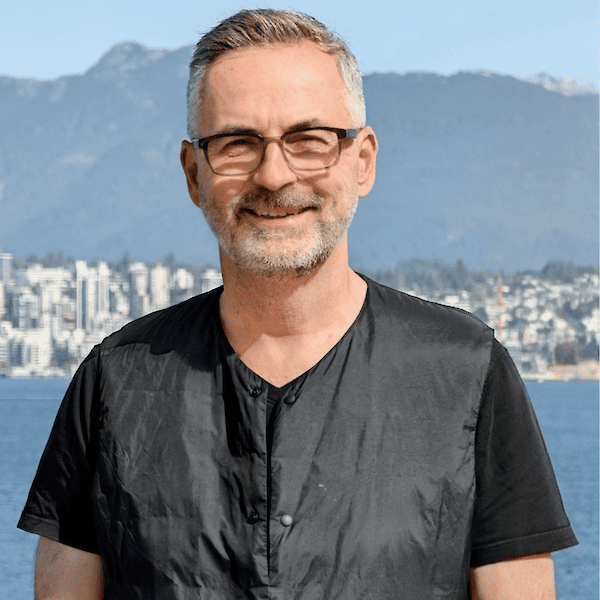
Dave Kurvers
About
Policy commitments
We all want healthy, affordable, and comfortable homes. These policies will help to lower energy bills, cut pollution, and improve indoor air quality.
The air we breathe, the water we drink, and the food we eat all rely on healthy ecosystems. Nature can also help protect our community from extreme weather by controlling floods, protecting shorelines, and cooling neighbourhoods. Access to nature improves the health and well-being of residents, and supports biodiversity.
We envision vibrant, walkable communities that protect nature and improve food security.
Connecting neighbourhoods through public transit and active transportation networks will cut pollution, improve public health, and make our communities more affordable (and fun!).
Zero waste policies reduce pollution, keep waste out of landfills, build resilient local economies, and safeguard public health by shifting society away from a disposable culture toward a sustainable circular economy.
Climate action
My contribution has been primarily practical and policy-focused. I support preserving public land and parks, improving transit and shared mobility, using heat pumps and district energy more effectively, recovering energy that would otherwise be wasted, and designing infrastructure around efficiency and resilience.
During this campaign I have developed proposals for whole-home cooling in new buildings, expansion of Lonsdale Energy, wastewater heat recovery, coordinated underground utility renewal, energy-sharing systems and better integration of cooling, heating and clean-air ventilation.
My approach is that climate policy should be measured by results: actual emissions reductions, energy efficiency, reliability, affordability and resilience.
Questions for North Vancouver (City of)
My first step would be to ask Lonsdale Energy for a clear public update on what has been completed, what remains outstanding, and when the work is expected to be finished.
I support transparency and would expect the substantive findings, assumptions, costs and proposed pathway to be made public where possible.
I would rather understand the work first and set a realistic timetable than promise a deadline without knowing what is involved.
I support reducing carbon emissions. The objective for LEC should be to lower the collective emissions of the entire system / City while maintaining affordability, efficiency and reliability.
That means comparing RNG with wastewater heat recovery, heat pumps, recovered building heat, geoexchange, electric boilers, thermal storage and other technologies on their actual performance and lifecycle costs.
If another technology can provide the same energy more efficiently, reliably and with lower emissions and cost, LEC should move toward it. But I would not rule out RNG in advance if it has a legitimate role in peak demand, backup capacity or system resilience.
I want LEC to publish the cost, emissions intensity and reliability contribution of each energy source so Council and the public can make those decisions using evidence.
The goal should be lower overall emissions, not eliminating one particular energy source for its own sake.
A failure on this scale should not simply be written off and passed through to taxpayers. The City should pursue every available avenue to recover losses from contractors, insurers, consultants or other parties found responsible, and press senior governments for assistance where appropriate.
Someone has to absorb the financial consequences of this project. My position is that North Shore and Metro residents should not automatically be the ones left paying for failures they did not create.
Trees are part of a living urban landscape. Some should be protected, some should be pruned, and some should eventually be replaced. A tree that began as a small ornamental planting 40 years ago may now block important views, overcrowd neighbouring trees, interfere with buildings or infrastructure, or simply be the wrong species for its location.
The City should manage the urban forest as a whole. That means protecting significant and healthy trees where appropriate, planting new trees continuously, encouraging a diversity of species and sizes, and planning for succession as older trees are removed.
Development applications should consider mature trees early in the design process, but tree retention should be balanced with housing, sunlight, views, safety, infrastructure and good site planning.
The goal should be a healthy, diverse and continuously renewed urban forest, not preservation of every individual tree at any cost.
North Vancouver is an urban community built for people. Trees, parks and green space are an important part of making that community healthy and enjoyable, but they need to be planned and managed. Trees grow, circumstances change, and pruning, removal and replacement are legitimate parts of managing an urban forest.
I would rather focus on maintaining a healthy overall canopy, planting a variety of appropriate species, protecting genuinely significant trees and creating permanent public green space. For example, I support preserving the City-owned land on East 1st Street as a municipal park rather than selling it for development.
Where tree regulations apply, they should also be clear, reasonable and enforced consistently whether the work involves a resident, developer, contractor or the City itself.
The objective should be a greener and more enjoyable city for people, not preservation of every individual tree regardless of its location, condition or impact.
Compiled & presented by

Vote4Tomorrow is an independent voter guide to evaluate where local candidates stand on climate and environmental policies that will affect our future.