
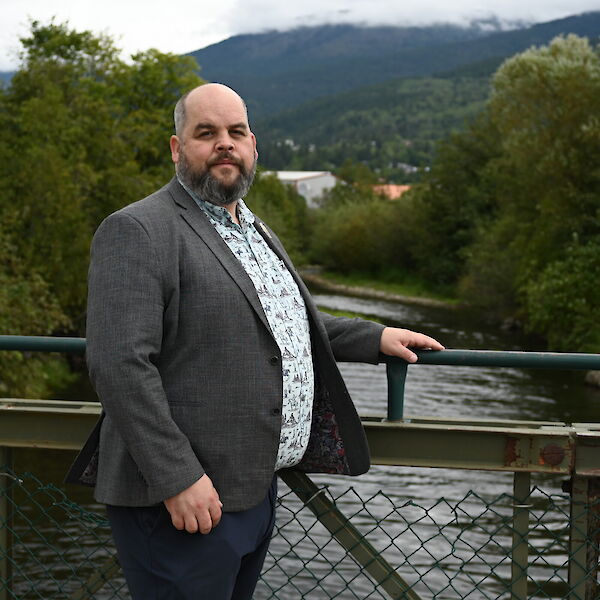
Keith Page
About
Policy commitments
We all want healthy, affordable, and comfortable homes. These policies will help to lower energy bills, cut pollution, and improve indoor air quality.
Our community is already experiencing the harmful impacts of climate change caused by fossil fuel pollution, and taxpayers are on the hook to upgrade and repair critical infrastructure.
The air we breathe, the water we drink, and the food we eat all rely on healthy ecosystems. Nature can also help protect our community from extreme weather by controlling floods, protecting shorelines, and cooling neighbourhoods. Access to nature improves the health and well-being of residents, and supports biodiversity.
We envision vibrant, walkable communities that protect nature and improve food security.
Connecting neighbourhoods through public transit and active transportation networks will cut pollution, improve public health, and make our communities more affordable (and fun!).
Climate change, increasing populations, and overconsumption threaten our water security. Healthy watersheds and forests are critical to support clean drinking water, stormwater management, climate resilience, and biodiversity for future generations.
Zero waste policies reduce pollution, keep waste out of landfills, build resilient local economies, and safeguard public health by shifting society away from a disposable culture toward a sustainable circular economy.
Climate action
On council I led the push to move Nelson to Step 4 of the BC Energy Step Code, so new homes built here use less energy from day one. I've championed Nelson Next, the city's climate and energy plan, and supported the NEST Lab as a place to test and scale local solutions. I pressed early and often to increase our spending on new trees, because a healthy canopy cools our streets and lasts for generations. I've also worked with Living Lakes Canada to restore and rehabilitate the Cottonwood Creek ecosystem.
At the Regional District, as chair of the Regional Parks Commission and Recreation Commission No. 5, I've pushed us to share and make better use of the facilities we already have before building new.
For fourteen years I've run The Repair Factory in downtown Nelson. Fixing computers and electronics instead of replacing them keeps them out of the landfill and cuts the emissions that come with making new ones. That's how I approach public assets too.
Questions for Nelson
But the most important part of Nelson Next isn't any single action. The plan was built to be revisited, with new community engagement every few years to evaluate what's working, what isn't and what needs to change. I'll make sure this term delivers the next round.
That engagement should come back to council with clear answers. Nelson Next is supposed to measure its objectives and actions for effectiveness, not just track whether they got done. Finishing an action means little if it didn't cut emissions or make us more resilient. Every action should be judged on results, and anything still worth doing gets a timeline, a lead department and a cost.
Timelines only matter if they're tied to money. Climate actions should go into the five-year financial plan alongside roads and pipes, so council has to fund them or say out loud that it isn't. Between engagement rounds, council should get an annual progress report at budget time, and residents should see the same report.
Small cities can't carry this alone. The province's Local Government Climate Action Program was giving communities like ours predictable money to deliver climate work, and I've pushed for it to be re-instated and long-term.
Intercity service is the bigger failure. Since Greyhound left in 2018, there's no reliable way out of the Kootenays without a car. Getting to Cranbrook, Kelowna, Calgary or Vancouver for a specialist appointment, a flight, school or family shouldn't depend on owning a vehicle or finding a ride.
That fix has to come from the province, and this is where I can do the most. As Third Vice-President of UBCM and Past President of AKBLG, I help decide what local governments bring to Victoria as a united ask. I'll work to make rural and intercity transit a UBCM priority, backed by resolutions from interior communities, so it can't be brushed off as one region's complaint.
For children, I chair the Recreation Commission that oversees the Nelson and District Community Complex and its summer programs. We're pushing for a clear heat and smoke protocol for day camps, tied to Environment Canada heat warnings and the Air Quality Health Index, so staff know exactly when to shorten outdoor time, move indoors or cancel. That also means making sure camps have filtered, cooled indoor space to fall back on, not just a plan on paper.
For renters and low-income households, the gap is cooling and clean air at home. HomeSave already helps homeowners install heat pumps, which cool as well as heat. I want to see it reach rental buildings through landlord incentives, and I'll press to make sure Nelson Hydro customers get full access to provincial programs for free heat pumps, air conditioners and air purifiers.
For everyone, the City needs reliable cooling and clean-air spaces with extended hours during heat and smoke events, and a way to check on people who live alone. Our libraries, the community complex and other public buildings can do this job if we fund their filtration and staffing for it.
Longer term, shade is infrastructure. I'll keep pressing to grow our tree canopy, especially in the neighbourhoods and schoolyards that need it most.
Our peaks set what we pay and what we have to build. The fix is rate design. I'll push for industrial and commercial rates structured to reward off-peak use, so businesses that can shift heavy loads to nights and shoulder seasons pay less for doing it. That fills the valleys in our demand curve, gets more out of the clean supply we already have and keeps costs down for residential customers.
Rates like that are also an economic development tool. Affordable, clean, publicly owned power is a reason for employers to base themselves here instead of on grids that run on coal and gas.
None of it works without a grid that can manage it. Nelson Hydro needs the metering, controls and planning to pool industrial, commercial and residential loads and sources, including batteries and backup systems, into one managed energy profile.
I'll push for this at council, and through UBCM I'll make the case that small public utilities need provincial support to modernize their grids.
Our creeks that carry floodwater, we gave a tree canopy that cools a neighbourhood and a watershed that filters runoff. They all do work we'd otherwise pay to build. I'll push for Nelson to include natural assets in its asset management plan, so they get maintained and protected with the same discipline as pipes and roads, and so losing one shows up as a real cost.
I've done this work hands-on. On council I've worked with Living Lakes Canada to restore and rehabilitate the Cottonwood Creek ecosystem, and I pressed early and often to increase our spending on new trees. As chair of the Regional Parks Commission, we expanded Rosebud Lake Regional Park from 16 to over 80 hectares with the BC Parks Foundation, protecting a key corridor for bears moving through the valley, and lead conversations about our regional partnerships on our most significant parks.
The lakeshore is our most valuable public space and our most pressured one. I'll protect public access to the waterfront, and I'll push for development decisions near the lake and our creeks to protect riparian areas.
Growth and green space aren't opposites. We need more housing, and the best way to protect natural areas is to build well in places that are already built, so we're not paving the places that keep us cool, dry and healthy.
That's stayed with me. It's why I fix things for a living instead of selling new ones, and it's how I think about this place.
Nelson is a small city with a lot going for it. We have clean power, a lake and forests right to the edge of town, and people who care enough to fill out questionnaires like this one. I don't take any of that for granted. I've spent eight years trying to leave it in better shape than I found it, and I'd like the chance to keep going.
Thanks to everyone who put this guide together.
Compiled & presented by



Vote4Tomorrow is an independent voter guide to evaluate where local candidates stand on climate and environmental policies that will affect our future.