
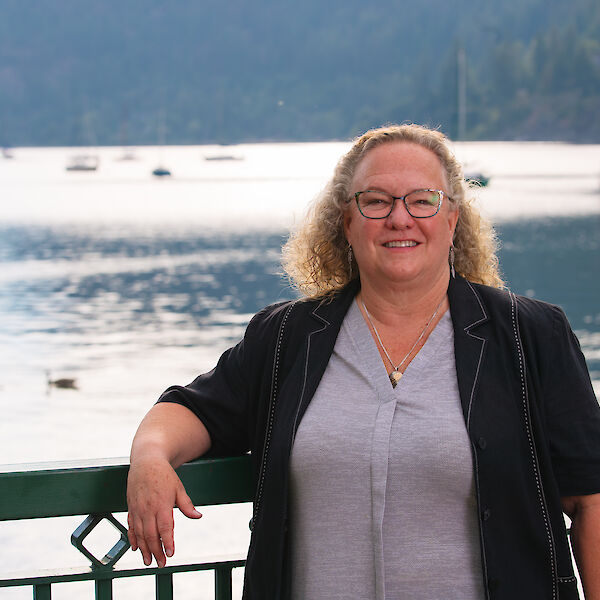
Janice Morrison
About
Policy commitments
We all want healthy, affordable, and comfortable homes. These policies will help to lower energy bills, cut pollution, and improve indoor air quality.
Our community is already experiencing the harmful impacts of climate change caused by fossil fuel pollution, and taxpayers are on the hook to upgrade and repair critical infrastructure.
The air we breathe, the water we drink, and the food we eat all rely on healthy ecosystems. Nature can also help protect our community from extreme weather by controlling floods, protecting shorelines, and cooling neighbourhoods. Access to nature improves the health and well-being of residents, and supports biodiversity.
We envision vibrant, walkable communities that protect nature and improve food security.
Connecting neighbourhoods through public transit and active transportation networks will cut pollution, improve public health, and make our communities more affordable (and fun!).
Climate change, increasing populations, and overconsumption threaten our water security. Healthy watersheds and forests are critical to support clean drinking water, stormwater management, climate resilience, and biodiversity for future generations.
Zero waste policies reduce pollution, keep waste out of landfills, build resilient local economies, and safeguard public health by shifting society away from a disposable culture toward a sustainable circular economy.
Climate action
As Mayor, I advocate and lobby senior levels of government for funding for adaptation as well as mitigation with the goal of carbon resilience. This past August we received 7M for replacement of our force main that takes the sewage to the treatment plant. Just this week we received a grant from the Federation of Canadian Municipalities (FCM) to continue our work on the urban forest plan. In the past term we have opened the new transit exchange to encourage people to get out of their cars and take public transit. We have won awards for our low carbon homes pilot and leadership in reducing embodies carbon in buildings. We have moved to Step code 4 and EL 4 for our part 9 buildings.
On a personal note we have Fire-smarted our home. We have taken the city’s water pledge.
Questions for Nelson
In this past year we have imbedded the Nelson Next document as part of the Official Community Plan (OCP). This insures climate will be an important and required consideration in any future development that takes place in the city of Nelson.
Setting specific timelines is a challenge. Much of the work we need to execute is expensive and will be dependent on being able to secure grants form senior levels of government and other strategic partners.
On another note, out first two electric buses should be in service by early 2027.
We need to work with our Emergency Management team and social service agencies locally ( to identify appropriate locations - library/rec centre, hospital, churches) as well as demanding support from senior levels of government for funding to ensure buildings are equipped with appropriate HVAC systems to clean and cool the air.
As a health care advocate we need to properly funded check -in systems to support high risk individuals - seniors, our vunerable unhoused residents, and people with chronic respiratory/health issues.
We need to continue to work on our urban tree canopy and as mentioned elsewhere we have received an FCM grant to continue this important work.
i have continued to advocate for the protection of our watershed. This past UBCM I spoke with the ministries of Health, Forestry and Water.Lands and Resource stewardship regarding the watershed and the effects of long hot dry summers.
We need to look at how the municipality could work with other agencies to improve air quality monitoring within the city and regionally
As for summer camps and other outdoor activities we need to be considering other options. - have a plan B -as I believe physical literacy and phone down time is critcal for youth’s development
We have examined battery storage in the past but the cost at that time did not make financial sense. I just recently asked our new Hydro manager if this is something we could look at again.
As part of the redesign for the five mile water intake - our main source of water here in the city - it is being contemplate to add some micro generation where slope would naturally create enough water (head) pressure to allow for generation. As technology advances additional oppurtunities will arise.
This is in part why I do not support the increase in density that has been mandated by the provincial government. We have an OCP, we have Nelson Next and council - this and past ones - have always supported gentle density. Yes we have a housing affordability issues but building more on one lot does not necessarily make homes less expensive - it just makers the land more valuable. When lots are fully built out - how do we manage rain and storm water. These systems are expensive to upgrade and make resilent but we are slowly getting this work done. Where do our youth/seniors go to enjoy the outdoors if everything is a built environment. Like I have mentioned else where we have just received an FCM grant to continue our work on our urban canopy. We need to look to other communities that have “valued” their nature assets and develop a made in Nelson natural asset management plan
We can always do with more green, open, accessible and probably most importantly free space for all of Nelson and our visitors to enjoy. We currently exceeded the Provincial recommendation for green space but we can always use more !
Compiled & presented by



Vote4Tomorrow is an independent voter guide to evaluate where local candidates stand on climate and environmental policies that will affect our future.