
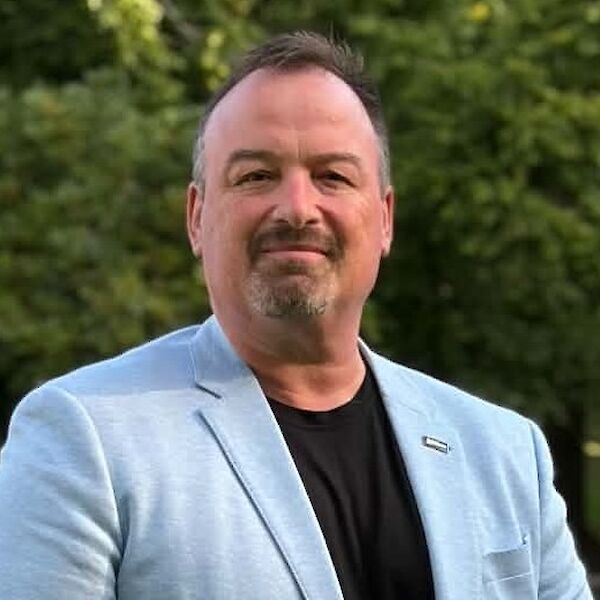
Mark Davies
About
Policy commitments
We all want healthy, affordable, and comfortable homes. These policies will help to lower energy bills, cut pollution, and improve indoor air quality.
Our community is already experiencing the harmful impacts of climate change caused by fossil fuel pollution, and taxpayers are on the hook to upgrade and repair critical infrastructure.
The air we breathe, the water we drink, and the food we eat all rely on healthy ecosystems. Nature can also help protect our community from extreme weather by controlling floods, protecting shorelines, and cooling neighbourhoods. Access to nature improves the health and well-being of residents, and supports biodiversity.
We envision vibrant, walkable communities that protect nature and improve food security.
Connecting neighbourhoods through public transit and active transportation networks will cut pollution, improve public health, and make our communities more affordable (and fun!).
Climate change, increasing populations, and overconsumption threaten our water security. Healthy watersheds and forests are critical to support clean drinking water, stormwater management, climate resilience, and biodiversity for future generations.
Zero waste policies reduce pollution, keep waste out of landfills, build resilient local economies, and safeguard public health by shifting society away from a disposable culture toward a sustainable circular economy.
Climate action
I supported the committee’s recommendation to adopt Level 4 of the Zero Carbon Step Code and voted for it at Council, although the motion was defeated. I also introduced a motion to strengthen aquifer protection and supported Mission’s updated Official Community Plan, Rural Strategy, and stronger soil-management and tree-clearing regulations.
Beyond policy work, I have participated in Lane Creek tree-planting events, contributing directly to local restoration efforts.
My approach is practical: growth must account for its environmental impact, protect our water and natural assets, and avoid passing unnecessary environmental and infrastructure costs to future generations.
Questions for Mission
For that reason, I believe Mission’s OCP should contain a strong vision and values section that clearly addresses climate resilience, water protection, natural assets, responsible land use and environmental stewardship. The updated Environmental Charter should help shape and support those commitments.
Structuring the OCP this way would ensure its environmental principles flow into every downstream neighbourhood plan, infrastructure strategy, development policy and operational decision. The Charter could then provide detailed actions, measurable targets and transparent reporting. Together, they would embed environmental responsibility throughout City planning while balancing social needs, economic opportunity, affordability and responsible growth.
I would support a practical future-generations lens in Council reports for decisions with significant or lasting consequences. The analysis should be proportionate to the decision and include measurable assumptions, lifecycle costs and regular reviews as conditions change.
Good government should meet today’s needs without leaving future residents with unaffordable infrastructure, environmental damage or problems that could have been prevented through better planning.
I would not necessarily require developers to install a specific charging unit in every home. Chargers and vehicle requirements continue to evolve, and mandating the hardware could leave owners with incompatible or obsolete equipment that is eventually discarded as electronic waste.
For multi-unit developments, requirements should include adequate building capacity and allow modern load-management systems. The technical standard should be developed with electricians, builders, utilities and accessibility experts rather than prescribing an arbitrary amperage.
Installing the underlying infrastructure during construction is significantly easier and less expensive than retrofitting it later, while allowing residents to select the charger that meets their needs.
The policy should include reasonable exemptions for emergency response, worker safety, extreme weather and vehicles or equipment that must remain running to perform their functions. Driver education, clear operating guidelines and fuel-use monitoring would help measure results and improve compliance.
The City should lead by example, but the policy must also recognize the operational realities faced by firefighters, public works crews and other municipal employees.
Campaign contributions
Public records from Elections BC — 6 contributions totalling $5,705.71.
2022 GENERAL LOCAL ELECTIONS
4 contributions · $4,527.28
| Contributor | Date | Amount | Office | Jurisdiction |
|---|---|---|---|---|
| LUWANDA DAVIES | Oct 1, 2022 | $1,250.00 | COUNCILLOR | MISSION |
| MARK DAVIES | Oct 1, 2022 | $1,250.00 | COUNCILLOR | MISSION |
| MARK DAVIES | Oct 1, 2022 | $1,250.00 | COUNCILLOR | MISSION |
| HALEN DAVIES | Oct 1, 2022 | $777.28 | COUNCILLOR | MISSION |
2018 GENERAL LOCAL ELECTIONS
2 contributions · $1,178.43
| Contributor | Date | Amount | Office | Jurisdiction |
|---|---|---|---|---|
| JONATHAN DAVIES | Sep 25, 2018 | $976.83 | COUNCILLOR | MISSION |
| GERI SCHUIT | Sep 25, 2018 | $201.60 | COUNCILLOR | MISSION |
Compiled & presented by

Vote4Tomorrow is an independent voter guide to evaluate where local candidates stand on climate and environmental policies that will affect our future.