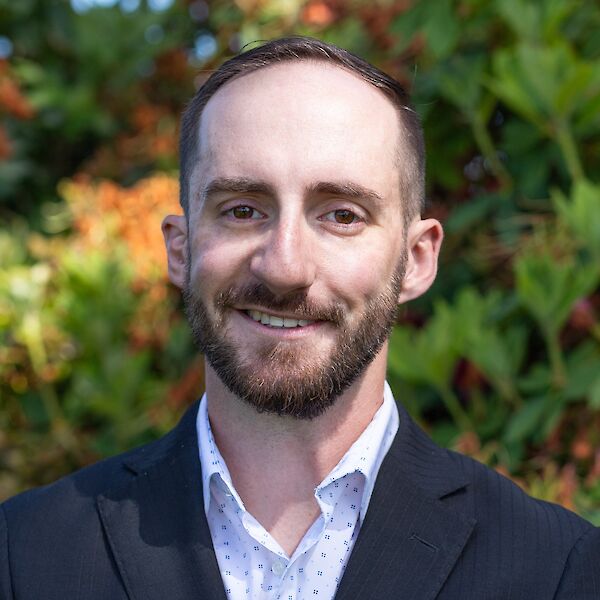
Kody Thomson

Kody Thomson

Council · Esquimalt
Esquimalt 3 yrs

About

I live and work right here in Esquimalt. My professional background includes civil engineering, emergency management, and 12 years of military service. I love adventuring all over BC, but I love living here with my partner and my dog even more.

Policy commitments

Buildings

We all want healthy, affordable, and comfortable homes. These policies will help to lower energy bills, cut pollution, and improve indoor air quality.

✓ Support electrification of new buildings. Supportive
✓ Incentivize electric heat pumps and air filtration systems. Supportive
✓ Incentivize renewable energy, battery storage, and smart-grid technologies in new and existing buildings to improve energy security. Supportive
✓ Scale up energy retrofits for existing homes, businesses, and public buildings. Supportive
✓ Implement a 'right to cool' bylaw to protect tenants during extreme heat events. Supportive
Climate Justice

Our community is already experiencing the harmful impacts of climate change caused by fossil fuel pollution, and taxpayers are on the hook to upgrade and repair critical infrastructure.

✓ Endorse the fossil fuel treaty and commit to phase out fossil fuels. Supportive
✓ Enact a moratorium on AI data centres to protect our energy and water resources. Supportive
✓ Pursue available legal options to recover a fair share of the climate costs facing our community from fossil fuel companies and other big polluters. Supportive
✓ Collaborate with Indigenous peoples as partners in the stewardship of the land, air, and water, and work towards reconciliation. Supportive
Ecosystems

The air we breathe, the water we drink, and the food we eat all rely on healthy ecosystems. Nature can also help protect our community from extreme weather by controlling floods, protecting shorelines, and cooling neighbourhoods. Access to nature improves the health and well-being of residents, and supports biodiversity.

✓ Protect and restore ecosystems, which are essential to human survival, health, and economic well-being. Supportive
✓ Expand and protect tree canopy, parks, and green infrastructure to cool neighbourhoods, clean air, and manage stormwater. Supportive
✓ Prioritize native tree planting in all areas, especially those with low tree cover, higher population densities, and more vulnerable residents. Supportive
✓ Create connected urban greenways for people and wildlife. Supportive
Land Use

We envision vibrant, walkable communities that protect nature and improve food security.

✓ Build affordable homes near jobs, schools, shops, and transit. Supportive
✓ Upgrade critical infrastructure for heat, fire, flood, and storm resilience. Supportive
✓ Increase food security by supporting local agriculture and community gardens. Supportive
Transport

Connecting neighbourhoods through public transit and active transportation networks will cut pollution, improve public health, and make our communities more affordable (and fun!).

✓ Deliver reliable, frequent, affordable local transit. Supportive
✓ Advocate to improve regional public transit between communities. Supportive
✓ Build bike and roll networks that are safe for everyone. Supportive
✓ Expand EV charging infrastructure. Supportive
Watersheds

Climate change, increasing populations, and overconsumption threaten our water security. Healthy watersheds and forests are critical to support clean drinking water, stormwater management, climate resilience, and biodiversity for future generations.

✓ Implement water conservation plans and educate the public to conserve drinking water. Supportive
✓ Protect and restore watersheds as vital municipal infrastructure. Supportive
✓ Develop and implement a water security plan. Supportive
Zero Waste

Zero waste policies reduce pollution, keep waste out of landfills, build resilient local economies, and safeguard public health by shifting society away from a disposable culture toward a sustainable circular economy.

✓ Implement zero waste bylaws to divert organic waste and recyclables from disposal. Supportive
✓ Support the development of a circular economy to eliminate waste and improve resilience. Supportive
✓ Implement bylaws to eliminate waste from new buildings, renovation, and demolition projects and to use existing buildings as efficiently as possible. Supportive
✓ Supportive
~ Neutral
× Opposed
– No response

Climate action

How have you contributed to climate action in your community through advocacy, past work, advisory committees, volunteer work, and/or reducing your personal carbon footprint?
I have volunteered on the board of Capital Bike, a local charity with the mission to create a sustainable community where active transportation is safe, healthy, and a fun part of everyday life. I also volunteer on the Esquimalt Township's Design Review Committee where I contribute to examining new developments in our community and how well they follow the township's environmental design requirements.

In my personal life I strive to have a low-waste lifestyle by reducing consumption, shopping local, buying used over new, participating in our local Buy-Nothing group, recycling/composting, and cycling or walking as much as possible.

Questions for Esquimalt

Esquimalt is rapidly losing its affordable housing with rising renovictions and demolitions. What strategies would you promote to ensure affordable housing is built and protected?
I would promote a multi-faceted approach centered on establishing more "missing middle" and non-market affordable housing, and protecting our existing stock of older affordable rental buildings.

Missing Middle housing is the type of homes that fit in between single family homes and apartment towers, such as townhomes, multiplexes, and low-rise apartments. This type of housing allows us to increase housing supply without compromising the human-scale character that we enjoy.

I would create a policy mandating that all new or redeveloped municipal infrastructure projects evaluate and prioritize the integration of mixed-used, non-market housing. Esquimalt's public assets and community centers are often in the most walkable and vibrant areas of town. By pre-zoning and designing these municipal assets to incorporate housing above, we can increase the affordable housing stock without acquiring new land. This policy would need to also safeguard our beloved parks and focus specifically on the existing built-up properties. We need to work with non-market housing operators (e.g., Capital Regional Housing Corporation, Greater Victoria Housing Society) to take advantage of higher-level government funding programs and reduce the financial risk.

We can safeguard our current stock of older, affordable rental buildings by redirecting development pressure away from them. If we allow new multifamily developments in low-density areas across the township, it means the existing buildings that have lower rents aren't torn down and long-term tenants aren't evicted. I also support density bonuses for affordable housing and further improvements to municipal tenant assistance policies to ensure existing residents maintain current rents post-development.
Natural Asset Management (NAM) puts a monetary value on living assets. It is key to Tree Protection. Public engagement for Small Scale Multi Unit Housing (SSMUH) identified tree protection as the number one concern.
I support renewing our Urban Forest Management Plan, which expires this year, and incorporating Natural Asset Management into it to more effectively track and protect our tree canopy and biodiversity.

I took part in the SSMUH workshop this summer and shared my own concerns about tree protection. The current permit approval process discourages developers from using creative designs and integrating existing mature trees in the case of unique lot layouts. I advocated for a smoother variance approval process to make it easier for SMMUH projects to adapt to specific site layouts, because developers and new residents ALSO want to keep mature trees if it makes sense financially. It's a huge part of the vibrancy, attractiveness, and climate resilience of Esquimalt.
With Department of National Defence and SeaSpan expansion, what are your solutions to deal with its impact on the existing challenging rush hour traffic?
Esquimalt and our entire region is growing. It is not realistic to expect the entire workforce of our region to be able to commute in a single occupancy vehicle everyday and not have traffic congestion. The solution lies in local housing options and enabling commuters to use public transit or active transportation.

Adding a variety of housing options in Esquimalt means more people who work in our community can actually afford to live here, significantly cutting down on the number of people commuting into Esquimalt. Shorter, local trips naturally lower vehicle miles traveled and relieve regional road congestion. Even if residents have to commute out of Esquimalt to work, they are generally going against the traffic congestion.

To make public transit a convenient alternative to driving, we need to make it faster and more reliable. I want to expand transit priority measures (including bus queue-jump lanes and bus-activated signals, where possible) at key intersections along our frequent transit corridors to keep buses moving smoothly past traffic. Similarly, we need to make walking, cycling, and rolling safer for people of all ages and abilities by continuing to expand our Active Transportation Network, which includes protected bike lanes, safe pedestrian crossings, and connected sidewalk routes throughout Esquimalt.

Finally, I support working closely with the Reconciliation Corridor Initiative and the CRD Regional Transportation Service to establish an immediate plan for higher-order transit options. I believe some sort of light rail (LRT) is necessary to form the backbone of our regional transit network.
A temporary permit has been issued for a private, for profit, sauna business to run in Esquimalt Gorge Park. What are your thoughts on private business in public parks?
I support the sauna proposal at Gorge Park because of the way the agreement was structured. The setup relies entirely on temporary/mobile structures, ensuring that park access remains accessible to the community and a new health-focused amenity is available in Esquimalt. The Township gets income through this agreement that can be reinvested into our Parks and Recreation Department.

As a general principle, I do not support the privatization of public parks or municipal services. Public green spaces must remain accessible, inclusive, and protected for everyone. However, there are many services and amenities that could enhance these spaces, such as a food vendors or ice cream trucks, that the municipality should not be operating directly. Any such agreements with private companies must ensure the municipality and public are adequately compensated, and that revenue generated is directly reinvested into the protection, maintenance, and enhancement of our local natural assets and parks infrastructure.
What is your position on whether Esquimalt should join an initiative to have local governments recover a fair share of climate costs from fossil fuel companies, eg: Sue Big Oil?
I personally signed onto the Sue Big Oil Declaration two years ago and would move for Esquimalt to join the other BC municipalities in committing to support a class action lawsuit against the worlds largest fossil fuel companies. The cost of climate change adaptation will be seen at the local level, and the profits made through unethically pushing fossil fuels should be recouped.

Compiled & presented by

Vote4Tomorrow is an independent voter guide to evaluate where local candidates stand on climate and environmental policies that will affect our future.

© 2026 Vote4Tomorrow