
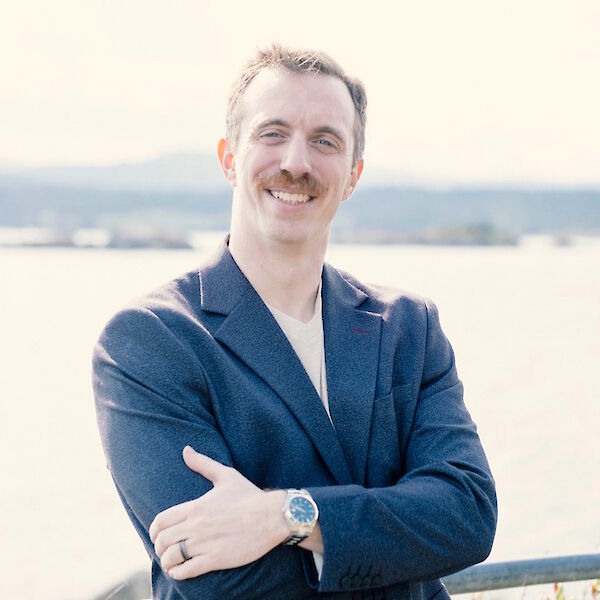
Dan Igaz
About
Policy commitments
We all want healthy, affordable, and comfortable homes. These policies will help to lower energy bills, cut pollution, and improve indoor air quality.
Our community is already experiencing the harmful impacts of climate change caused by fossil fuel pollution, and taxpayers are on the hook to upgrade and repair critical infrastructure.
The air we breathe, the water we drink, and the food we eat all rely on healthy ecosystems. Nature can also help protect our community from extreme weather by controlling floods, protecting shorelines, and cooling neighbourhoods. Access to nature improves the health and well-being of residents, and supports biodiversity.
We envision vibrant, walkable communities that protect nature and improve food security.
Connecting neighbourhoods through public transit and active transportation networks will cut pollution, improve public health, and make our communities more affordable (and fun!).
Climate change, increasing populations, and overconsumption threaten our water security. Healthy watersheds and forests are critical to support clean drinking water, stormwater management, climate resilience, and biodiversity for future generations.
Zero waste policies reduce pollution, keep waste out of landfills, build resilient local economies, and safeguard public health by shifting society away from a disposable culture toward a sustainable circular economy.
Climate action
In my personal life, I’ve been a vegetarian for 12 years, and I have been a long-time volunteer in community cleanups across Canada, from Lac St-Louis in Québec to the beaches of Hay River, NWT, to our own Esquimalt Clean-Up Project. I have also heavily included environmental considerations and the Leave No Trace philosophy into various camping and rockclimbing workshops that I’ve run over the years.
Cycling is my primary means of transportation by far, and I support others in reducing their personal vehicle use as well. At work, I have regularly offered to ride with employees and partners who weren’t yet comfortable cycling on their own, and was an active leader in our Bike to Work Week. When I do need my vehicle, I drive a fully electric Nissan Leaf (2012 and still going strong!)
I think these choices point towards my greater philosophy: individual action is important, but public policy and regulation are what will truly protect the environment and make sustainable choices the norm rather than the exception.
Questions for Esquimalt
For new developments, incentives like lower fees and expedited approvals can make non-market projects easier and more attractive for developers to build. For example, if and when Esquimalt does move forward with the implementation of Developer Cost Charges (DCCs) as I and many others have suggested, I would like to see explicit relief for builds that include non-market housing units.
Esquimalt’s overall housing progress has been encouraging, but the rate at which we’ve built non-market housing has seemingly stagnated (0/204 units in the most recent report). The most important step will be to determine what’s causing this, identify the challenges and the opportunities involved, and then establish a clearer pipeline for future non-market housing so that we can continue to make affordable, accessible housing a meaningful part of our community's future.
We need to start treating our trees and green spaces as the immensely valuable community resources that they are. Climate change is here, and we're feeling the effects every year. Our green spaces provide real, tangible services to our community: cooling and shade, stormwater management, improved air quality, biodiversity, public health benefits, etc.
We need to remove the guesswork so we can accurately assess and reflect on all of these benefits when we make decisions about areas like infrastructure and development. Our climate policies can't be something that we only consider when we're explicitly talking about climate policy. For example, I would like to explore introducing an open lot space requirement to mandate a minimum amount of green, permeable space in new developments. A well-thought-out NAM plan would be critical in informing the details of such a policy.
In the short term, and hopefully working alongside rail someday soon, the best solutions we can pursue are alternatives to driving. A 5m-long vehicle transporting a single person is objectively an inefficient use of space. As the old adage goes, inter-municipal problems require inter-municipal solutions; working with our regional partners to strengthen public transit options will get more cars off the road and make travel safer and more efficient for everyone. The existing shuttle pilot program at the base is a good example of the kind of practical alternatives that I'd like to see expanded to serve more workers.
Our active transit networks will be just as important. Safe, connected walking and cycling infrastructure complements public transit by supporting easier connections, while also acting as a strong alternative for shorter trips in itself. I’d like to fill the “missing links” in our walking and cycling networks, make travelling through construction zones safer, and establish leading pedestrian intervals to help address unsafe intersections.
My default position on this matter will be to oppose, and the bar would be high. But I would still want to evaluate each case on its own merits. I would want to see what cultural and community benefits it might bring (particularly reconciliation-based), ensure that it has no impact on whether the public is still able to enjoy the entire park, and evaluate whether the organization can operate responsibly without impacting the surrounding ecosystem.
We would also need to be very careful that private use doesn't effectively privatize any area of a public park, or create any sort of mechanism to shift the costs of operating a private business onto the public. If a private business is benefiting from a public asset, there must be a clear and very substantial net public benefit.
Finally, anything that would have any significant impact on the ecology of our parks would be a hard no for me.
It's easy to be skeptical whether something like this will lead anywhere. But consider the 1990s, when the first small governments started suing Big Tobacco companies for healthcare costs. At the time, critics called it silly, frivolous, and impossible. Years later, after more and more lawsuits around the world were launched, the industry was forced to pay out a historic $246 billion settlement, and it led directly to tighter regulations concerning accountability, sponsorships, youth-oriented marketing, and more.
Climate change is here, and the impacts that we're seeing are already creating significant costs for municipalities and our residents. Stormwater and cooling upgrades, wildfire preparedness and response, blue-green infrastructure and retrofits... these are investments worth doing and are net positives for the world, but they aren't cheap. I think there is a very reasonable question to be asked about whether we should be bearing the overwhelming bulk of these costs while the companies that made billions from fossil fuels, knowing full well the impacts that they were (and still are) causing, face little to none of that same burden.
I understand anyone's instinctive hesitation, but the initial commitment is low. I would be happy to support adding our names to the list of those asking the courts to hear and consider whether fossil-fuel companies should pay their fair share.
Compiled & presented by
Vote4Tomorrow is an independent voter guide to evaluate where local candidates stand on climate and environmental policies that will affect our future.