
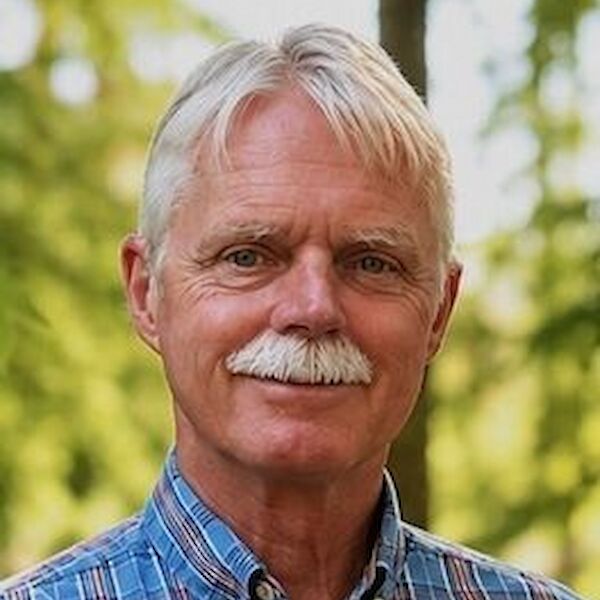
Hilary Abbott
- Neighbourhood:
- Cowichan Bay
- Years in the community:
- 34
About
Policy commitments
We all want healthy, affordable, and comfortable homes. These policies will help to lower energy bills, cut pollution, and improve indoor air quality.
Our community is already experiencing the harmful impacts of climate change caused by fossil fuel pollution, and taxpayers are on the hook to upgrade and repair critical infrastructure.
The air we breathe, the water we drink, and the food we eat all rely on healthy ecosystems. Nature can also help protect our community from extreme weather by controlling floods, protecting shorelines, and cooling neighbourhoods. Access to nature improves the health and well-being of residents, and supports biodiversity.
We envision vibrant, walkable communities that protect nature and improve food security.
Connecting neighbourhoods through public transit and active transportation networks will cut pollution, improve public health, and make our communities more affordable (and fun!).
Climate change, increasing populations, and overconsumption threaten our water security. Healthy watersheds and forests are critical to support clean drinking water, stormwater management, climate resilience, and biodiversity for future generations.
Zero waste policies reduce pollution, keep waste out of landfills, build resilient local economies, and safeguard public health by shifting society away from a disposable culture toward a sustainable circular economy.
Climate action
I persevered for the installation of the Wessex Ravine staircase - when faced with possible cancellation due to conflict with the heron rookery. Through proper park management and seasonal closure during the sensitive nesting season - saw the completion of a very well used walkable connection for upper Cowichan Bay residents down to the lower Village.
I am supportive of restoration efforts of the Cowichan Estuary back to its pre-contact status - thereby permitting natural salt water intrusion onto former indigenous agricultural lands - originally known as "Cowichan Gardens". This work is being undertaken by the owners of the lands - Nature Trust BC, who are working in collaboration with Cowichan Tribes to reestablish traditional agricultural species grown by the Cowichan People for millennia.
This work will also remove the destructive wave action that harms the eel grass beds that salmon fry live in for up to a year as they acclimatize to salt water before their migration into the open ocean.
Questions for Cowichan Valley Regional District
These forests should be allowed to continue to stand, to protect our watersheds - be allowed to grow large - can be harvested at some point in the future when processing returns to our Island communities - but until then we need to take action to protect our new and old growth forest canopy. Concurrently - we need to attract new industry to set up on the Island - to grow and process more of the goods and services we have become accustomed to ordering and receiving from off the Island - as we satiate our desire for "Instant Gratification".
I would advocate for this conversation to begin - between all levels of government and our neighbouring indigenous communities.
More safe and secure bike storage must complement the active transportation initiative. People are not going to use alternative transportation if they cannot count upon safe, well lit, secure and affordable storage.
We need to work with BC Transit to look for better solutions to move bikes on buses - akin to in the Netherlands where rail carriages and ferries are geared up to transport a large quantity of bikes. At present - BC Transit typically offers 2 spaces for bikes - that are conventional in size. The notion of using BC Transit is to allow commuters to get from one node to another node - then switching to their non-gas consuming form of transportation. A BC Transit solution also helps to provide a partial solution (ie. one way public transit) during shorter days in the winter and during weather events.
For current housing stock - consider the challenge of plumbing fixture units - instead of focusing upon the number of homes and detached or attached suites that a parcel can support - focus on how many water consuming and discharging fixtures are being used. Many of our homes were built decades ago designed to house a typical family - perhaps a couple with 2 or 3 children. With changing demographics - increasingly we see the same household footprint with one or two people living in the residence. Adding additional suites to the property may not put increased demands on water and sewer infrastructure. Count the number of washrooms, showers, bathtubs, laundry systems (ie. fixture units) - and the number of residents living on a parcel when considering densification and/or infill. I believe we could have more unique and alternative housing solutions to address the current shortage of residence space - and not put greater demands on the finite water and sewage connections. AND - when the baby boom is finally behind us - the parcel may or may not return to it's original built-up footprint.
Campaign contributions
Public records from Elections BC — 17 contributions totalling $4,275.00.
2022 GENERAL LOCAL ELECTIONS
17 contributions · $4,275.00
| Contributor | Date | Amount | Office | Jurisdiction |
|---|---|---|---|---|
| HILARY S ABBOTT | Sep 4, 2022 | $250.00 | ELECTORAL AREA DIRECTOR | COWICHAN VALLEY REGIONAL DISTRICT |
| DOUGLAS C ABBOTT | Sep 11, 2022 | $200.00 | ELECTORAL AREA DIRECTOR | COWICHAN VALLEY REGIONAL DISTRICT |
| PATTY ABBOTT | Oct 15, 2022 | $200.00 | ELECTORAL AREA DIRECTOR | COWICHAN VALLEY REGIONAL DISTRICT |
| JERRY ANDERSON | Oct 7, 2022 | $1,000.00 | ELECTORAL AREA DIRECTOR | COWICHAN VALLEY REGIONAL DISTRICT |
| TOM DEVEREAUX | Aug 24, 2022 | $100.00 | ELECTORAL AREA DIRECTOR | COWICHAN VALLEY REGIONAL DISTRICT |
| ALLISON HAGEN | Sep 22, 2022 | $100.00 | ELECTORAL AREA DIRECTOR | COWICHAN VALLEY REGIONAL DISTRICT |
| STEVE HOUSSER | Sep 13, 2022 | $125.00 | ELECTORAL AREA DIRECTOR | COWICHAN VALLEY REGIONAL DISTRICT |
| LORI IANNIDINARDO | Sep 28, 2022 | $100.00 | ELECTORAL AREA DIRECTOR | COWICHAN VALLEY REGIONAL DISTRICT |
| LARRY LENSKE | Oct 4, 2022 | $100.00 | ELECTORAL AREA DIRECTOR | COWICHAN VALLEY REGIONAL DISTRICT |
| BRUCE MUIR | Oct 11, 2022 | $250.00 | ELECTORAL AREA DIRECTOR | COWICHAN VALLEY REGIONAL DISTRICT |
| KEN OLIVE | Sep 28, 2022 | $250.00 | ELECTORAL AREA DIRECTOR | COWICHAN VALLEY REGIONAL DISTRICT |
| ROBERT SHARMAN | Sep 17, 2022 | $100.00 | ELECTORAL AREA DIRECTOR | COWICHAN VALLEY REGIONAL DISTRICT |
| DAVID SLANG | Nov 4, 2022 | $150.00 | ELECTORAL AREA DIRECTOR | COWICHAN VALLEY REGIONAL DISTRICT |
| ROSS SMITH | Sep 14, 2022 | $500.00 | ELECTORAL AREA DIRECTOR | COWICHAN VALLEY REGIONAL DISTRICT |
| KARLA SWAN | Oct 7, 2022 | $500.00 | ELECTORAL AREA DIRECTOR | COWICHAN VALLEY REGIONAL DISTRICT |
| MARJA TENCATE | Sep 22, 2022 | $100.00 | ELECTORAL AREA DIRECTOR | COWICHAN VALLEY REGIONAL DISTRICT |
| GAY WISE | Sep 26, 2022 | $250.00 | ELECTORAL AREA DIRECTOR | COWICHAN VALLEY REGIONAL DISTRICT |
Compiled & presented by

Vote4Tomorrow is an independent voter guide to evaluate where local candidates stand on climate and environmental policies that will affect our future.