
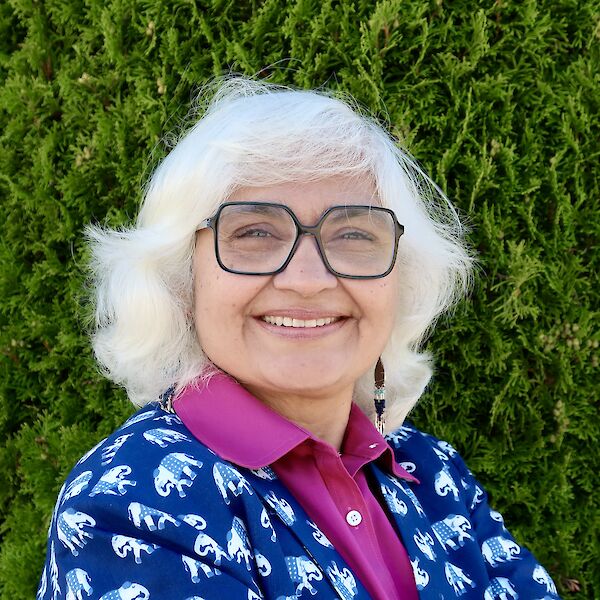
Madhavee Inamdar
- Neighbourhood:
- Coquitlam
- Years in the community:
- 22
About
Policy commitments
We all want healthy, affordable, and comfortable homes. These policies will help to lower energy bills, cut pollution, and improve indoor air quality.
Our community is already experiencing the harmful impacts of climate change caused by fossil fuel pollution, and taxpayers are on the hook to upgrade and repair critical infrastructure.
The air we breathe, the water we drink, and the food we eat all rely on healthy ecosystems. Nature can also help protect our community from extreme weather by controlling floods, protecting shorelines, and cooling neighbourhoods. Access to nature improves the health and well-being of residents, and supports biodiversity.
We envision vibrant, walkable communities that protect nature and improve food security.
Connecting neighbourhoods through public transit and active transportation networks will cut pollution, improve public health, and make our communities more affordable (and fun!).
Climate change, increasing populations, and overconsumption threaten our water security. Healthy watersheds and forests are critical to support clean drinking water, stormwater management, climate resilience, and biodiversity for future generations.
Zero waste policies reduce pollution, keep waste out of landfills, build resilient local economies, and safeguard public health by shifting society away from a disposable culture toward a sustainable circular economy.
Climate action
Questions for Coquitlam
To ensure infrastructure keeps pace with increased density, I will implement the following key commitments:
Mandatory Infrastructure Assessments: I will require documented infrastructure capacity assessments prior to council approval for any major growth decisions, ensuring schools, roads, transit, and green energy capacity are verified early.
Annual Infrastructure Capacity Scorecard: I will establish an annual scorecard to transparently track and report on capacity across our roads, transit, schools, and green spaces as population increases.
Active Regional Advocacy: I will work closely with federal, provincial, and regional partners to secure coordinated funding for transit expansions, schools, and health infrastructure.
Connected Neighbourhoods & Diverse Housing: I will prioritize diverse housing forms such as townhomes, co-ops, and rentals paired with local transit pilots and accessible design to ensure complete, walkable, and connected communities.
By tying growth directly to transparent infrastructure benchmarks and upfront developer contributions, Coquitlam can accommodate density while protecting quality of life, climate resilience, and neighborhood livability.
Mature trees are critical urban infrastructure, offering immediate shade, cooling, and carbon sequestration that newly planted saplings cannot replicate for decades. Protecting Coquitlam's mature canopy and expanding green cover are central to my Growth That Pays Its Fair Share and climate resilience commitments.
To protect our urban forest and establish strong canopy standards, I will focus on four key measures:
Prioritize Mature Tree Retention in Planning: I will require documented tree canopy and environmental impact assessments prior to council approval for major developments, ensuring mature trees are retained wherever feasible during site design.
Tree Canopy & Climate Resilience Strategy: I will integrate strict mature tree protection guidelines and target canopy coverage goals into municipal planning, holding development to clear retention and replacement standards.
Extreme Weather & Climate Preparedness: I will align tree preservation with municipal extreme weather safety plans to safeguard our neighborhoods against urban heat island effects and storm impacts.
Accountability Through City Reporting: I will support public reporting on municipal environmental targets including urban forest health and canopy preservation so residents can monitor local progress transparently.
By prioritizing preservation alongside responsible growth, we can ensure Coquitlam remains green, resilient, and climate-ready for future generations.
My position aligns directly with my platform commitments:
Connected, Safe & Resilient Neighbourhoods: Implementing the Zero Carbon Step Code helps protect our residents from rising fossil fuel costs while ensuring new homes are healthier, highly energy-efficient, and equipped for extreme weather through modern electric heating and cooling systems.
Joining the "Sue the Big Oil" Class-Action Lawsuit: Climate action requires holding major polluters accountable. By joining the "Sue the Big Oil" class-action lawsuit, Coquitlam will demand fossil fuel companies pay their fair share of climate-related costs ensuring the financial burden of climate adaptation doesn't fall solely on local taxpayers and homebuyers.
Growth That Pays Its Fair Share: Early adoption sets clear, predictable standards for developers, ensuring new residential growth actively contributes to our community's long-term emissions targets without delaying home construction.
Eliminating Red Tape for Sustainable Builders: I will streamline municipal permitting and provide clear guidelines for builders adopting low-carbon performance standards early.
By pairing strict building emissions standards with bold accountability like the "Sue the Big Oil" lawsuit, Coquitlam can lead in climate resilience while keeping living costs manageable.
Compiled & presented by

Vote4Tomorrow is an independent voter guide to evaluate where local candidates stand on climate and environmental policies that will affect our future.