
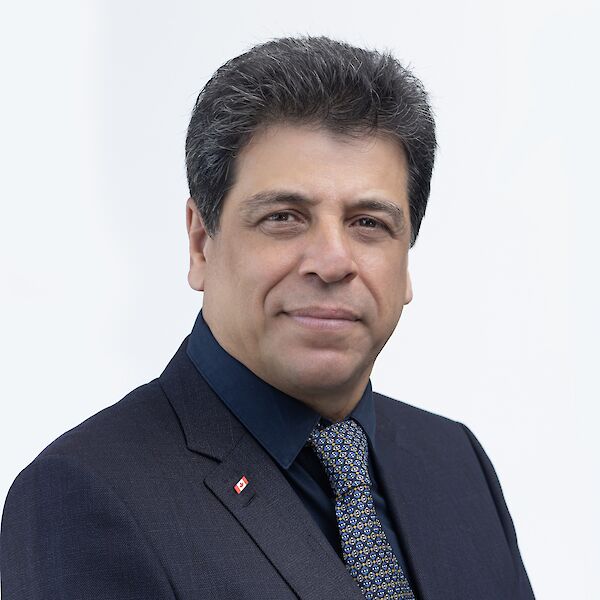
Behzad Abdi
- Neighbourhood:
- Coquitlam Westwood plateau
- Years in the community:
- 17
About
Policy commitments
We all want healthy, affordable, and comfortable homes. These policies will help to lower energy bills, cut pollution, and improve indoor air quality.
Our community is already experiencing the harmful impacts of climate change caused by fossil fuel pollution, and taxpayers are on the hook to upgrade and repair critical infrastructure.
The air we breathe, the water we drink, and the food we eat all rely on healthy ecosystems. Nature can also help protect our community from extreme weather by controlling floods, protecting shorelines, and cooling neighbourhoods. Access to nature improves the health and well-being of residents, and supports biodiversity.
We envision vibrant, walkable communities that protect nature and improve food security.
Connecting neighbourhoods through public transit and active transportation networks will cut pollution, improve public health, and make our communities more affordable (and fun!).
Climate change, increasing populations, and overconsumption threaten our water security. Healthy watersheds and forests are critical to support clean drinking water, stormwater management, climate resilience, and biodiversity for future generations.
Zero waste policies reduce pollution, keep waste out of landfills, build resilient local economies, and safeguard public health by shifting society away from a disposable culture toward a sustainable circular economy.
Climate action
In my personal life, I have also moved toward lower-emission transportation by driving an electric vehicle.
I believe meaningful climate action should produce measurable results while remaining practical and affordable. This includes improving energy efficiency, expanding cleaner transportation options, protecting trees and natural areas, and making infrastructure more resilient to heat, flooding, and other climate risks.
I also believe municipalities should work closely with residents, experts, businesses, First Nations, and other levels of government rather than trying to solve these challenges in isolation.
Questions for Coquitlam
I would use long-term planning and data to connect new housing with the infrastructure residents need: transit, roads, schools, childcare, utilities, parks, recreation, emergency services, shops, and employment opportunities.
Higher density makes the most sense where residents can walk to daily needs and access reliable public transit. At the same time, infrastructure capacity should be assessed as neighbourhoods grow, with clear performance indicators and transparent reporting.
I would also pursue partnerships with developers and provincial and federal governments so the cost of growth does not fall disproportionately on existing taxpayers.
We can streamline development approvals and build housing faster without lowering infrastructure, environmental, or community standards. The goal should be complete communities where housing, services, transportation, green space, and economic opportunities grow together.
Healthy mature trees should therefore be identified early in the development process, with professional arborist assessments, appropriate root-zone protection, and site-design adjustments where reasonably possible.
Where removal is necessary, replacement requirements should consider species, location, biodiversity, long-term canopy potential, and changing climate conditions.
I support implementing Coquitlam’s Urban Forest Management Strategy with measurable outcomes and transparent annual reporting. Particular attention should be given to neighbourhoods with lower canopy coverage and greater exposure to urban heat.
Canopy standards should be evidence-based and appropriate to different neighbourhood densities and land uses. We need to protect and grow our urban forest while also accommodating housing, infrastructure, public safety, and responsible growth.
Implementation of higher levels of the Zero Carbon Step Code should consider housing affordability, construction costs, industry readiness, energy capacity, and the availability of proven technologies.
I would work with builders, energy experts, residents, and other levels of government to establish predictable timelines and identify incentives that can help with the transition.
Where the evidence shows that higher emission-performance levels can be achieved without creating unreasonable barriers to new housing, I support moving forward.
Our objective should be both environmental and economic: reducing building emissions and energy consumption while protecting housing affordability and supply.
I favour measurable targets, transparent cost-benefit analysis, incentives where appropriate, and regular review rather than sudden regulatory changes.
Compiled & presented by

Vote4Tomorrow is an independent voter guide to evaluate where local candidates stand on climate and environmental policies that will affect our future.