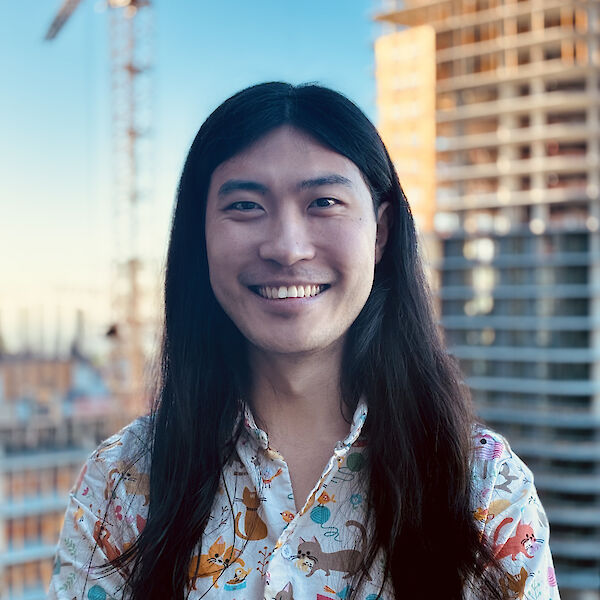
Hanzhi Wang

Hanzhi Wang

Mayor · Burnaby
Metrotown 5 yrs

About

Hi! I'm Hanzhi. Burnaby is a great city, but we have ample room for improvement. As the only mayoral candidate under 50 in this election, I will bring a fresh perspective and represent the burgeoning youth population in our municipal politics.

Policy commitments

Buildings

We all want healthy, affordable, and comfortable homes. These policies will help to lower energy bills, cut pollution, and improve indoor air quality.

✓ Support electrification of new buildings. Supportive
✓ Incentivize electric heat pumps and air filtration systems. Supportive
✓ Incentivize renewable energy, battery storage, and smart-grid technologies in new and existing buildings to improve energy security. Supportive
✓ Scale up energy retrofits for existing homes, businesses, and public buildings. Supportive
✓ Implement a 'right to cool' bylaw to protect tenants during extreme heat events. Supportive
Climate Justice

Our community is already experiencing the harmful impacts of climate change caused by fossil fuel pollution, and taxpayers are on the hook to upgrade and repair critical infrastructure.

✓ Endorse the fossil fuel treaty and commit to phase out fossil fuels. Supportive
✓ Enact a moratorium on AI data centres to protect our energy and water resources. Supportive
✓ Pursue available legal options to recover a fair share of the climate costs facing our community from fossil fuel companies and other big polluters. Supportive
✓ Collaborate with Indigenous peoples as partners in the stewardship of the land, air, and water, and work towards reconciliation. Supportive
Ecosystems

The air we breathe, the water we drink, and the food we eat all rely on healthy ecosystems. Nature can also help protect our community from extreme weather by controlling floods, protecting shorelines, and cooling neighbourhoods. Access to nature improves the health and well-being of residents, and supports biodiversity.

✓ Protect and restore ecosystems, which are essential to human survival, health, and economic well-being. Supportive
✓ Expand and protect tree canopy, parks, and green infrastructure to cool neighbourhoods, clean air, and manage stormwater. Supportive
✓ Prioritize native tree planting in all areas, especially those with low tree cover, higher population densities, and more vulnerable residents. Supportive
✓ Create connected urban greenways for people and wildlife. Supportive
Land Use

We envision vibrant, walkable communities that protect nature and improve food security.

✓ Build affordable homes near jobs, schools, shops, and transit. Supportive
✓ Upgrade critical infrastructure for heat, fire, flood, and storm resilience. Supportive
✓ Increase food security by supporting local agriculture and community gardens. Supportive
Transport

Connecting neighbourhoods through public transit and active transportation networks will cut pollution, improve public health, and make our communities more affordable (and fun!).

✓ Deliver reliable, frequent, affordable local transit. Supportive
✓ Advocate to improve regional public transit between communities. Supportive
✓ Build bike and roll networks that are safe for everyone. Supportive
✓ Expand EV charging infrastructure. Supportive
Watersheds

Climate change, increasing populations, and overconsumption threaten our water security. Healthy watersheds and forests are critical to support clean drinking water, stormwater management, climate resilience, and biodiversity for future generations.

✓ Implement water conservation plans and educate the public to conserve drinking water. Supportive
✓ Protect and restore watersheds as vital municipal infrastructure. Supportive
✓ Develop and implement a water security plan. Supportive
Zero Waste

Zero waste policies reduce pollution, keep waste out of landfills, build resilient local economies, and safeguard public health by shifting society away from a disposable culture toward a sustainable circular economy.

✓ Implement zero waste bylaws to divert organic waste and recyclables from disposal. Supportive
✓ Support the development of a circular economy to eliminate waste and improve resilience. Supportive
~ Implement bylaws to eliminate waste from new buildings, renovation, and demolition projects and to use existing buildings as efficiently as possible. Neutral
✓ Supportive
~ Neutral
× Opposed
– No response

Climate action

How have you contributed to climate action in your community through advocacy, past work, advisory committees, volunteer work, and/or reducing your personal carbon footprint?
In my personal life, I try to minimize my environmental footprint whenever possible. I avoid buying new items where possible, instead opting to repair, reuse, or repurpose items I already have, or buying second hand, and helping friends to do the same. I also support right-to-repair legislation aimed at making electronic devices more repairable and less disposable. I'm also an active participant in my local buy-nothing group to support a circular economy for our furniture and other items.

I also eat a primarily plant-based diet and try to buy local seasonal produce when possible. Not only is this an easy way to reduce the carbon emissions involved in our food supply chain, it's also great for my health!

Questions for Burnaby

Climate change is already driving up the cost of living (i.e., insurance, food prices, strain on our healthcare system). How will you provide leadership in moving our municipality towards meaningful climate action that addresses this issue?
Addressing climate change will require a coordinated effort between all levels of government, but we as a city can lead by example while putting pressure on the Provincial and Federal governments to enact change.

I believe the most effective climate actions are ones that do not place additional onus on individuals, and make it easy for people to pick the option that's also good for the environment. My transportation policies will make active modes of transport (walking, biking, and public transit) the fastest, cheapest, and most convenient way to get around so that it becomes an easy choice to leave the car at home, saving money in the process and encouraging healthy habits.

My housing policies which encourage more missing-middle density and mixed-use developments are also aimed at decreasing the distance that people need to travel to work, shop, and play, which will help reduce emissions as well as save people time and money on commuting.
What specific policies do you promise to fight for to address transportation emissions, including making streets safer for walking and active modes of travel?
I will fight to build infrastructure for alternative modes of transportation, such as bike and transit priority lanes, to encourage people to use alternatives to driving. Not only do these investments make it more appealing to choose options other than driving, they also make our streets safer by separating different types of traffic and providing a buffer between car lanes and the sidewalk.

In terms of traffic safety, too often, a single dangerous driver or ear-shatteringly loud car makes the street feel hostile for everyone. We need to implement physical traffic calming infrastructure such as wider kerbs and speed bumps, especially around parks and schools, as well as more enforcement around traffic and noise violations. I believe we can make use of tactical urbanism strategies to deploy these changes quickly and cheaply to make an immediate impact while we work on building out longer term transit infrastructure projects, such as Bus Rapid Transit.
How will you improve transit in Burnaby, using tools within your jurisdiction as a municipality?
I will work to reclaim the copious amounts of public space given to private vehicles in this city, and return it to the people in the form of transit priority lanes, grade-separated bike routes, and wider sidewalks. Not only will this encourage people to use alternative modes of transit, it will make our streets safer, faster to get around, and more pleasant to navigate for everyone, even including those who still need to drive.

I will also work with Translink and provincial authorities to improve transit coverage and connectivity across the city, so that it can become the faster, cheaper, and preferred option for everyone.

Our zoning laws also dictate the effectiveness of our transit system - it's much easier to provide quality transit when neighbourhoods are designed around them. My policies will encourage more density and mixed-use developments around existing transit corridors, increasing the proportion of people that are able to get around without a car.
What ideas do you have to solve housing affordability and homelessness issues and address climate change at the same time?
I will enable and encourage more high density, missing-middle density, and mixed use developments across the city. These are the types of housing we need to provide affordable homes for lower-income families and individuals, and are also much more energy efficient, both in terms of the buildings themselves and their use of public utilities. Having more mixed-use neighbourhoods also reduces the amount people need to travel for shopping, work, and recreation.

I will also incentivize retrofitting existing housing with energy-efficient heat pumps, including providing resources for strata buildings to help them navigate the process. As someone who recently worked with their strata to get a heat pump installed, I understand first-hand how the lack of a pre-existing framework makes this process much more difficult.

Regarding homelessness, our one-size-fits-all approach to supportive housing is failing our most vulnerable population. Homelessness comes in all shapes and sizes, and our approach needs to reflect that. I will work to build more suitable shelter and housing units for individuals and families that are experiencing temporary homelessness, while ensuring that members of the longer-term homeless are given services that help them rehabilitate and reintegrate into our community. Not only is this the more humane approach, it has also been proven to be more cost-effective than dealing with the consequences of a large homeless population.
How can we make our parks and green spaces work harder for us in terms of rainwater management, carbon capture and food production? 
I think many of our existing parks - such as Burnaby Lake, Deer Lake, and Burnaby Mountain - are already doing a great job of this. They are well-maintained natural ecosystems with a lot of native plant diversity and permeable surfaces for rainwater. We can use them as a model as we look at other parts of the city.

There is room for improvement in urban areas. We should look for opportunities to convert under-utilised areas into more effective green spaces. A great first step for example would be to convert areas under SkyTrain tracks to community garden plots - these tend to be in high-density areas with existing demand for garden space, and will help to feed local communities.

Additionally, our urban canopy currently disproportionately favours wealthier neighbourhoods. As we build out our sidewalks in the city, I will ensure we line them with trees in order to provide future residents with shade during our increasingly hot summers.

Another opportunity for better green space is people's own yards. Too many houses have large patches of water-intensive imported lawns on them, and I believe a little encouragement can go a long way by showing people how they can transform their own gardens with native plants or to grow their own food.

Compiled & presented by

Vote4Tomorrow is an independent voter guide to evaluate where local candidates stand on climate and environmental policies that will affect our future.

© 2026 Vote4Tomorrow