
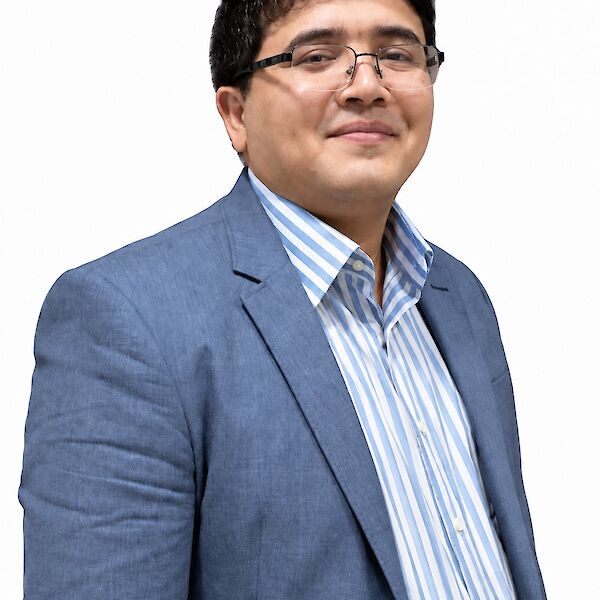
Akmal Bazarov
About
Policy commitments
We all want healthy, affordable, and comfortable homes. These policies will help to lower energy bills, cut pollution, and improve indoor air quality.
Our community is already experiencing the harmful impacts of climate change caused by fossil fuel pollution, and taxpayers are on the hook to upgrade and repair critical infrastructure.
The air we breathe, the water we drink, and the food we eat all rely on healthy ecosystems. Nature can also help protect our community from extreme weather by controlling floods, protecting shorelines, and cooling neighbourhoods. Access to nature improves the health and well-being of residents, and supports biodiversity.
We envision vibrant, walkable communities that protect nature and improve food security.
Connecting neighbourhoods through public transit and active transportation networks will cut pollution, improve public health, and make our communities more affordable (and fun!).
Climate change, increasing populations, and overconsumption threaten our water security. Healthy watersheds and forests are critical to support clean drinking water, stormwater management, climate resilience, and biodiversity for future generations.
Zero waste policies reduce pollution, keep waste out of landfills, build resilient local economies, and safeguard public health by shifting society away from a disposable culture toward a sustainable circular economy.
Climate action
I have likewise taken part in various community organisations and done voluntary work, such as acting as a Board Member for the United Nations Association's Vancouver branch.
In the way that I deal with community matters, I think that environmental responsibility should be incorporated into our plans for the neighbourhood and the way we manage public resources. This should involve promoting energy efficiency, improving transportation, planting trees, developing resilient infrastructure and enhancing waste management.
I think that action on climate issues should be both measurable and responsible. Since the city is using public funds for a climate initiative, residents ought to be able to see what objectives it has, how much it costs and whether it is achieving results.
Questions for Burnaby
I would focus on practical actions that reduce emissions while improving how the City functions. These measures would involve improving public transportation, providing safer routes for walking and cycling, increasing energy efficiency, planting more trees, developing resilient infrastructure, and enhancing waste management.
Burnaby should also make use of technology and improved data to pick up on problems before they turn out to be costly; for instance, better monitoring of the infrastructure can help in identifying the need for maintenance earlier on, and traffic data can be used to improve traffic flow and cut down on unnecessary fuel consumption.
As the city of Burnaby grows, housing and infrastructure must be planned jointly. When new housing is being considered, transit, roads, sidewalks, parks, utilities and community facilities should also be taken into account.
I also think there should be some form of accountability for climate investments. People ought to know the cost of a program, what results it is expected to achieve, and whether or not those results are in fact being delivered.
The way I proceed is simple: to carry out practical climate action that helps protect our environment, positions Burnaby to cope with extreme weather, and delivers tangible benefits to residents.
I would back improved transit reliability and better connections by working with TransLink and the nearby municipalities to deal with regional transportation issues, and I would also support safer pedestrian crossings, better sidewalks, school zone safety, and more well-connected cycling routes.
Transportation planning must be based on improved data, and the city can use technology to detect congestion, improve traffic flow, and better understand where pedestrians, cyclists, and transit users need safer connections.
I also think that Burnaby should realise that a great many people still rely on their cars. That doesn't mean we should ignore drivers; instead, we should work on improving traffic flow and parking as well as making the streets safer for all.
When new developments are being considered, account should be taken of their effects on local streets and transportation infrastructure. Since Burnaby is expanding, housing, roads, public transit, sidewalks and cycling infrastructure all need to be planned in a coordinated manner.
The objective must be simple, namely fewer accidents, an improved range of transport options and less time spent in traffic.
I should work closely with TransLink and the municipalities next to us to push for improved reliability, better connections, and better service as Burnaby grows. The City also needs to coordinate its transportation planning with new housing and large-scale developments rather than treating transit as a separate matter.
In the area under the City's control, we could enhance public transit infrastructure by improving sidewalk safety, providing better pedestrian crossings, enhancing cycling links, and ensuring that routes and streets are accessible so that buses and other traffic can move more efficiently.
Technology can also be of assistance; improved traffic data can detect congestion and enable the city to see where transportation improvements are most required.
I would also ensure that residents have a clearer way to report transportation problems and track them.
The population in Burnaby is increasing, and the transportation infrastructure must grow with it; the city should use its position to coordinate, campaign for change, and introduce practical improvements in cooperation with TransLink, neighboring municipalities, and other levels of government.
I back having more housing options, such as purpose-built rental properties, affordable housing, larger homes for families, smaller homes, housing for seniors, and homes close to public transit. I also think it is important to make the approval process more predictable and reduce unnecessary delays and costs.
When new housing is constructed, transportation, sidewalks, parks, utilities and community facilities should all be planned at the same time. Proper planning can lead to more efficient neighbourhoods in which people have better access to transit, services and their everyday needs.
Burnaby should improve its cooperation with the Province, the health authorities, the neighbouring municipalities and the non-profit organizations. There should be more shelter and supportive housing as well as access to mental health, addiction, employment and other kinds of support.
We should also provide for homes and infrastructure to withstand extreme weather and promote energy efficiency.
I am taking a practical approach by providing more housing options, improving the planning process, strengthening partnerships, and making investments that enhance both affordability and resilience.
I back the idea of protecting and expanding trees and green spaces, especially where they can provide shade, enhance neighbourhoods, and increase resilience during extreme weather.
The city should also consider using green infrastructure to manage rainwater and reduce the strain on engineered infrastructure, and improved planning could help us identify where trees, vegetation, and permeable surfaces can offer practical benefits.
Community gardens and various other local food projects can likewise offer residents the chance to take part in their neighbourhoods, provided that they are established in situations where they are appropriate for the community.
The city can use advances in technology and improved data to determine where green infrastructure will provide the greatest benefit and to assess how its investments are performing.
As has been the case with other forms of public investment, I would stress the importance of achieving results. We must safeguard our natural resources while ensuring that public spending is responsible and delivers real benefits to residents.
Compiled & presented by

Vote4Tomorrow is an independent voter guide to evaluate where local candidates stand on climate and environmental policies that will affect our future.