
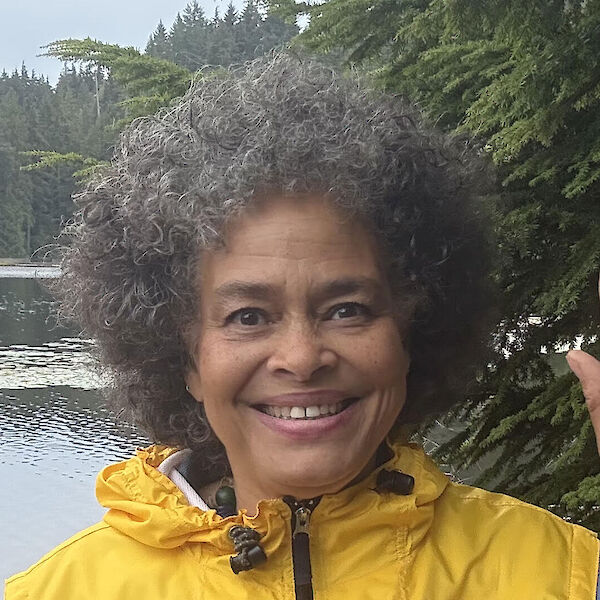
Constance Barnes
- Neighbourhood:
- Bowen Island-Josephine Lake
- Years in the community:
- 6
About
Policy commitments
We all want healthy, affordable, and comfortable homes. These policies will help to lower energy bills, cut pollution, and improve indoor air quality.
Our community is already experiencing the harmful impacts of climate change caused by fossil fuel pollution, and taxpayers are on the hook to upgrade and repair critical infrastructure.
The air we breathe, the water we drink, and the food we eat all rely on healthy ecosystems. Nature can also help protect our community from extreme weather by controlling floods, protecting shorelines, and cooling neighbourhoods. Access to nature improves the health and well-being of residents, and supports biodiversity.
We envision vibrant, walkable communities that protect nature and improve food security.
Connecting neighbourhoods through public transit and active transportation networks will cut pollution, improve public health, and make our communities more affordable (and fun!).
Climate change, increasing populations, and overconsumption threaten our water security. Healthy watersheds and forests are critical to support clean drinking water, stormwater management, climate resilience, and biodiversity for future generations.
Zero waste policies reduce pollution, keep waste out of landfills, build resilient local economies, and safeguard public health by shifting society away from a disposable culture toward a sustainable circular economy.
Climate action
Questions for Bowen Island
Before we start making promises, I want to know what conversations have already happened. Has Bowen Island Municipality connected with BC Ferries? Have we talked with the Province, our federal partners, our MP and MLA, our Indigenous partners, the Squamish Nation, climate experts and people in our community?
Because if we’re going to do something as big as move toward an electric ferry, we need people at the table.
I would go to BC Ferries and ask some straightforward questions.
Do you already have a feasibility study or business case? What would an electric vessel cost? What would Bowen and Horseshoe Bay need to do to make it work? What charging infrastructure would we need? And, most importantly, how much could it reduce our greenhouse gas emissions?
Then we have to talk about money. Where could the funding come from? Could there be federal or provincial funding, the Canada Infrastructure Bank, green infrastructure programs, public-private partnerships or private investment?
I don’t know the answer to all of that yet—and I’m not going to pretend I do.
What I do know is that I’ve spent years sitting around government tables. As an elected Park Board Commissioner and Chair, I learned how to work across governments, build relationships, understand budgets and bring people together to get things done.
I’d want to talk to our neighbouring islands. They may be looking at opportunities, and we can work together.
The thought of significantly more tanker traffic moving through Howe Sound makes me nervous. These are our waters, and I care deeply about the safety of Bowen residents, our marine environment and our community.
This is an issue I would need to do my homework on. I don’t want to pretend I already know all the answers, because I don’t.
My first step would be to understand the facts. What tanker traffic is there today? What would a doubling or tripling of Woodfibre LNG mean? What are the actual risks? What emergency plans are in place? And are Bowen’s emergency responders properly equipped and prepared?
I would want to talk with the people who know this best including our own staff —Transport Canada, the Coast Guard , marine safety experts, our emergency responders, Indigenous partners including the Squamish Nation, Woodfibre LNG, and our neighbouring Islands.,
I would insist that Bowen has a strong confident voice at that table.
I’ve spent years working across governments and sitting around public-policy tables. I know how to ask questions, bring people together and keep digging until I understand an issue. I worked very closely with the Vancouver Coast Guard when the Feds wanted to shut her down. It was brutal confrontation some days but alas the feds found the resources and acknowledged the risks so it was restored and it now services Vancouver. Kits, English Bay and surrounding Stanley Park waters. WE WON!
I spent 15 years working in the tourism industry, including at Storyeum and the Dr. Sun Yat-Sen Classical Chinese Garden, where I worked in operations and marketing. So I’ve seen firsthand how tourism can affect a community.
For Bowen, I would want to start with the facts. When are our busiest times? Where are the pressure points? Can our transportation, waste management, washrooms, trails and ecosystems handle more visitors?
Then I’d bring residents, businesses, environmental experts and the appropriate government and service providers together to find practical solutions.
I also think education and enforcement have a role. Visitors should know what is expected of them when they come to Bowen, and our community shouldn’t be left carrying the costs when people don’t respect our island.
I want Bowen to welcome visitors—but I also want visitors to respect Bowen.
I remember standing in Stanley Park after the devastating windstorm. I was there in boots, a hard hat and big work gloves, stepping over enormous trees that had stood for generations. Seeing the massive Western Red cedar estimated to be 1000 years-old collaped and down was devastating. The saplings underneath were bent and broken. It was heartbreaking, but it was also reality—and we had to deal with it.
That experience taught me that resilience isn’t just about what you do after a disaster. It’s about preparing before it happens.
On Bowen, I would start by looking at our vulnerabilities and existing plans. Where are the gaps? Are our roads, drainage, shorelines, forests and other infrastructure prepared? Do our emergency responders have the equipment, training and resources they need? Do we have strong evacuation and communication plans?
I would bring together our emergency responders, staff, climate and environmental experts, Indigenous partners, residents and the appropriate levels of government to build practical plans for these risks.
And I would absolutely use my Park Board experience. I have a Rolodex full of people I can call who have dealt with these challenges—and I would reach out for guidance.
I’ve seen what climate events can do. I don’t want Bowen scrambling if tragedy strikes!
Compiled & presented by

Vote4Tomorrow is an independent voter guide to evaluate where local candidates stand on climate and environmental policies that will affect our future.